Overtourism strains Venice, Paris and other beloved destinations
Overcrowding is turning dream destinations into pressure points, and Sunday Morning uses that story to show why shared, curated reporting still matters.
A Sunday ritual that still sets the cultural agenda
CBS News Sunday Morning continues to do something most television has struggled to preserve: it gathers a national audience around one carefully edited conversation. Hosted by Jane Pauley, the program airs Sundays at 9:00 a.m. ET and streams on the CBS News app beginning at 11:00 a.m. ET, giving it a reach that feels both traditional and current.
That format still matters because the show does more than preview the week. It frames how viewers think about public life, culture and the institutions shaping both. On this broadcast, that means a cover story on overtourism, a health feature about therapeutic horsemanship, an exhibition on Mozart and the recurring Almanac look back at history on May 3. The mix is deliberate: civic pressure, personal healing and artistic legacy in one hour.
When too much travel becomes the story
The cover story, reported by Seth Doane, asks a blunt question: is tourism becoming too much of a good thing? CBS says tourism represents 10% of the global economy, which helps explain why the issue is no longer just a nuisance for popular places. It is an economic force, a political dispute and, increasingly, a local quality-of-life battle.
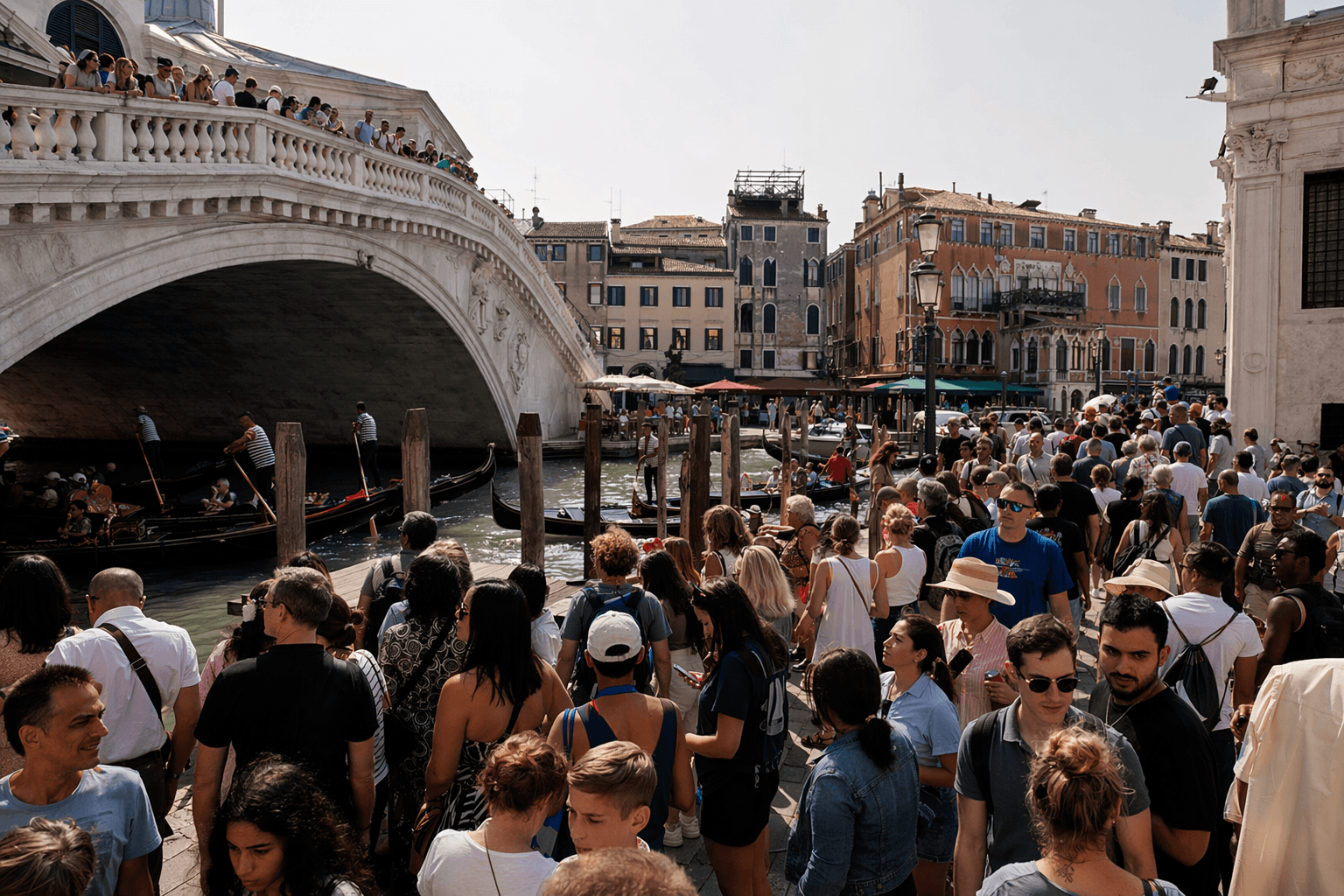
Doane travels to Amsterdam, Paris, Venice and Portofino to examine how surging visitor numbers are reshaping cities, resorts and natural attractions. The reporting also points to a larger shift in travel culture, with social media accelerating demand and helping turn fragile places into must-see backdrops. In many of these destinations, residents are not simply complaining about crowds. They are trying to redefine what tourism should look like, who it should serve and how much pressure beloved places can absorb.
The tension is not anti-travel. It is about whether the people who live in these places can keep living there with dignity while outsiders continue arriving in ever larger numbers. That question sits at the center of the story and helps explain why the issue has moved from local frustration to a broader policy debate.
Venice shows the scale of the problem
Venice is the clearest warning sign in the report. UNESCO describes the city and its lagoon as a World Heritage property inscribed in 1987, spread across 118 small islands and founded in the 5th century. It is also one of the world’s most famous examples of a place where visitor volume now competes with daily life.
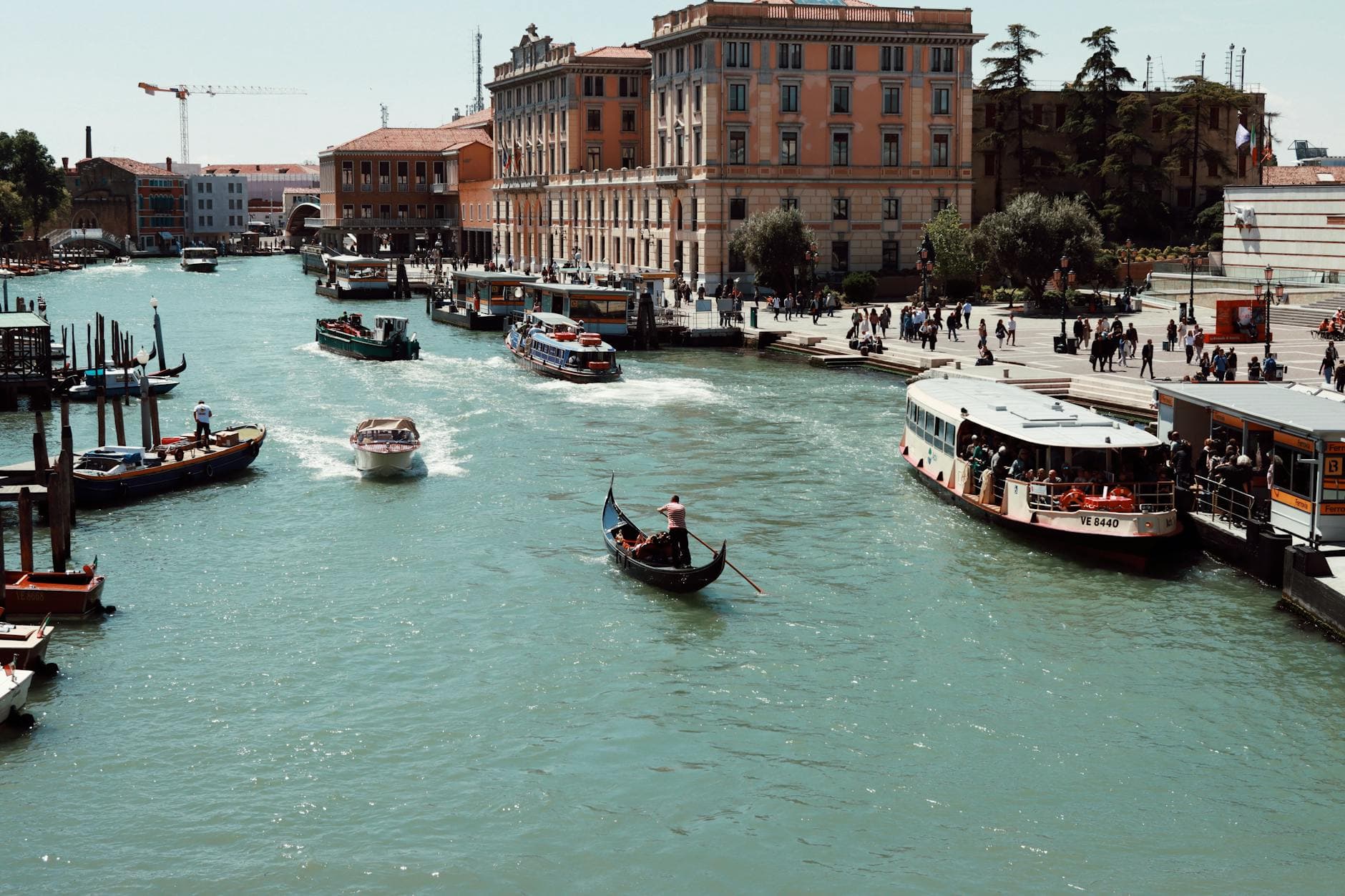
According to UNESCO, Venice draws more than 20 million visitors annually, while about 50,000 people live in the historic center. That imbalance is the heart of the crisis. UNESCO’s 2023 decision urged Italy to keep working toward a sustainable tourism model and to continue the experimental entry-fee and booking system for day-trippers. Its 2025 decision said the booking-and-access fee system, introduced on a trial basis in 2024, continued in 2025.
The issue is larger than admission charges. UNESCO’s 2025 decision also welcomed the continued enforcement of the ban on large ships and continued significant investment in the MoSE flood barrier system. Taken together, those measures show how Venice is trying to manage not just water and weather, but human traffic. The city has become a case study in how heritage, access and survival can collide.
Amsterdam, Paris and Portofino face their own version of the same strain
Venice is the most dramatic example, but Doane’s reporting makes clear that the pressure is shared. Amsterdam, Paris and Portofino each illustrate a different version of the same dilemma: how to welcome visitors without hollowing out the places they came to see. The story points to local responses such as Tours That Matter and We Live Here in Amsterdam, along with Discover Amsterdam and Portofino Tourism, as evidence that communities are searching for alternatives to unfettered growth.
Jasper van Dijk, an economist at Utrecht University School of Economics, is among the voices helping explain why these debates matter beyond individual streets or landmarks. The argument is not just about crowd control. It is about housing, infrastructure, neighborhood character and the political trade-offs that come with depending on tourism for revenue while bearing its costs on the ground.
For a broadcast built around context, this is exactly the kind of story Sunday Morning does well. It treats a familiar destination not as a postcard, but as a governance challenge. That approach is what keeps the program relevant in a fragmented media environment: it connects personal experience to public consequence.
A different kind of healing with horses
The health report shifts from crowded cities to a quieter form of connection. Lesley Stahl visits Endeavor Therapeutic Horsemanship in Bedford Corners, New York, where horses are used to help people with disabilities, veterans with PTSD and incarcerated participants. The premise is simple but powerful: horses can form bonds with people because they are sensitive to human emotion.

Endeavor says it was founded in 2014 and is a 501(c)(3) nonprofit that serves people ages 4 through seniors, including veterans, active-duty military, school groups and incarcerated women. It also says it is the only therapeutic horsemanship center in the United States with both PATH International Premier Accredited Center and Eagala Designated Military Services Provider status.
Westchester County funding documents say the organization has supported hundreds of participants, and local reporting has said it serves about 900 people a year. That combination of public support and private resilience fits the broader Sunday Morning pattern: institutions matter when they deliver measurable help, not just good intentions.
Mozart returns to New York with artifacts that deepen the music
The arts segment turns to Wolfgang Amadeus Mozart through a new exhibition at The Morgan Library & Museum in New York City. Jane Pauley reports on “Wolfgang Amadeus Mozart: Treasures from the Mozarteum Foundation of Salzburg,” on view from March 13 through May 31, 2026.
The exhibition traces Mozart’s life and work through manuscripts, letters, personal objects and the instruments he used to compose. Among the highlights are his clavichord, on which he composed The Magic Flute, and his childhood violin, both on view in the United States for the first time. The effect is to make a mythic figure feel newly tangible, reminding viewers that cultural memory depends on objects, institutions and careful curation.
Why the format still works
The final strength of Sunday Morning is that it refuses to narrow its definition of public interest. One segment examines overtourism as a policy problem. Another explores therapeutic care through animals. Another places Mozart in a modern museum context. The Almanac then pulls the hour back into the calendar, revisiting historical events tied to May 3.
That range is the point. In a media world built around speed and fragmentation, the program still offers a shared frame for understanding what matters, why it matters and who bears the cost. It remains a broadcast that can make a crowded Venice, a therapeutic stable and a Mozart manuscript feel like parts of the same national conversation.
This article was produced by Prism’s automated news system from verified source data, official records, and press releases, then run through automated quality and moderation checks before publishing. The system is built and supervised by the people who set the standards it runs under. Read our full AI policy.
Did this article answer your question?