Owner Isolates Persistent Cruiser Leak, Temporarily Patches, Replaces Sealant and Fasteners
Owner aboard a small cruiser isolated a persistent leak, applied a temporary patch, and followed up by replacing sealant and fasteners to stop water ingress.
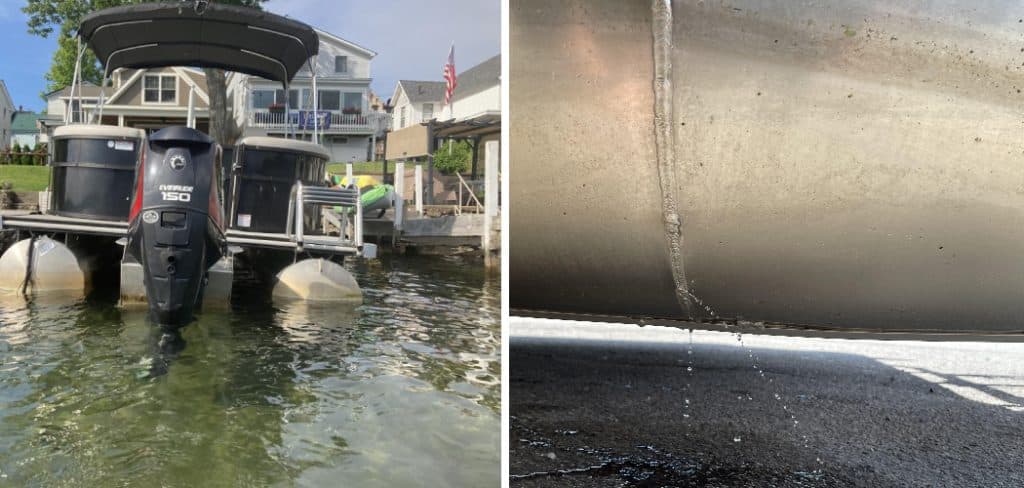
A hands-on maintenance day aboard a small cruiser at anchor ended with a successful stop to a persistent leak, and the owner documented the full sequence with photos and a short caption. The work highlights a straightforward approach any cruiser can follow when a slow ingress refuses to quit: find the source, stabilize the situation, then make a proper repair.
The owner first isolated the leak source while the boat remained at anchor, using visual checks and removal of covers shown in the photos. That step made it possible to limit water entry and prevent secondary damage to cabins and systems. After isolation, the owner applied a temporary patch to reduce flow and buy time to plan a more durable fix. The post shows the temporary patch holding long enough for the follow-up work.
Later in the maintenance day the owner removed the old bedding, replaced sealant, and swapped out the fasteners that had been holding the compromised joint. The documentation indicates attention to both sealing material and hardware - a combination that is often the root cause when leaks return after a re-bed. Replacing both sealant and corroded or weakened fasteners restores clamping pressure and improves the long-term seal, which is important when boats sit in salt water and experience regular vibration and movement.
For readers who care for cruisers, this account reinforces a practical maintenance sequence that reduces risk and expense. Isolate first so the bilge pump and electrics are not overwhelmed. Use a temporary patch only to gain time and access. Remove old bedding and inspect fasteners; rusted or loose screws and bolts are common failure points and should be renewed rather than reused when possible. The photos shared in the community post make it clear that careful preparation and staged repair work can be done at anchor by a single owner without calling in a yard immediately.
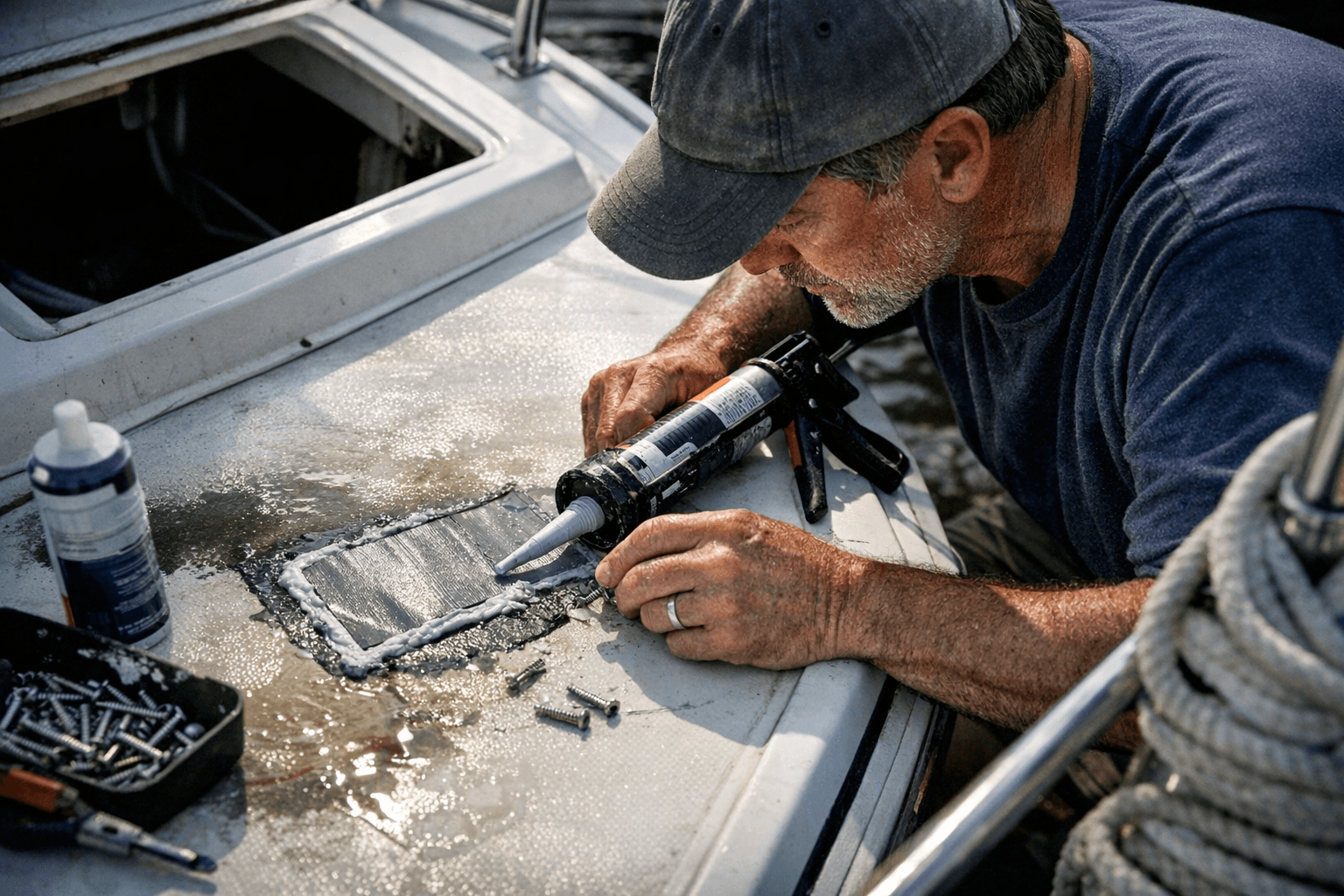
This repair day also carries a wider message for the community: persistent small leaks are cumulative hazards. Left unchecked, they lead to mildew, laminated core rot, and expensive system failures. Documenting the steps and sharing photos helps other owners recognize early signs and the materials and effort needed for a proper re-bed.
Expect to see more hands-on posts like this as owners favor pragmatic, do-it-yourself solutions over emergency haul-outs. If you find a leak, isolate it, apply a reliable temporary patch, then plan a thorough re-seal and fastener replacement at the next calm window or haul-out. That sequence keeps boats drier, systems safer, and maintenance bills more predictable.
Know something we missed? Have a correction or additional information?
Submit a Tip

