Owsley County Identified as Poorest U.S. County That Voted for Trump
Booneville’s tiny Ole Bus Stop Diner sits in a county whose 2015 median household income was $19,146, cited in debates as “the poorest U.S. county that voted for Trump.”
A claim that Owsley County is “the poorest U.S. county that voted for Trump” has surfaced in political discussions, placing the Eastern Kentucky seat of Booneville at the center of national debates about poverty and voting. The Original Report frames Owsley this way while Al Jazeera, TalkPoverty and decennial census excerpts sketch a county of deep economic distress and strong Republican votes.
Population figures vary across reports. The 2020 census places Owsley’s population at 4,051, making it the second‑least populous county in Kentucky and listing Booneville as the county seat. An Al Jazeera citation of a Census Bureau estimate described a 4,461‑person population and said the county was “more than 98 percent white.” By contrast, TalkPoverty called Owsley “83 percent white, mostly rural, and rigidly conservative,” a discrepancy the reporting notes without a single definitive year for each figure.
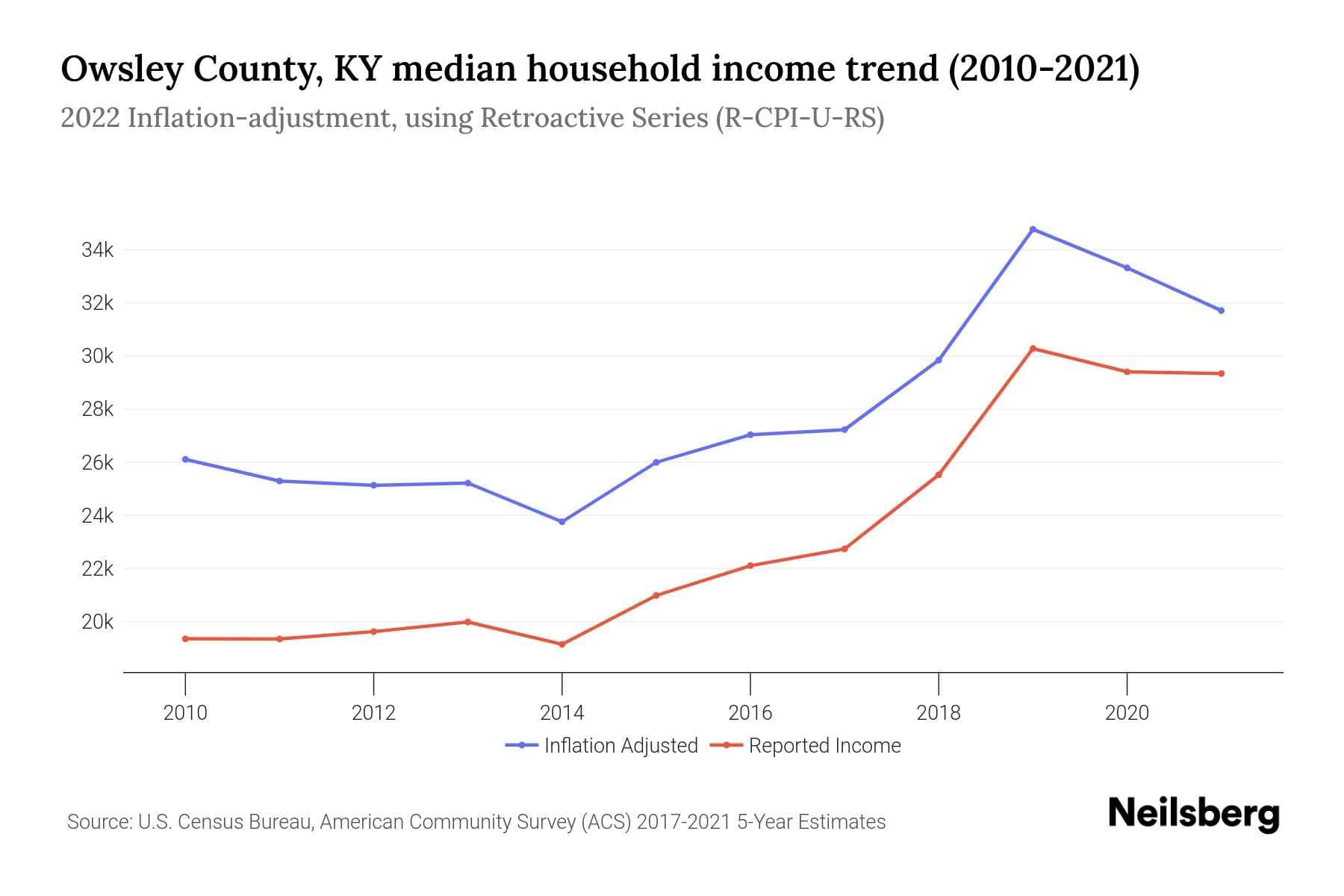
Economic measures in the supplied reporting show persistent poverty. Al Jazeera reported that “Owsley county’s median household income of $19,146 was just over a third of the national median income of $55,775 in 2015.” Wikipedia excerpts preserve earlier figures from the 2000 census, a median household income of $15,805 and a per capita income of $10,742, and record that “Owsley county’s population lives below the government‑designated poverty line, including 56.3 percent of children.”
Joblessness and benefit dependence are central to the county’s profile. Al Jazeera reported a 10.4 percent unemployment rate in 2015, compared with a national average of 5.25 percent that year. The county is described as “one of the most food stamp‑dependent counties in the United States,” and TalkPoverty recorded that “in 2011 more than half the county’s residents received food stamps.” Wikipedia material cited that in 2009 government benefits accounted for 53.07 percent of personal income in Owsley County.
Health coverage gains under Medicaid expansion are prominent in the reporting. TalkPoverty states that “when Medicaid was expanded under the Affordable Care Act, a whopping 66 percent of residents became eligible.” The piece includes a first‑person testimonial: “It’s been a godsend to me,” said a school custodian who suffered from a thyroid condition that practically immobilized her. Medicaid let her get treatment, and it paid for her cataract and carpal tunnel surgery.
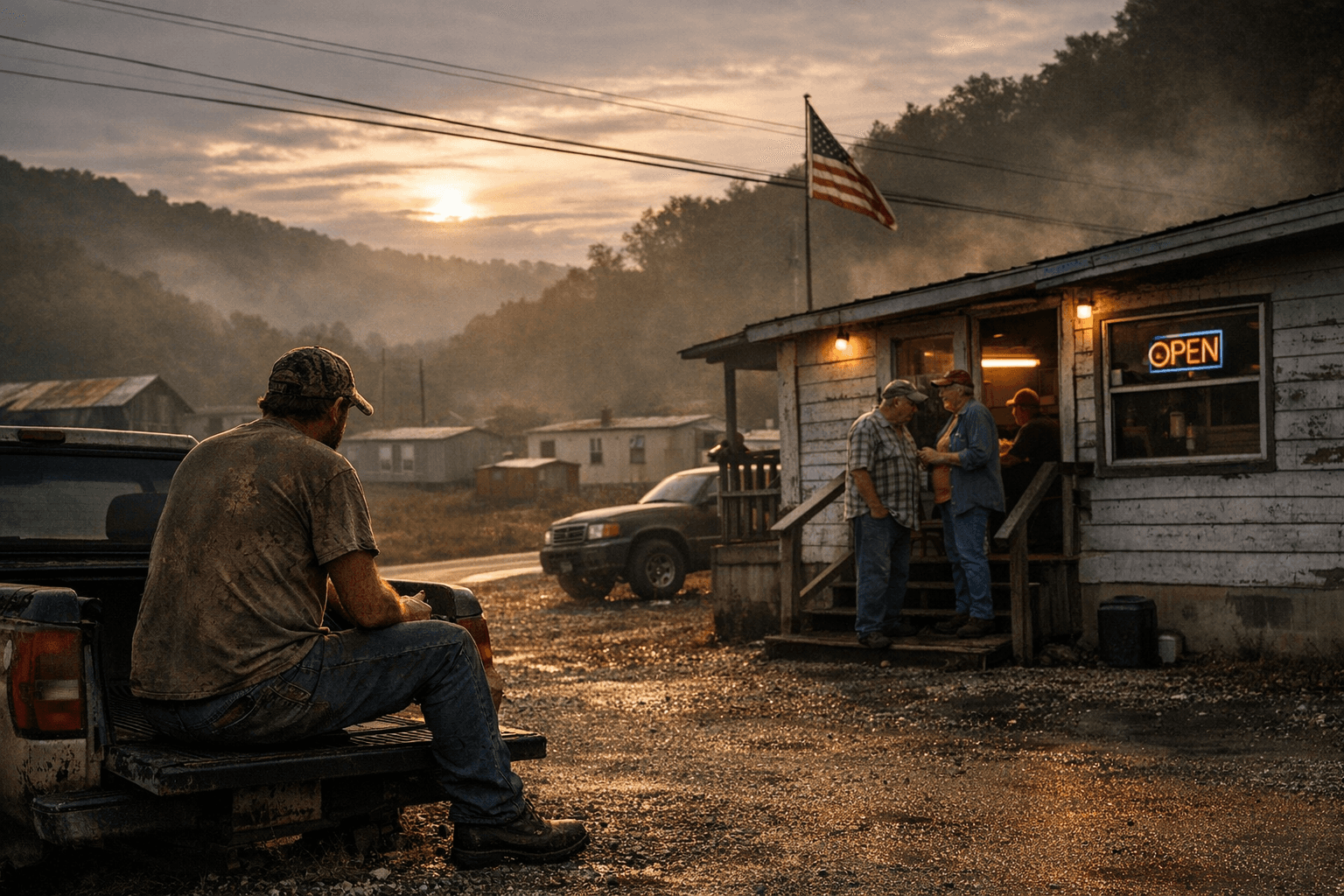
Local life and political portrait are drawn in human detail. Al Jazeera paints Booneville scenes: “Small clouds of cigarette smoke rise and then dissolve amid a steady chorus of small talk. The Ole Bus Stop Diner is the only restaurant in the tiny Appalachian town of Booneville that is still open for business. The others have long since closed down.” The report profiles Della and Carl Noble, noting Carl’s 26 years working in coal and quoting their assessment: “Whether it’s a Democrat or a Republican, there’s no jobs.” The same reporting records Owsley County voted an “overwhelming 80.9 percent Republican during the 2012 presidential elections.”
Longer‑term health and child poverty statistics underline structural challenges. Wikipedia excerpts show the county’s cancer death rate rose by 45.6 percent between 1980 and 2014 and state that the 2010 census placed Owsley among the counties with the highest levels of child poverty.
The political framing that links extreme poverty to support for Donald Trump remains a matter of public debate in Owsley’s coverage. Sources provided here document severe economic hardship, high SNAP and Medicaid dependence, and strong past Republican margins, but they also show discrepancies in population and racial statistics and leave open which election and metric underpin the claim that the county is the “poorest U.S. county that voted for Trump.” Amid “job losses, institutional inattention, developmental neglect and negative stereotyping,” many locals are, as one report put it, “openly resentful of the federal government and distrustful of outsiders and the media.”
Know something we missed? Have a correction or additional information?
Submit a Tip