Oxford's Square draws tourists, tests local services and equity
Oxford's downtown Square and campus attractions draw festival crowds, boosting business while creating parking, housing and public service strains.
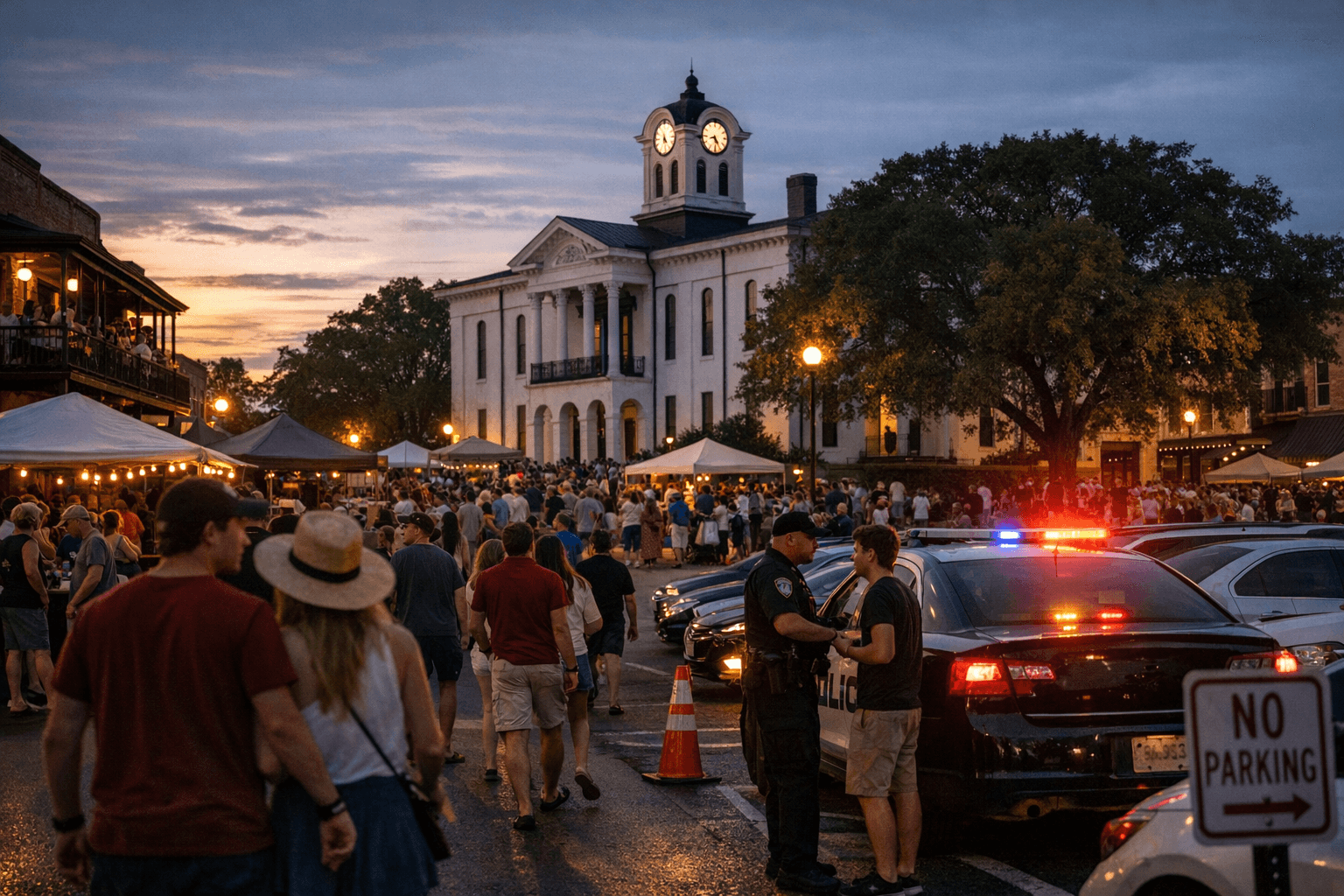
Oxford's compact, walkable downtown and University of Mississippi campus have long made the city a regional cultural destination. The Square's shops, restaurants and live music venues, along with Rowan Oak, the University Museum and seasonal events such as the Double Decker Arts Festival, Oxford Film Festival and Fiber Festival, attract steady visitor traffic that fuels local businesses but also pressures public infrastructure and community resources.
Visitors come for live music at The Lyric and Proud Larry’s, campus green spaces and the walkable downtown experience. For locals and planners, that steady tourism lists immediate trade-offs: more customers for small businesses and hospitality jobs, paired with spikes in parking demand, louder streets on event nights, higher short-term rental occupancy and greater wear on sidewalks and public restrooms. Visit Oxford offers downloadable travel guides and a visitors center that residents and visitors can use for parking, event schedules and trip planning.
Those pressures carry public health and equity implications. Increased foot traffic and packed venues change how emergency services are deployed during peak festival weekends and can create barriers to care for residents with mobility limits or limited transportation. Demand for short-term rentals and higher seasonal hotel occupancy can raise rent pressure in neighborhoods where long-term renters and lower-income households already face instability. Noise and late-night crowds can disproportionately affect residents living near the Square, including seniors and families with young children.
Public health planning and city policy can help balance benefits and burdens. Investments in clear wayfinding, expanded accessible bathrooms, improved pedestrian crossings and coordinated trash and sanitation services reduce immediate health risks tied to crowds. Strengthening public transit and shared parking strategies for events eases congestion while policies that limit the concentration of short-term rentals and support affordable housing help protect long-term residents from displacement.
Community-centered event management also matters. Scheduling that staggers major attractions, expanded community health outreach during festivals and visible first-aid stations at large events can ease strain on local emergency departments and first responders. Equitable enforcement of noise and nuisance regulations, coupled with predictable hours for live venues, helps preserve livability without shuttering cultural businesses that drive the local economy.
For Lafayette County residents, the trade-offs are tangible: cultural vibrancy and economic activity alongside real questions about who benefits and who bears the costs. Using Visit Oxford’s travel guide and visitors center can reduce day-to-day friction for residents and visitors alike. Longer term, city leaders, university partners and community groups will need to craft policies that preserve downtown’s character while protecting health, housing stability and access to city services, so the Square remains a place where everyone in Oxford can thrive.
Sources:
Know something we missed? Have a correction or additional information?
Submit a Tip