Pakistan hosts high-stakes U.S.-Iran peace talks amid fragile ceasefire
Pakistan locked down Islamabad for the first U.S.-Iran face-to-face talks in more than a decade, but Lebanon, sanctions and Hormuz still stood between a ceasefire and collapse.
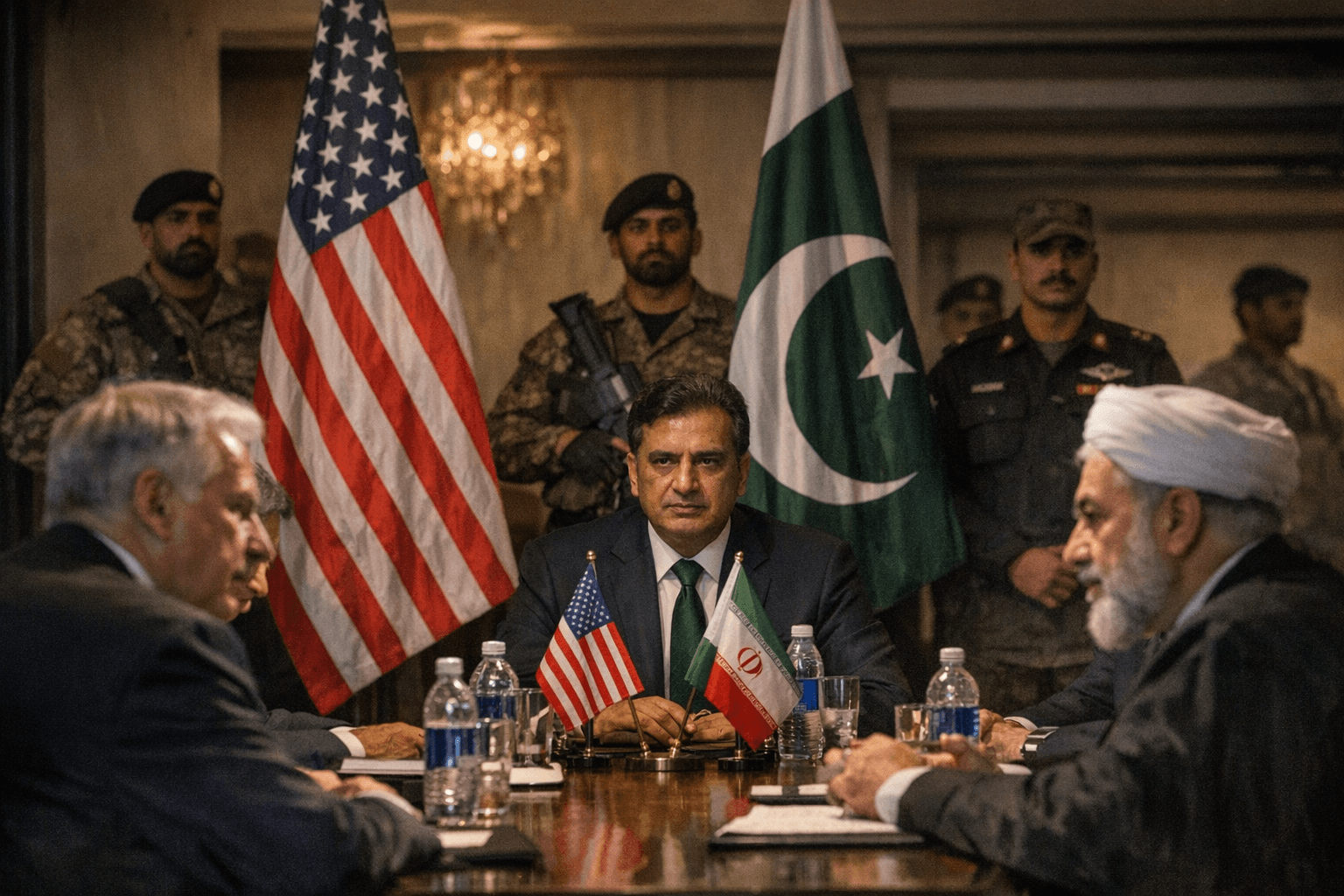
Moeed Yusuf, Pakistan’s former national security adviser, said the window for U.S.-Iran diplomacy was narrowing as Islamabad hosted the first face-to-face talks between the two sides since 2015. The real test is whether both capitals can accept a limited bargain before Lebanon and the Strait of Hormuz push the fragile ceasefire toward collapse.
The talks in Pakistan brought together a heavyweight American delegation led by Vice President JD Vance, with Steve Witkoff and Jared Kushner alongside him, and an Iranian team led by Parliament Speaker Mohammad Baqer Qalibaf and Foreign Minister Abbas Araqchi. By any measure, the meeting was exceptional: it was the highest-level U.S.-Iran contact since the 1979 Islamic Revolution and the first official face-to-face negotiation since the nuclear deal reached in 2015, a pact Washington abandoned in 2018.
The diplomatic off-ramp now looks extremely narrow. Iran said the talks could not even begin without commitments on Lebanon and sanctions, and Qalibaf said Washington had already agreed to unblock Iranian assets and support a ceasefire in Lebanon. That means the next round will not be about a grand settlement but about sequencing: whether the United States can offer limited sanctions relief, asset access or other concrete assurances, and whether Iran can reciprocate with steps that reduce pressure on the ceasefire and calm regional flashpoints.
The Strait of Hormuz sits at the center of that calculation. The waterway is a chokepoint for about 20 percent of global energy supplies, which gives Tehran leverage far beyond the room in Islamabad. President Trump said the United States would begin blockading ships there on April 13 at 10:00 a.m. ET, a threat that raises the cost of failure and leaves room for miscalculation on both sides. If the talks are to resume, both governments will have to step back from actions that turn a negotiation into a military test.
Pakistan’s role is less about imposing a deal than keeping the channel open. Islamabad provided the venue, and the heavy lockdown around the capital showed how rare and sensitive the diplomacy had become. In regional terms, Pakistan can help by offering secure ground for follow-up talks, enabling technical exchanges of documents, and giving both sides a place to continue talking without immediate public capitulation.
Yusuf’s April 6 policy brief mapped the possible trajectories ahead: a ceasefire that holds, escalation triggers that unravel it, and a wider war that could pull in additional countries. The first round in Islamabad did not deliver an agreement, but it did identify the price of failure. If the talks continue, the next concessions will have to be concrete, limited and fast, because the room for another missed round is already shrinking.
This article was produced by Prism’s automated news system from verified source data, official records, and press releases, then run through automated quality and moderation checks before publishing. The system is built and supervised by the people who set the standards it runs under. Read our full AI policy.
Did this article answer your question?


