Pakistan says second round of U.S.-Iran talks still being planned
Pakistan is saying no date is set for a second U.S.-Iran round, even as Asim Munir met Abbas Araghchi in Tehran and channels stayed open.
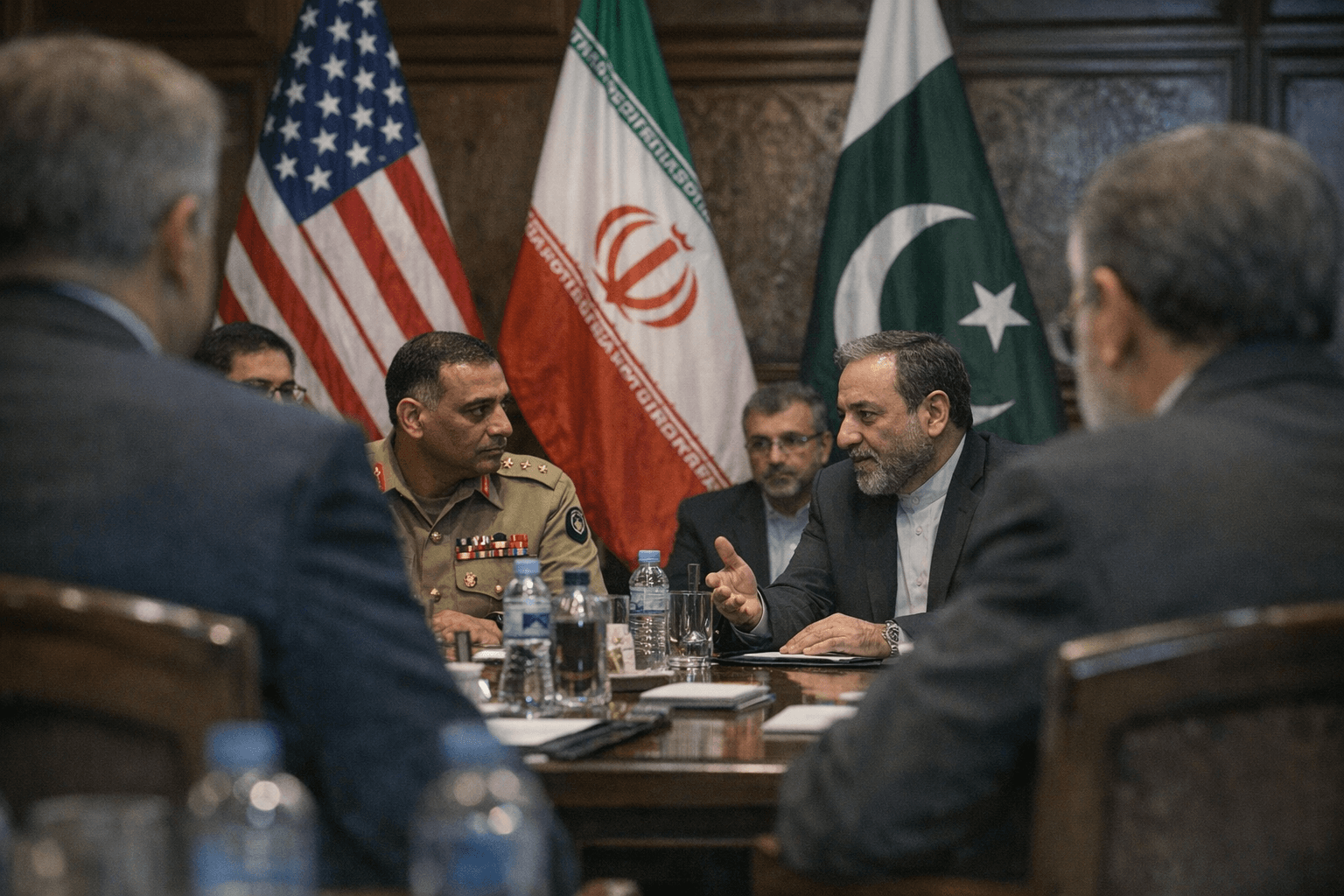
Pakistan is positioning itself as the corridor for a second round of U.S.-Iran talks, but the latest signals still leave open a harder question: is Islamabad building a real back channel, or simply carrying messages while the war and its fallout keep widening.
Pakistan’s foreign ministry said Thursday that no date had been set for the next round, even though nuclear issues were among the subjects under discussion. The statement followed a first round in Islamabad on April 11, 2026, that stretched for about 21 hours and ended without agreement. JD Vance said U.S. officials walked away after Iran would not accept American demands not to develop a nuclear weapon. The White House later said a second round would likely be held in Islamabad, while also making clear that no final decision had been made on the venue, timing or makeup of the delegations. Geneva remained under discussion as well.
The Pakistani role gained weight a day earlier, when Army chief Asim Munir traveled to Tehran and met Iranian Foreign Minister Abbas Araghchi. Iran’s foreign ministry said communication between Tehran and Washington was continuing through Pakistani channels, a sign that Islamabad has become more than a passive host. It is now, at minimum, a conduit that both sides are willing to use when direct contact has become too politically costly.
That does not yet make Pakistan a broker with real leverage. Its influence appears to rest on access, geography and timing: Islamabad can host talks, deliver messages quickly, and keep both Tehran and Washington in the room without forcing either side into the optics of a bilateral meeting. Munir’s trip to Tehran also showed how tightly the military and diplomacy are intertwined in Pakistan’s handling of the crisis, with the army chief taking the lead in a regional opening that now reaches from Islamabad to Tehran.
Both sides have reasons to prefer indirect talks right now. The ceasefire remains under strain, the Strait of Hormuz is still a flashpoint for global shipping, and the war has already jolted markets and the regional economy. In that setting, a Pakistani channel can serve as a pressure valve, allowing each side to test the other without conceding too much publicly.
What would separate real diplomacy from performative signaling is concrete movement: a fixed venue, named delegations, a clear agenda beyond nuclear issues, and a date that sticks. If the next round lands in Islamabad, or even Geneva, with both sides sending empowered negotiators, Pakistan will have proved it can do more than relay messages. If the dates keep slipping, it will look less like a back channel and more like a courier in wartime chaos.
This article was produced by Prism’s automated news system from verified source data, official records, and press releases, then run through automated quality and moderation checks before publishing. The system is built and supervised by the people who set the standards it runs under. Read our full AI policy.
Did this article answer your question?


