Pakistan Shiites Rage Over Khamenei Killing, Straining U.S. Ties
Shiite fury over Ayatollah Ali Khamenei’s killing spilled into Karachi and beyond, forcing Islamabad to balance its U.S. ties against domestic anger.
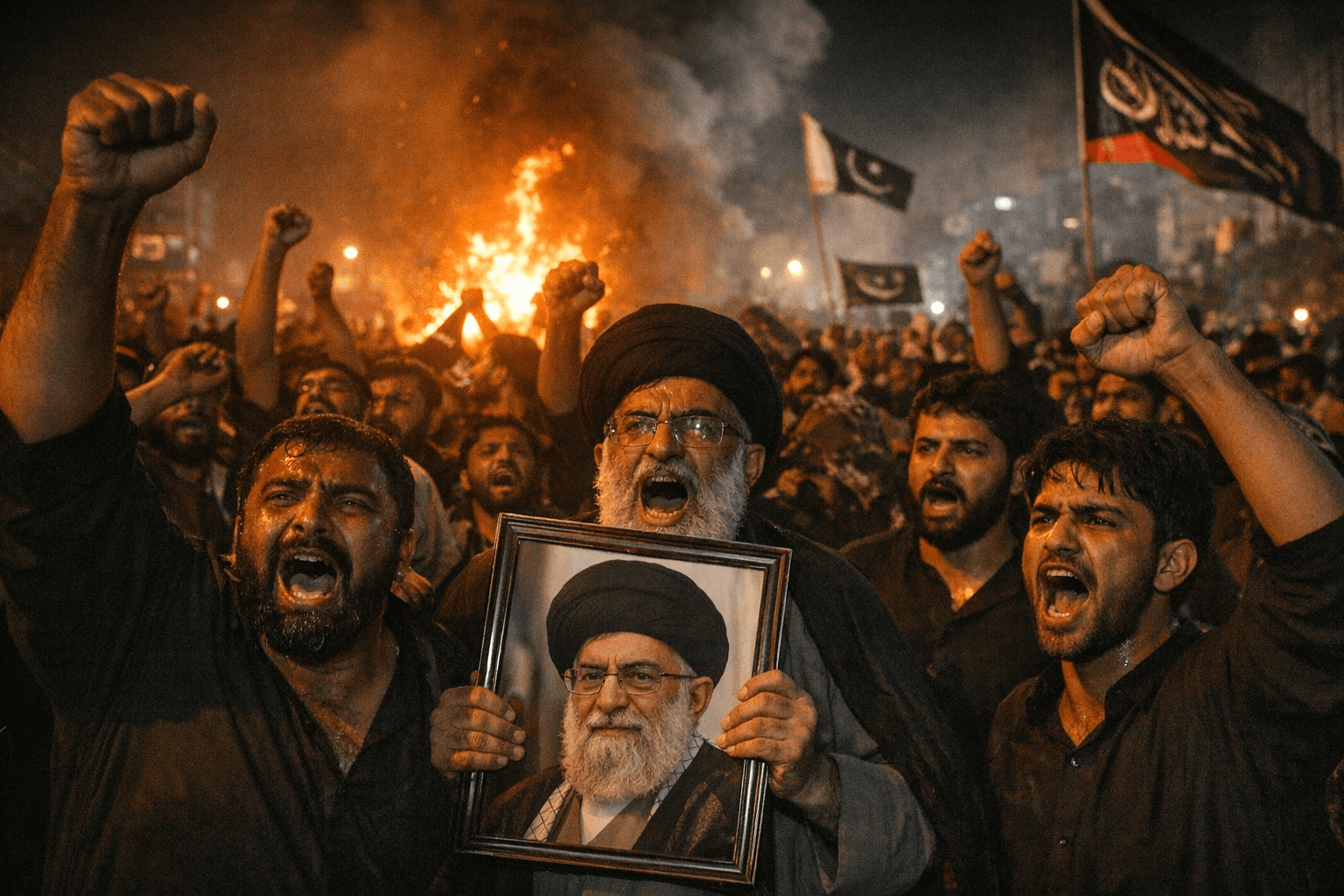
Pakistan’s Shiite minority erupted after the killing of Ayatollah Ali Khamenei in U.S.-Israeli strikes, and the backlash quickly became a test of whether Islamabad can keep its footing between Washington and Tehran. Protesters stormed the U.S. consulate in Karachi and filled streets in other cities, turning a foreign-policy crisis into a domestic security problem for a government already juggling tensions with Afghanistan and pressure to preserve direct channels to both capitals.
The unrest underscored how deeply Khamenei resonated with many Pakistani Shiites, who saw him as a defender of their identity. Pakistan is home to the world’s second-largest Shiite population after Iran. Shiites remain a minority nationwide, but in parts of the north, including Gilgit-Baltistan, they are a majority, giving the anger political weight well beyond a single urban protest.
The violence was not confined to demonstrations. Reporting on the unrest put the nationwide death toll at at least 20, while other accounts placed it at 23 or 26, a range that captured the scale of the backlash and the difficulty of restoring calm. The protests exposed a volatile domestic fault line and complicated Islamabad’s effort to stay neutral while maintaining its alliance with the United States and its broader regional diplomacy.
That balancing act became even more delicate as Pakistan moved into a mediating role in the Iran war. Its diplomacy helped produce a temporary ceasefire on April 8, 2026, after mediation efforts had been described as close to collapse. Pakistan had earlier put forward a 45-day, two-phased ceasefire framework on April 5, while Iran countered with its own 10-point peace plan. The process showed that Islamabad could still move between rival capitals, but only within narrow limits.
Analysts have described Pakistan’s diplomacy as an effort to convert regional turmoil into relevance, yet the country’s leverage remained limited because Tehran had not fully embraced the process. That constraint matters in Islamabad as much as in Washington. Public anger inside the Shiite community narrows the room for any government that hopes to align closely with U.S. or Gulf priorities while claiming to speak for regional stability.
This article was produced by Prism’s automated news system from verified source data, official records, and press releases, then run through automated quality and moderation checks before publishing. The system is built and supervised by the people who set the standards it runs under. Read our full AI policy.
Did this article answer your question?