Pakistani national convicted in Iran-linked plot to kill Trump, Biden and Haley
A Brooklyn jury found 47-year-old Asif Merchant guilty of murder-for-hire and terrorism charges tied to an IRGC-directed plot that named Trump, Biden and Nikki Haley.

A federal jury in Brooklyn on March 6 convicted 47-year-old Pakistani national Asif Merchant of plotting political assassinations in the United States, finding he arranged a scheme prosecutors say was directed by Iran’s Islamic Revolutionary Guard Corps. The Justice Department said Merchant was guilty of “murder for hire and attempting to commit an act of terrorism transcending national boundaries,” and faces the possibility of life in prison.
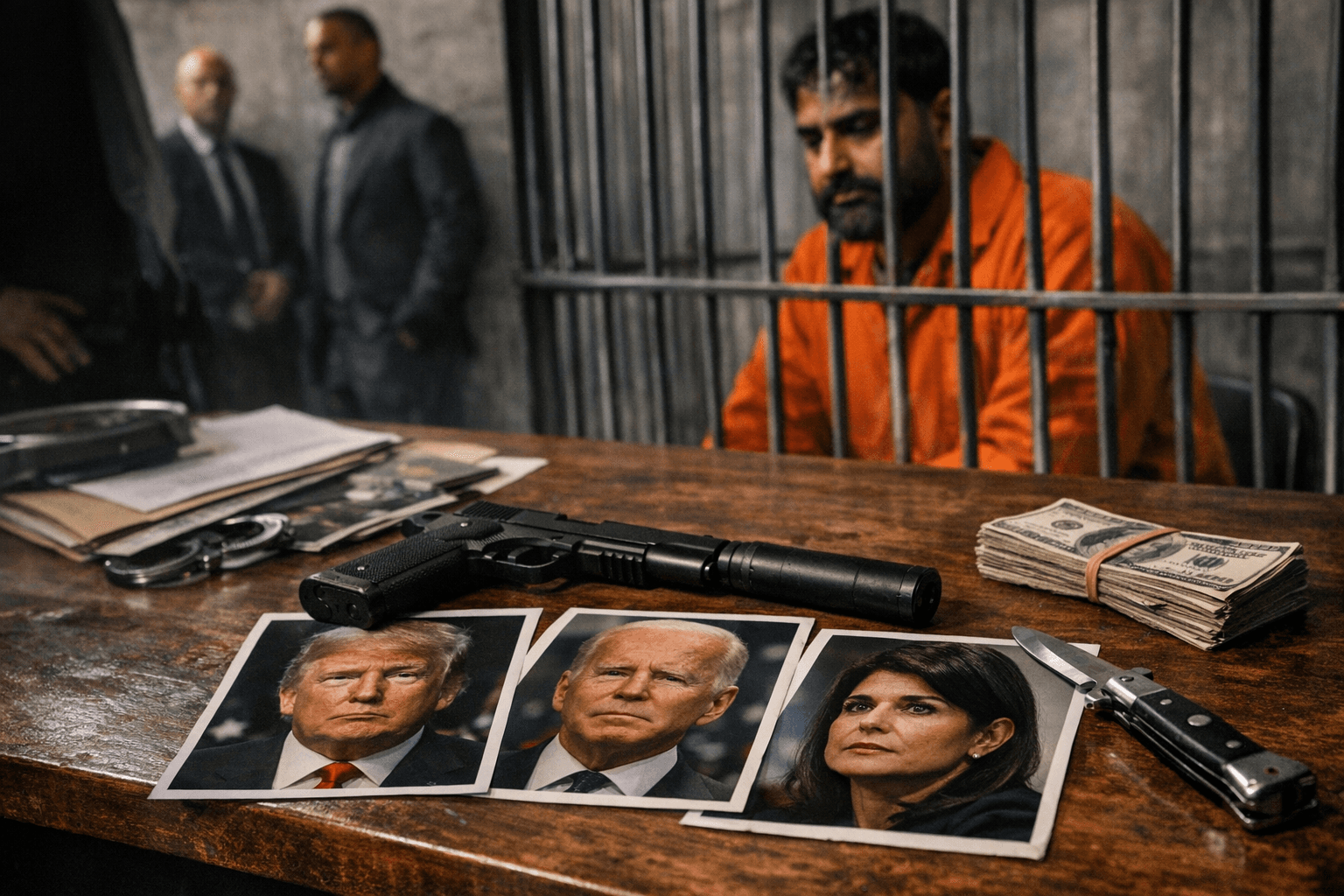
Prosecutors portrayed the case as an IRGC-directed assignment motivated in part by retaliation for the 2020 killing of Iranian commander Qasem Soleimani. U.S. attorneys said the plot had broached the names of then-candidate Donald Trump, President Joe Biden and Nikki Haley as possible targets. Joseph Nocella Jr., the U.S. attorney for the Eastern District of New York, said Iran “enlisted Mr. Merchant to ‘sow mayhem and murder.’”
Court testimony and the government’s timeline show Merchant arrived in the United States in April 2024 after time spent in Iran. In June 2024, he met in New York with men he believed were hired hitmen; those men were undercover federal agents who had been notified after an intermediary Merchant contacted reported him to law enforcement. Federal agents arrested Merchant in July 2024 before he left the country, bringing the alleged plot to a halt.
At trial in late February and early March, Merchant acknowledged in court that he had sought to put an assassination in motion during the 2024 presidential campaign and that he had joined an effort orchestrated by the IRGC. He told the court he acted unwillingly to protect family members in Tehran and that he “had no other option.” Merchant also testified he anticipated being arrested before anyone was killed and said he intended to cooperate with U.S. authorities, stating he had hoped cooperation might help his bid for legal status.
The weeklong trial in the Eastern District of New York was overseen by Judge Eric R. Komitee. Jurors returned a guilty verdict after less than two hours of deliberation. Merchant, who listened through an Urdu interpreter, showed little reaction when the counts were read in court.
Merchant’s lawyer, Christopher Neff, said the defense was “disappointed by the conviction” and that there remained “complex and significant legal issues yet to be decided,” signaling likely post‑verdict motions and appeals. Prosecutors credited interagency coordination for preventing any violence and described the conviction as a counterterrorism success.
The ruling carries immediate national security and diplomatic implications. A conviction tying an assassination scheme to the IRGC sharpens congressional and executive branch scrutiny of Iranian intelligence operations overseas and could harden calls for additional sanctions or targeted measures. Financial markets often react to episodes that raise Middle East risk, with potential near-term volatility in oil prices and gains in defense-related equities, though officials emphasized the plot was disrupted before any attack occurred.
Iran has denied attempting to kill U.S. officials. With sentencing pending and the prospect of appeals, the case is likely to become a touchstone in debates over U.S. counterterrorism posture, immigration vetting for foreign nationals in the United States and the reach of state-directed plots on U.S. soil.
Know something we missed? Have a correction or additional information?
Submit a Tip