Pandemic Viruses Can Jump to Humans Without Evolving First, UC San Diego Study Finds
A UC San Diego analysis in Cell challenges a core assumption in pandemic preparedness: that viruses must adapt before they can infect humans.
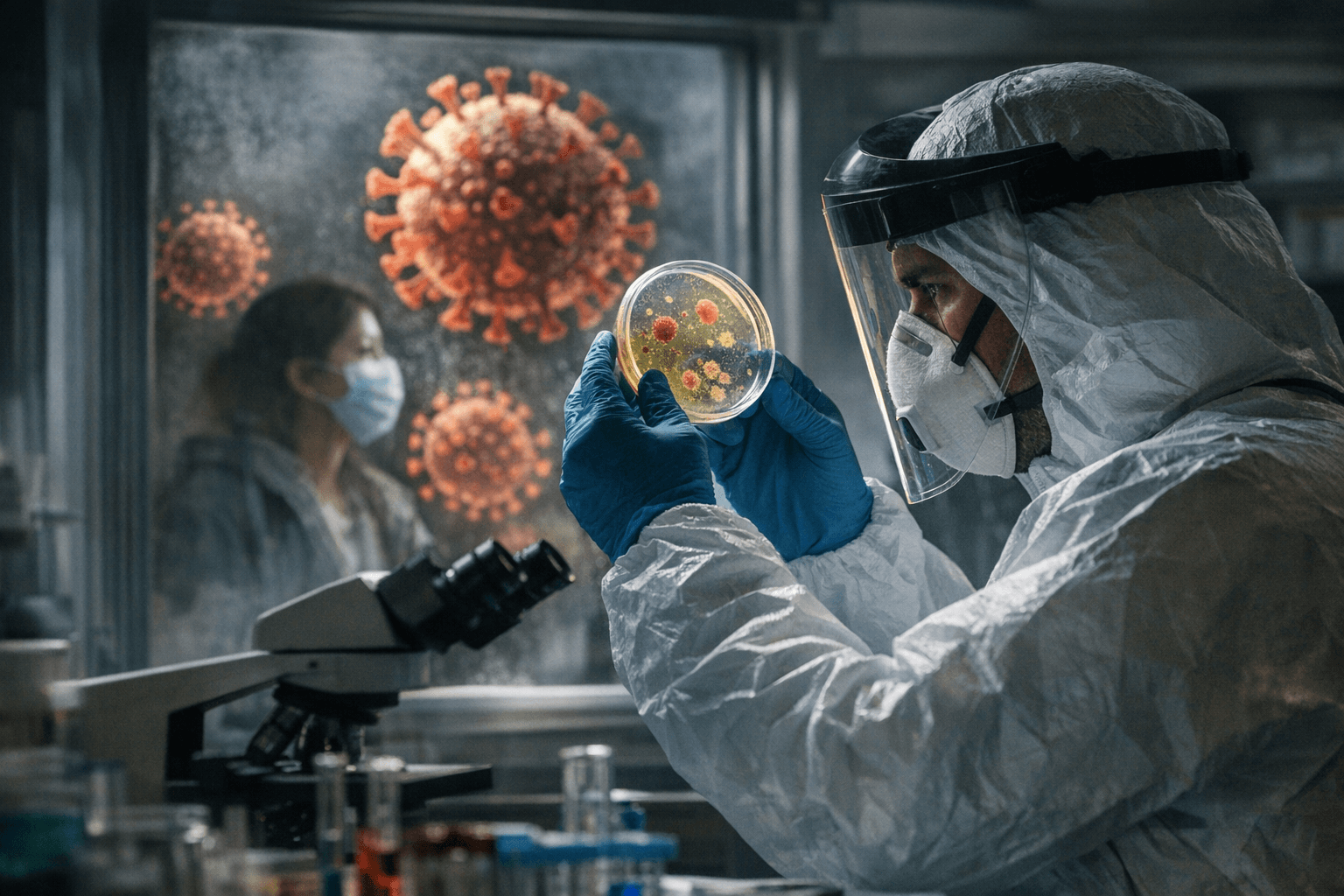
The assumption has long shaped how scientists assess pandemic risk: a virus circulating in animals must accumulate certain mutations before it can successfully infect humans. A new study published in the journal Cell by researchers at the University of California San Diego upends that logic, finding that many of the zoonotic viruses behind history's most devastating epidemics and pandemics crossed into humans without any prior adaptation at all.
The multi-virus evolutionary analysis, published in early March 2026, examined pathogens including strains of influenza A, Ebola and Marburg. The findings suggest that the biological barrier between animal reservoirs and human hosts may be far more permeable than pandemic preparedness models have assumed.
The public health implications are significant. If viruses do not need to accumulate adaptive mutations before spilling over into human populations, then surveillance strategies built around detecting those mutations may be missing the threat entirely. A pathogen could be circulating in wildlife, appear genetically unremarkable, and still be capable of triggering an outbreak the moment it reaches a new host.
Zoonotic spillover events, in which a virus passes from animals to humans, are the origin point of some of the most consequential infectious disease crises in modern history. The 1918 influenza pandemic, the Ebola outbreaks in West and Central Africa, and the emergence of novel coronaviruses all followed that same cross-species pathway. The prevailing scientific framework held that successful spillover required a period of viral evolution, a kind of molecular apprenticeship in which the pathogen gradually acquired the tools to bind to human cells, evade immune defenses, and sustain transmission.
The UC San Diego analysis challenges that framework directly. By conducting a broad evolutionary comparison across multiple virus families, the researchers found evidence that many spillover events occurred without the genetic signatures typically associated with host adaptation. The viruses, in effect, arrived ready.
For communities already bearing the disproportionate burden of emerging infectious diseases, including low-income populations in regions where human-wildlife contact is highest and healthcare infrastructure is thinnest, the finding carries immediate urgency. Pandemic preparedness funding and early-warning systems are often calibrated to detect the slow accumulation of worrying mutations. A threat that does not announce itself that way requires a fundamentally different kind of vigilance.
The research arrives amid a broader wave of scientific output from UC San Diego in early March 2026. Separate institutional work published in the journal Cell Stem Cell examined how human blood-forming stem cells behaved after spending 32 to 45 days aboard the International Space Station, finding metabolic disruptions and the reactivation of dormant genetic elements described as "remnants of ancient viral insertions." Though entirely distinct in subject matter, both studies point toward the same underlying scientific territory: the relationship between viruses, host biology, and the conditions under which that boundary breaks down.
The full author list, methods, and data for the Cell zoonosis study had not been publicly released at time of publication. The journal confirmed the paper's publication in early March 2026. UC San Diego did not immediately respond to requests for comment from lead researchers.
Know something we missed? Have a correction or additional information?
Submit a Tip