Pellet-Based Diet Plus Daily Fruits and Vegetables Keeps Parrots Happy
Experts now recommend a pellet-based foundation with daily fresh fruits and vegetables to give parrots consistent nutrition and reduce picky, seed-driven diets.
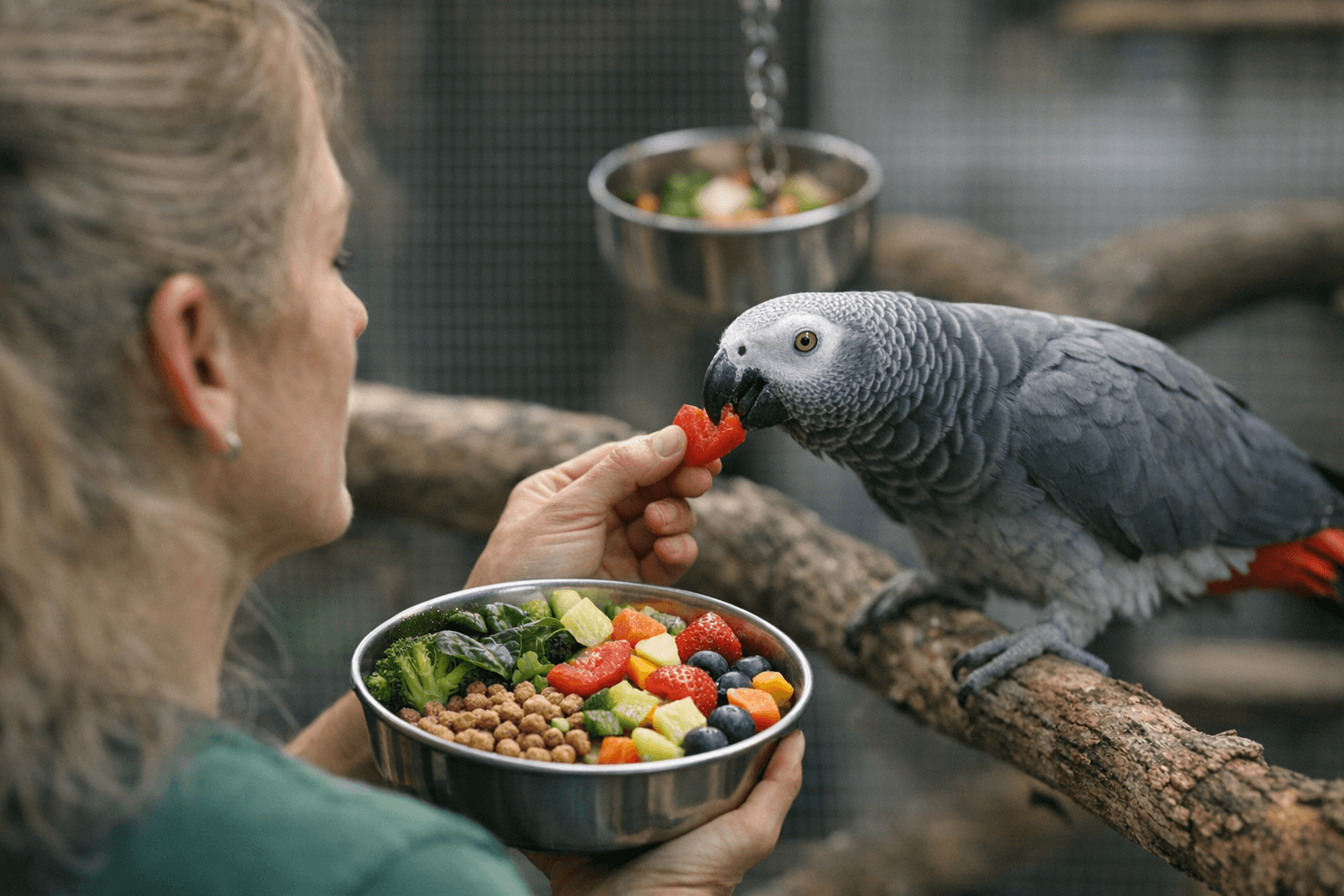
A clear feeding formula is gaining traction among parrot keepers: formulated pellets as the foundation, plus a daily variety of fresh vegetables and a small amount of fruit. The guidance aims to supply consistent essential nutrients, discourage selective eating, and reduce health problems linked to seed-heavy diets.
Petmate and Myrightbird both recommend pellets as the major portion of a parrot’s diet, though their numeric ranges differ. Petmate recommends that 70 to 90% of a parrot’s diet consist of pellet food, arguing that “Incorporating bird pellets into your pet bird’s diet provides a balanced base diet that supports their overall health and well-being.” Myrightbird advises that “Specially formulated pet bird diets. These should always be available in your parrot’s cage and should account for approximately 60-80% of their diet.” Both sources emphasize pellets prevent selective eating and can improve feather quality—Petmate notes that “The best parrot diet can also improve a bird’s feather quality, leading to a more vibrant appearance.”
Vegetables and fruits are the daily supplements to that pellet base. Myrightbird recommends vegetables and greens make up about 15–20% of the diet, and lists spinach, carrots, peas, sweet potatoes, and collard, mustard, or turnip greens as particularly nutritious. Parrots urges variety with carrots, sweet and hot peppers, kale, dandelion, chard, peas, string beans, pumpkin, sweet potatoes and then zucchini, tomatoes, fennel, corn, and okra. For fruit Myrightbird and Allkindsvet both advise keeping fruit to roughly 5% of daily intake; Myrightbird points to apples, bananas, berries, grapes, papaya, and melon, while Allkindsvet highlights mangoes, pineapple, grapefruit, and star fruit. Allkindsvet cautions that “Fruit is very sweet and should only be fed in moderation.”
Seeds, nuts, treats and enrichment items require careful limits. Myrightbird says “Seeds, which shouldn’t account for more than 10% of your bird’s diet,” while Allkindsvet recommends avoiding seeds altogether except for sprouted seeds, which “are packed with nutrients, as long as your bird eats the sprouts as well as the seed portion.” Parrots recommends a “good quality seed mix” with a low percentage of sunflower seeds and suggests millet sprays for foraging. Myrightbird adds that treats should be small—“Just like humans, parrots love the occasional tasty treat. Opt for healthy items like unsalted nuts, and be sure that treats account for no more than 5% of your bird’s diet.” Parrots warns to avoid peanuts because “Peanuts should be avoided as they can harbor Aspergillus sp. fungus, which can be deadly to your parrot,” and to keep nuts fresh and mold-free.
Preparation and safety matter as much as proportions. Kaytee advises: "Offer fresh produce straight from your garden or a farmer's market. Fresh frozen or canned foods packed in water (no oils, salt, or seasonings) are also good options. Avoid fresh supermarket produce that's polished with waxes or sprayed with preservatives." Kaytee also recommends serving cooked produce “then mashed or broken into small crumbles via a food processor. Skip the butter, oil, and seasonings.” For clinical follow up, Kaytee urges owners to "Schedule annual check-ups with an avian veterinarian to keep your pet healthy."
What this means for your parrot is straightforward: move pellets toward the majority of daily calories, add a rotating selection of chopped or steamed vegetables and a little fresh fruit, limit seeds and treats, and prioritize safe preparation. Consult your avian vet or a trusted avian retailer for species-specific needs and to tailor pellet formulas—Kaytee notes it “offers formulas created with the appropriate nutrient levels for specific parrot types.” Follow these steps and you’ll give your feathered companion a balanced diet that supports health, feather quality, and natural foraging behavior.
Know something we missed? Have a correction or additional information?
Submit a Tip