Pentagon Confirms B-52 Bombers Begin Flying Missions Over Iran
B-52 bombers flew over Iranian territory for the first time in the war, a shift Pentagon officials said signals Iran's air defenses have been significantly degraded.
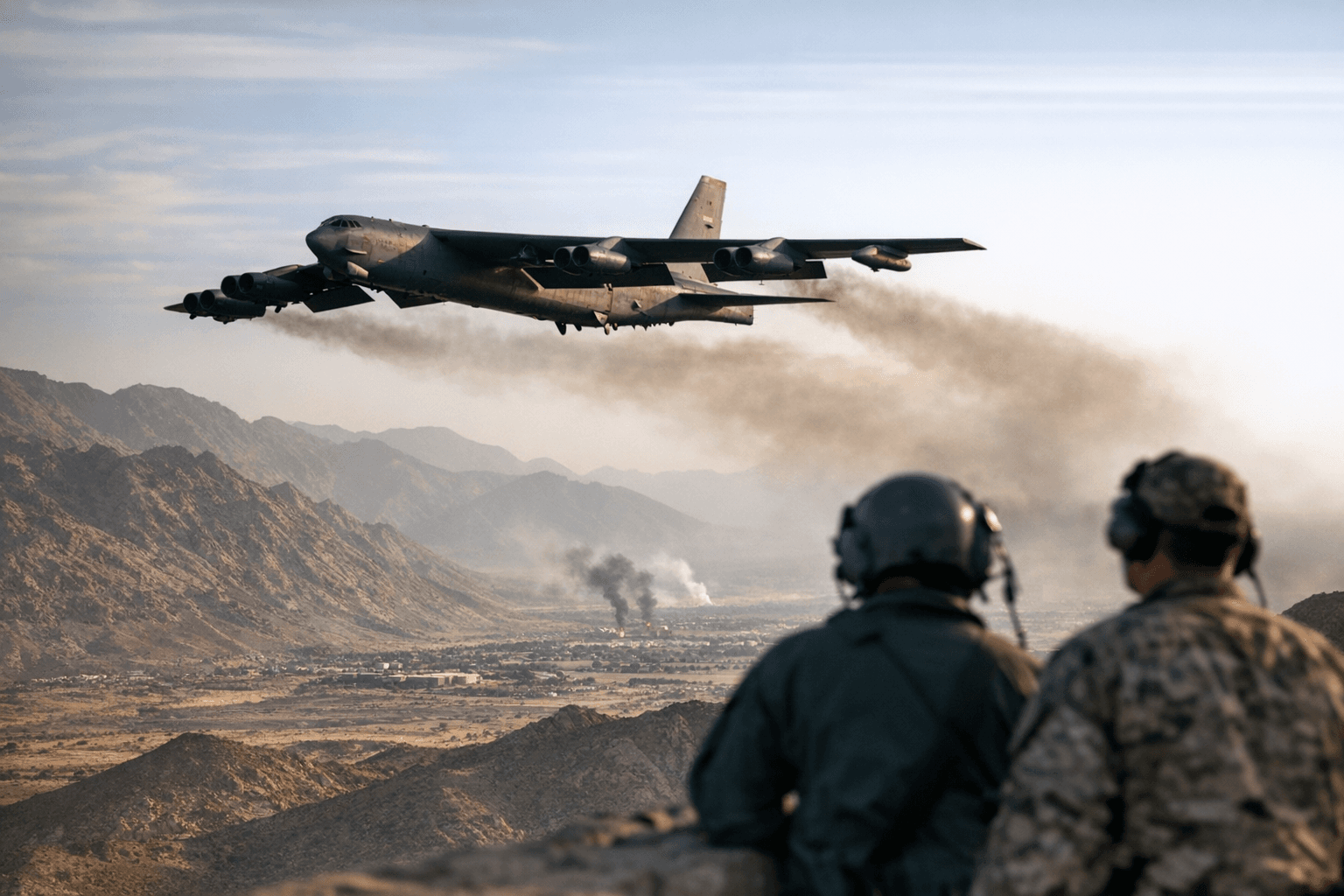
The United States began flying B-52 bomber missions over land in Iran for the first time since the war began, the chairman of the Joint Chiefs of Staff confirmed Monday, a tactical shift that marks a significant escalation in the air campaign and reflects American confidence that Iranian defenses are crumbling beneath the weight of sustained bombardment.
Gen. Dan Caine announced the change at a Pentagon briefing alongside Defense Secretary Pete Hegseth. The ability to fly the massive strategic bombers directly over Iranian territory, Caine said, "suggests that Iran's air defenses have been significantly degraded." Until now, B-52s operating against Iran had delivered their payloads differently: launching AGM-158 JASSM stealthy cruise missiles from outside Iranian airspace, likely over Iraq or another allied Arab country, keeping the aircraft well beyond the reach of Iranian surface-to-air systems.
The mission profile has now changed materially. With bombers flying over land rather than releasing standoff weapons from a safe distance, the United States is signaling it can operate inside Iranian airspace in at least some areas. The War Zone reported that B-52s had been carrying out cruise missile strikes with JASSMs over the preceding days, and remains of an AGM-158 JASSM were reportedly downed by Iranian air defenses over Markazi Province, indicating those defenses had not been entirely neutralized. But Caine's overflight announcement represents a different order of risk acceptance on the U.S. side.
The logistical groundwork for higher sortie rates was laid weeks earlier. B-52 and B-1 bombers arrived at RAF Fairford in England on March 9, forward deploying from U.S. bases to cut transit time and reduce wear on the fleet. Forward basing at Fairford and at Diego Garcia, analysts noted, would drastically increase the number of missions the bomber force could sustain compared with flying round trips from the continental United States, a factor that becomes more significant as operations shift from standoff launches to direct strikes over Iran.
Caine framed the current phase of the air campaign as a strategic chokehold. U.S. warplanes are now focused on "interdicting and destroying the logistical and supply chains that feed" Iran's missile, drone and naval ship building facilities, he said, with the explicit goal of "choking off the country's ability to replace munitions destroyed in thousands of American bombing runs." He did not offer a timetable for how much longer the war would last.
Hegseth, who had returned from an unannounced visit to U.S. troops at bases across the Middle East over the weekend, was direct about the remaining threat. After a month of joint U.S.-Israeli strikes, Iran still retains the ability to launch missiles, he acknowledged. His response to that reality was characteristically blunt: "They will shoot some missiles; we will shoot them down."
The defense secretary described a campaign gaining momentum rather than approaching a ceiling. "I witnessed urgency to finish the job," Hegseth told reporters, saying the United States was "closer than ever before to winning." He added: "We have more and more options, and they have less." Hegseth and Caine had not taken questions from reporters since March 19.
The broader costs of the conflict were visible in the backdrop of Monday's briefing. The Trump administration has been working to contain the economic fallout of a war that has disrupted global markets and sent U.S. gas prices surging. The introduction of B-52s into Iranian airspace, and the grinding targeting of Iran's defense-industrial base, suggest Washington is betting that pressure on Tehran's munitions supply lines will erode its ability to sustain the fight before those economic pressures force a political reckoning at home.
This article was produced by Prism’s automated news system from verified source data, official records, and press releases, then run through automated quality and moderation checks before publishing. The system is built and supervised by the people who set the standards it runs under. Read our full AI policy.
Did this article answer your question?


