Pentagon Good Friday Service Excludes Catholic Mass, Sparking Religious Bias Concerns
An internal Pentagon email directed more than 3,500 employees to a Protestant-only Good Friday chapel service, with no Catholic liturgy offered on one of Christianity's holiest days.
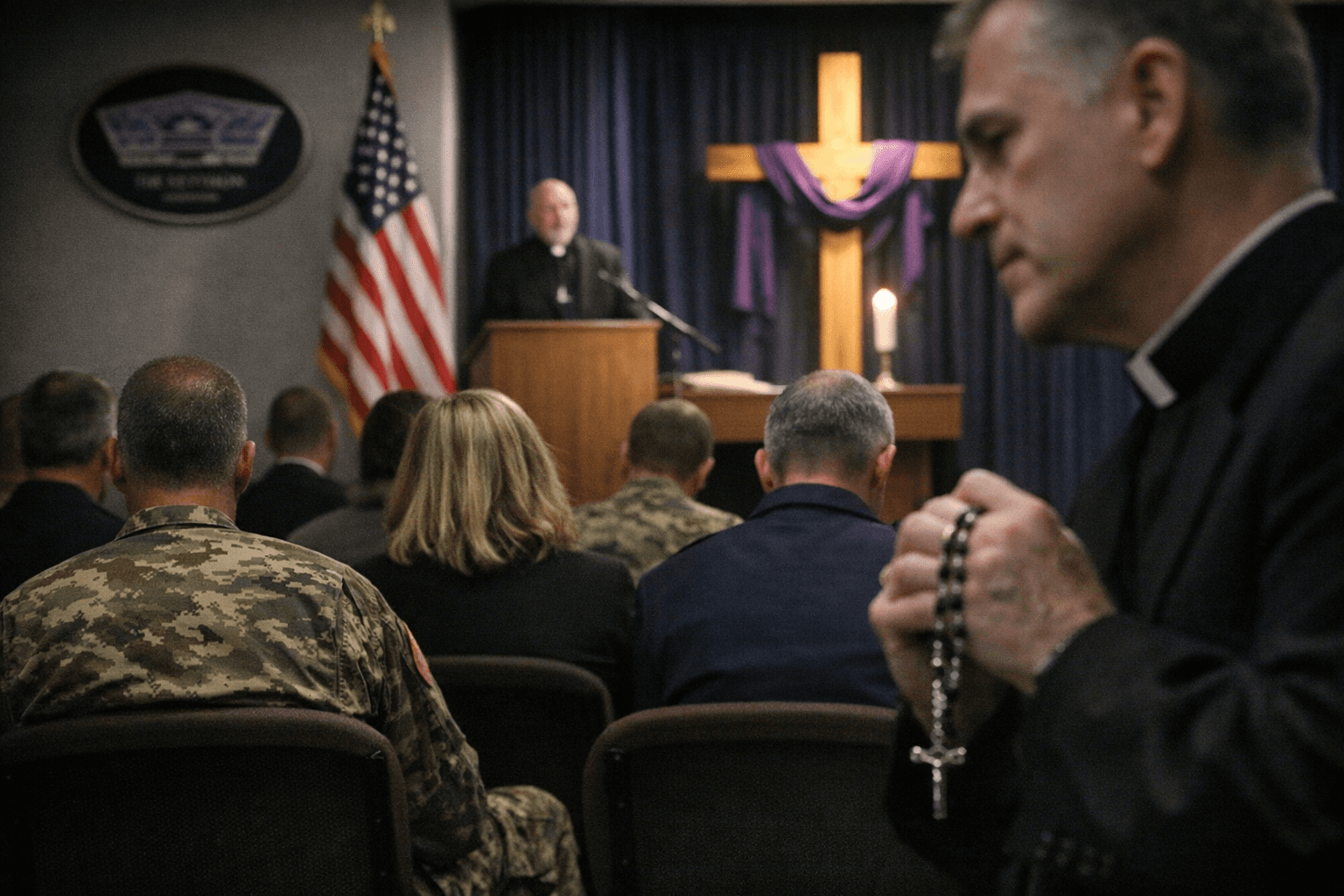
An internal Air Force email sent to more than 3,500 Pentagon employees on Good Friday directed staff to a Protestant-only chapel service, with no Catholic observance scheduled, igniting a fresh round of criticism over Defense Secretary Pete Hegseth's stewardship of religious life inside the nation's military headquarters.
The email, obtained by HuffPost reporter Jennifer Bendery, was blunt in its framing: "Just a friendly reminder: There will be a Protestant Service (No Catholic Mass) for Good Friday today at the Pentagon Chapel." When Bendery asked whether a separate Catholic service had been arranged, a Pentagon spokesperson confirmed there had not. "The Protestant service is the only service scheduled in the Pentagon chapel today," the spokesperson said. At least one Defense Department employee who shared the email reacted with open frustration. "I guess so the Catholics know their kind ain't welcome," the employee told HuffPost anonymously. "It's so ridiculous."
The omission carried particular weight given the liturgical significance of the day. Catholics do not celebrate a traditional Mass on Good Friday; instead, they observe a distinct rite centered on the Passion of Christ, a solemn ceremony involving the veneration of the crucifix and the reception of Communion. Critics argued the chapel announcement treated those two observances as interchangeable, effectively sidelining Catholic service members and employees at the Pentagon on one of the most sacred days in the Christian calendar.
The Pentagon Memorial Chapel, where the service was held, is designated as a 24-hour interfaith space available to all employees for prayer and reflection. Its use for a single denominational service, without a corresponding Catholic rite, raised immediate questions about whether the allocation of chaplain resources reflected the religious composition of the building's roughly 23,000 daily workers.
The episode lands against a backdrop of mounting concern about Hegseth's approach to religion inside the Pentagon. The Washington Post reported in recent weeks that Hegseth has been hosting monthly evangelical Christian prayer services in the building. Last May, he brought Brooks Potteiger, his Tennessee pastor and spiritual advisor, to lead one such gathering, during which Potteiger described President Donald Trump as a divinely appointed leader. Hegseth said at the time he wanted to make the monthly services a permanent tradition.
Civil liberties advocates and former military officials have argued those activities cross the line from personal faith expression, which federal law protects, into official government endorsement of a specific religious tradition, which the Establishment Clause prohibits. The Good Friday announcement added specificity to what had previously been a more diffuse argument: here was a single day on which the Pentagon's only scheduled religious event was explicitly Protestant.
The controversy also arrives as Hegseth faces intensifying scrutiny over a wave of firings and removals of senior military officers, which critics have characterized as a politically driven purge. Religious-freedom organizations and members of Congress are expected to press the Department of Defense for a clearer accounting of its religious-accommodation policies, particularly whether the Good Friday announcement reflected a one-time scheduling gap or evidence of a deeper imbalance in how the Pentagon serves a force that includes Catholics, Jews, Muslims, and members of other faiths in significant numbers. How the department responds will likely determine whether the incident remains a single news cycle or becomes the basis for formal congressional oversight.
This article was produced by Prism’s automated news system from verified source data, official records, and press releases, then run through automated quality and moderation checks before publishing. The system is built and supervised by the people who set the standards it runs under. Read our full AI policy.
Did this article answer your question?