Pentagon identifies six U.S. service members killed after Kuwait drone strike
Pentagon named six service members killed after a March 1 drone strike at a Kuwaiti port and said the deaths stem from Iranian counterattacks; families and communities face long-term consequences.
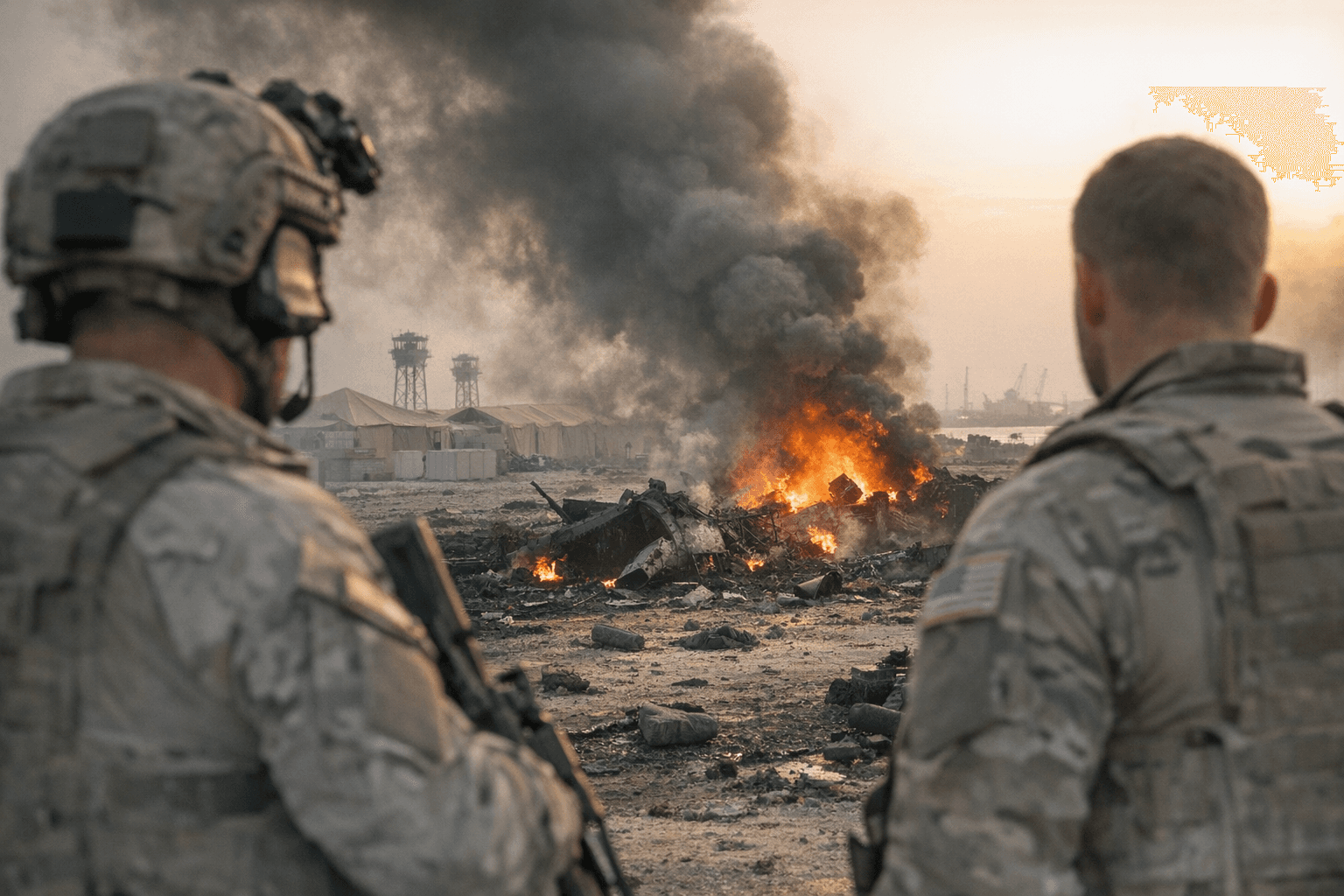
The Pentagon on Wednesday identified six U.S. service members who were killed in the opening days of the military campaign against Iran, saying the deaths stem from Iranian counterattacks that followed U.S. and Israeli strikes. Four of the service members died when a drone struck an operations or command center at a civilian port in Kuwait on March 1; two additional officers were identified in a subsequent release.
The four killed at the port were Capt. Cody A. Khork, 35, of Winter Haven, Florida; Sgt. 1st Class Noah L. Tietjens, 42, of Bellevue, Nebraska; Sgt. 1st Class Nicole M. Amor, 39, of White Bear Lake, Minnesota; and Declan J. Coady, 20, of West Des Moines, Iowa, listed by officials as having been posthumously promoted to sergeant from specialist. Two other service members later named by the Defense Department were Chief Warrant Officer 3 Robert Marzan, 54, of Sacramento, and Maj. Jeffrey O'Brien, 45, of Indianola, Iowa. Photographs provided to the Pentagon by the U.S. Army Reserve accompanied the identifications.
Officials described the site that was struck as an operations or command center located at a civilian port in Kuwait, variously reported with the place-name spellings Port Shuabia, Port Shuaiba, and Port Shuaiba. The releases said the four killed in the port strike were Army Reserve personnel who performed logistics and sustainment work in support of deployed forces. Local and military records differ on administrative and operational affiliations: some documents list the reservists as assigned to the 103rd Sustainment Command in Des Moines, Iowa, while other military sources indicate they were serving with the 1st Theater Sustainment Command based at Fort Knox, Kentucky. The Pentagon said it will clarify unit assignments as it completes its notifications to families.
The casualty announcements come after a weekend of escalating strikes and counterstrikes. U.S. and allied strikes on Iran early in the campaign prompted Iranian missile and drone launches across the region, including attacks on Israel and targets in Gulf countries that host U.S. forces. The Defense Department characterized the deaths as the result of those Iranian counterattacks; officials said investigations into the circumstances of the strikes remain ongoing.
The human toll reaches beyond the military chain of command. Kentucky Governor Andy Beshear urged the nation to support families directly affected, saying, "America, let’s join together and pray for the families of the now six soldiers killed in attacks by Iran, including those based out of my home state, Kentucky. Let’s wrap our arms around them during this difficult time." Local communities in Iowa, Minnesota, Nebraska, Florida and California are now preparing to receive grieving relatives and fellow service members.
Public health and community supports will be tested in the weeks ahead. Survivors and families of the fallen face acute needs for grief counseling, benefits navigation and long-term mental health care, while military medical systems and local health providers must manage the surge in demand for crisis services. The deaths also raise equity questions: reserve and National Guard members often come from smaller communities with limited mental health and social services, and those communities frequently lack the resources to absorb sudden, high-profile losses without federal assistance.
The Pentagon said additional details, including formal unit clarifications and operational findings, will be released as notifications conclude and investigations continue. A regional casualty figure cited in some reports, three killed in the United Arab Emirates and one each in Kuwait and Bahrain, remains ambiguous and is under verification by defense and host-nation authorities.
Know something we missed? Have a correction or additional information?
Submit a Tip

