Pentagon Preparing Ground Operation Options Inside Iran, Officials Say
Pentagon planners drew up weeks-long ground operation options for Iran as 82nd Airborne paratroopers and roughly 5,000 Marines converged on the Persian Gulf region, with no presidential order yet issued.
Pentagon planners drew up a menu of ground operation options that would send American forces into Iran for potentially weeks at a time, U.S. officials said Friday, as thousands of paratroopers and Marines converged on the Persian Gulf in a military buildup that is rapidly expanding the options available to President Donald Trump in the month-old conflict with Tehran.
The scenarios ranged from targeted special operations raids to prolonged infantry operations aimed at seizing or degrading specific Iranian military or energy infrastructure. One official familiar with the deliberations said the options were being developed to "ensure we have the capability to seize or neutralize specific targets if directed." No authorization order has been issued, and Trump told reporters he was not planning to send ground troops anywhere at this time. White House press secretary Karoline Leavitt echoed that framing, saying the preparations were intended to give the commander in chief "maximum optionality."
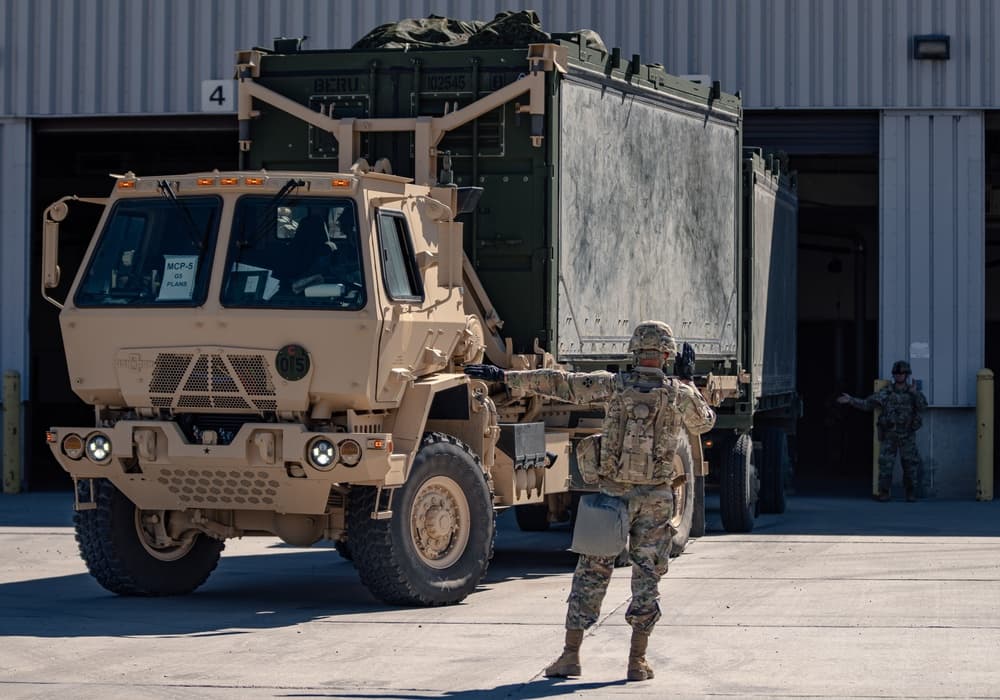
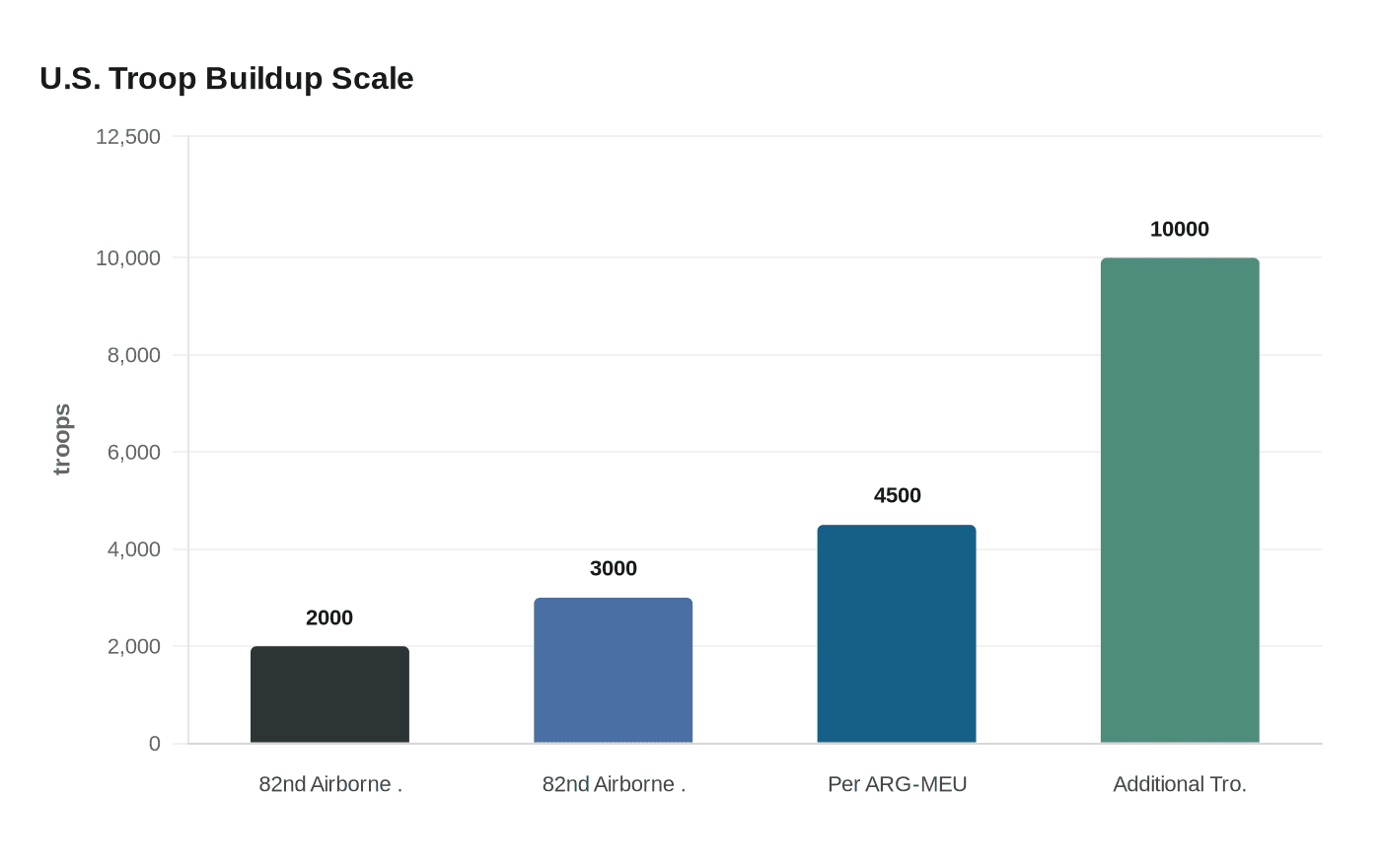
The gap between that public caution and the operational posture on the ground has narrowed sharply. Between 2,000 and 3,000 paratroopers from the 82nd Airborne Division's Immediate Response Force, a brigade-level element designed to mobilize anywhere in the world within 18 hours, received written deployment orders to the Middle East. The contingent includes two battalions of roughly 800 soldiers each and is accompanied by the division's commander, Maj. Gen. Brandon Tegtmeier. Separately, the Pentagon was reported to be weighing the dispatch of up to 10,000 additional ground troops, a force that would include infantry and armored vehicles.

At sea, two Amphibious Ready Groups are closing in on the CENTCOM theater. The USS Tripoli, an America-class assault ship carrying the 31st Marine Expeditionary Unit, departed Sasebo, Japan, on March 13 and reached Diego Garcia by March 23. The USS Boxer, a Wasp-class vessel with the 11th Marine Expeditionary Unit embarked, had its scheduled Indo-Pacific deployment accelerated and rerouted toward the Persian Gulf. Each ARG-MEU carries approximately 4,500 Marines and sailors. Combined with the 82nd Airborne deployment, U.S. officials estimated the buildup could position 6,000 to 8,000 American ground troops in close proximity to Iranian territory.
Internal Pentagon conversations, according to officials familiar with the planning, covered logistics, sustainment chains, casualty projections and the handling of any captured Iranian soldiers or paramilitary operatives, including the question of where detainees would be sent. Officials acknowledged that operations deep inside Iran carry substantially elevated risks of American casualties and the potential for wider regional escalation across a theater already inflamed by four weeks of air and missile strikes.
Among the scenarios under examination was a possible operation against Kharg Island, a five-mile strip of land in the Persian Gulf that processes approximately 90 percent of Iran's oil exports. Seizing or neutralizing the island would represent a devastating economic blow to Tehran but would require a sustained amphibious or airborne assault far inside Iranian-controlled territory. The scenario illustrates the scope of what is on the table even as Trump has publicly distanced himself from any ground commitment.
The current conflict began roughly one month ago when U.S. and Israeli strikes widened hostilities with Tehran. Since then, the United States has fired hundreds of Tomahawk cruise missiles and accelerated personnel movements across the region. Iran, meanwhile, rejected a Trump administration proposal to end the war, laying out five conditions of its own, a sign that diplomatic off-ramps remain narrow even as military planners prepare for the next phase. If Trump authorizes even a limited ground action, it would mark the most consequential expansion of the conflict yet, drawing congressional scrutiny, shaking regional alliances and confronting the American public with the prospect of U.S. troops in combat on Iranian soil for the first time in history.
This article was produced by Prism’s automated news system from verified source data, official records, and press releases, then run through automated quality and moderation checks before publishing. The system is built and supervised by the people who set the standards it runs under. Read our full AI policy.
Did this article answer your question?