Pentagon Seeks Expanded Military Access to Greenland Amid Local Opposition
The Pentagon wants access to three new military areas in Greenland beyond its sole base at Pituffik, as local residents push back against an expanding U.S. footprint.
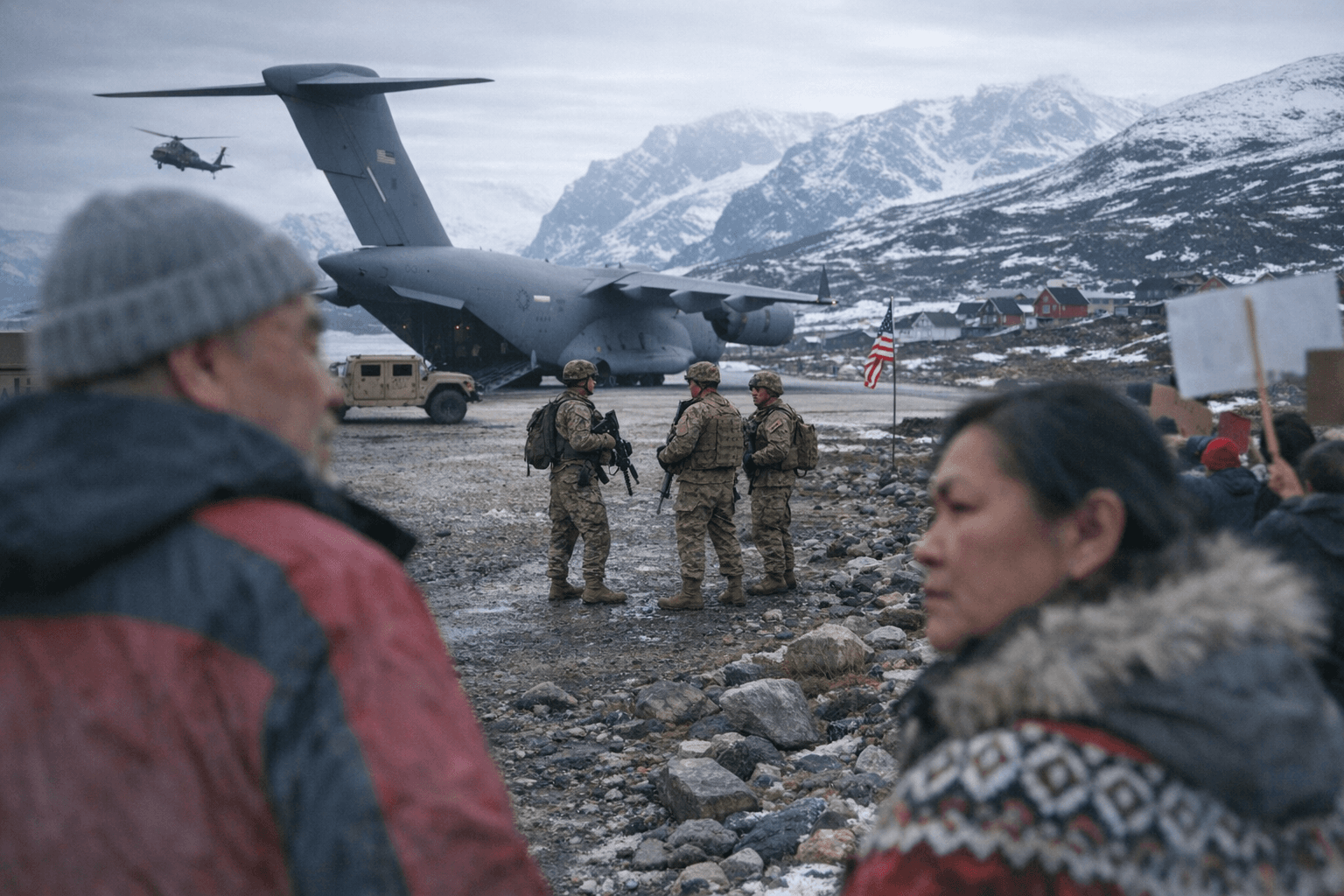
The United States military is in active negotiations with Denmark to establish access to three additional defense areas on Greenland, moving to extend its Arctic footprint well beyond Pituffik Space Base, the only American military installation currently on the island.
Gen. Gregory Guillot, commander of U.S. Northern Command, disclosed the negotiations during testimony before the Senate Armed Services Committee on March 19, 2026 in Washington. "We have three areas that we'd like to negotiate with Denmark and Greenland to see if we could expand the defense areas from Pituffik, where we are now, into these other areas, which would help our homeland defense mission," Guillot told lawmakers.
Pituffik Space Base, in the northern part of Greenland, provides significant space capability but limited capacity for fighters and tankers, Guillot said. The expansion would address that gap directly. NORTHCOM is seeking locations to increase naval access and special operations capabilities on the island. Analysts say potential sites could include Narsarsuaq in the south, Kangerlussuaq in the southwest, and areas near Pituffik, all of which retain strategic infrastructure such as airfields or deep-water ports dating back to Cold War-era U.S. military presence.
The talks are being led by State Department and White House officials, though the content is closely coordinated with U.S. defense staff. The framework for any expansion is the long-standing 1951 defense agreement between the United States and Denmark, which Guillot described as "very favorable to our operations or potential operations in Greenland." The agreement was amended in 2004 to reflect Greenland's changed status from colony to self-governing territory, with all three flags now flying over Pituffik.
Guillot characterized the ongoing discussions as cooperative, but the picture on the ground in Greenland is more complicated. Opinion polls have consistently shown that Greenlanders overwhelmingly oppose U.S. control of the island, while a strong majority support independence from Denmark. Thousands of Greenlanders marched in Nuuk in what the Greenlandic government described as the largest protest in the country's history earlier this year. Greenlandic Business Minister Naaja Nathanielsen described Trump's threats as "devastating," saying an occupation would mean "the destruction of our culture."
The negotiations came after President Trump vowed to take over Greenland "the easy way" or "the hard way," arguing it was vital for American security in an Arctic region where Russia and China are competing for military and commercial dominance. Alongside the push for new areas, NORTHCOM is also working to repair and update infrastructure at Pituffik itself, where the decades-old installation has suffered "accelerated wear and tear" due to harsh Arctic conditions.
In Nuuk, local residents told reporters they were glad that initial meetings between Greenlandic, Danish and American officials had taken place, but suggested the talks left more questions than answers. For a self-governing territory of just 57,000 people, the prospect of a significantly larger American military presence sits uneasily alongside a population that has spent years asserting its right to chart its own future.
This article was produced by Prism’s automated news system from verified source data, official records, and press releases, then run through automated quality and moderation checks before publishing. The system is built and supervised by the people who set the standards it runs under. Read our full AI policy.
Did this article answer your question?