Permits, federal notices and lease sales shape North Slope development
Federal permits, Federal Register notices and lease-sale law together set the tempo for North Slope projects — from exploration pads to export terminals — and court rulings, IRA mandates and BOEM notices will shape timelines.
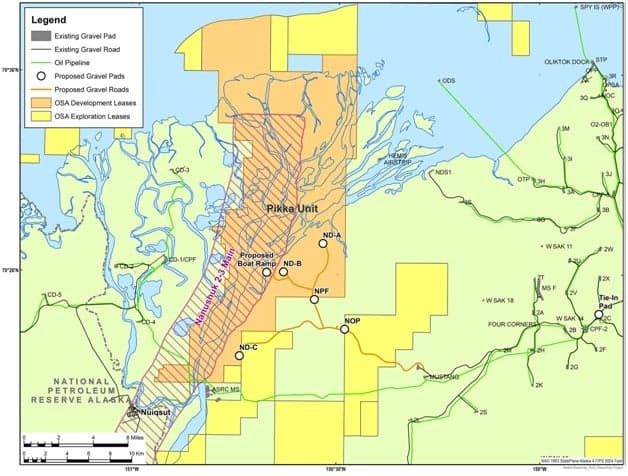
1. Layered permitting framework
"Development on the North Slope — from exploration wells and gravel pads to pipelines and export terminals — depends on a layered federal, state and local permitting framework." That single sentence frames every project: onshore activity typically needs state permits and municipal approvals, while federal review (BLM, DOI, NEPA) often controls whether and when ground‑disturbing work can proceed. For larger projects — pipelines or export facilities that cross federal lands or touch federally managed waters — coordination between agencies becomes decisive for schedule and scope.
2. Key federal actors and where they matter
The Department of the Interior and its bureaus are central: BOEM manages Outer Continental Shelf (OCS) leasing and notices, while the Bureau of Land Management oversees onshore leasing and land-availability determinations that affect North Slope parcels. The Environmental Protection Agency also plays a role offshore — the EPA issued the Final 2023 GMG290000 Outer Continental Shelf General Permit for the Western and Central OCS on May 11, 2023 — and the Department of Justice (Attorney General) can be pulled into antitrust review for certain coal leases. Understanding which agency exercises jurisdiction over a given footprint (onshore pad vs. offshore OCS tract) is the practical first step for any North Slope developer.
3. Federal Register postings and their legal character
"The documents posted on this site are XML renditions of published Federal Register documents. Each document posted on the site includes a link to the corresponding official PDF file on govinfo.gov." FederalRegister.gov also cautions: "This prototype edition of the daily Federal Register on FederalRegister.gov will remain an unofficial informational resource until the Administrative Committee of the Federal Register (ACFR) issues a regulation granting it official legal status." Practically, that means developers, Tribal governments and borough attorneys should verify notices against the official PDF on govinfo.gov before treating a posting as the operative legal notice.
4. BOEM’s recent Federal Register slate (Jan–Feb 2026)
BOEM published multiple OCS notices in early 2026 that should be on North Slope planners' radar: 91 FR 3534 and 91 FR 3537 (calls for information and nominations for Central and Southern California OCS, both dated 1/27/2026); 91 FR 3923 (Request for Information and Interest: Commercial Leasing for Outer Continental Shelf Minerals Offshore Alaska, 1/29/2026); 91 FR 4606 (Oil and Gas Lease Sale: Cook Inlet OCS, One Big Beautiful Bill Act Lease Sale 1, 2/02/2026); 91 FR 5251 (Gulf of America OCS: Lease Sale 2, 2/05/2026); and 91 FR 8269 (Notice of Availability for Gulf of America Lease Sale 3, 2/20/2026). While several of these concern other regions, 91 FR 3923 and the Cook Inlet notice are explicitly Alaska‑adjacent and signal BOEM activity that can intersect with regional energy plans and federal coordination.
5. BOEM docket detail to track for legal steps
BOEM filings appear across Federal Register cycles — for example, one BOEM document is recorded as Docket No. BOEM-2025-0020 with Document Citation 90 FR 49242, Document Number 2025-19780, published 11/04/2025 (page 49242). Those docket identifiers and document numbers matter: they are how agencies and stakeholders file comments, challenge procedures, and follow administrative records. When contesting a sale or seeking to intervene, parties cite these exact docket and document numbers in filings.
6. Lease sales, the IRA and litigation that changed practice
BOEM’s timeline shows the law-and-court dynamic that shapes sale timing. As recorded: on Sep. 14, 2022 BOEM accepted bids for Lease Sale 257 "to comply with the IRA," and on Sep. 15, 2022 BOEM filed to dismiss a NEPA challenge, arguing NEPA only requires EISs for "major federal actions" and that with the passage of the IRA, Lease Sale 257 became nondiscretionary. The D.C. Circuit has also remanded prior sales: on Aug. 30, 2022 the court held DOI’s EIS for Lease Sales 250 and 251 "unreasonably refused to consider possible deficiencies in environmental enforcement" (Gulf Restoration Network v. Haaland, No. 20-05179). BOEM held Lease Sale 259 in the Gulf as required by the IRA: the final Notice of Sale listed 73.3 million acres (Feb. 24, 2023), and on Mar. 29, 2023 BOEM auctioned 313 tracts covering 1.6 million acres — "Actual lease sales totaled roughly 2% of the total 73.3 million acres available in Lease Sale 259." These entries show how the IRA, agency positions and court review combine to produce specific acreage outcomes.
7. Statutory antitrust checks and coal‑lease controls
Federal law builds in antitrust and concentration safeguards: "Provided, further, That in no case shall such person, association, or corporation be permitted to take, hold, own, or control any further Federal coal leases or permits until such time as their holdings, ownership, or control of Federal leases or permits has been reduced below an aggregate of 150,000 acres within the United States." The law also requires that "[...] (2) No coal lease may be issued, renewed, or readjusted under this chapter until at least thirty days after the Secretary of the Interior notifies the Attorney General of the proposed issuance, renewal, or readjustment. Such notification shall contain such information as the Attorney General may require in order to advise the Secretary of the Interior as to whether such lease would create or maintain a situation inconsistent with the antitrust laws. If the Attorney General advises the Secretary of the Interior that a lease would create or maintain such a situation, the Secretary of the Interior may not issue such lease, nor may he renew or readjust such lease for a period not to exceed one year, as the case may be, unless he thereafter conducts a public hearing on the record in accordance [...]" Those provisions demonstrate how non‑energy statutes can impose calendared delays, hearings and ownership ceilings that affect project economics.

8. Mineral Leasing Act, the "pause" and what courts said about “availability”
Courts have scrutinized agency use of discretion on leasing. As one legislative analysis records: "The court held that the postponed lease sales involved lands that were not 'available,' because the BLM deputy director of operations or DOI Assistant Secretary for Land and Mineral Management determined that the NEPA documentation for the lease sales needed additional review and possible reworking due to other developments. As a result, the court concluded that the federal lands tentatively set for lease through competitive bidding in March 2021 had not satisfied all necessary statutory requirements." That same source notes "This provision requires quarterly lease sales 'where eligible lands are available,' but the Secretary may have some discretion..." and that the Biden Administration in 2021 issued E.O. 14008 to "pause" all leasing on federal lands; a district court found the "pause" likely violated the MLA. In practice, those holdings mean a North Slope timetable can be upended if agencies characterize parcels as not "available" pending additional NEPA or consultation work.
9. Onshore vs. offshore distinctions and Alaska signals
Keep onshore and offshore tracks distinct: the original primer centers on North Slope onshore permitting, while many BOEM notices are OCS/offshore actions. Still, BOEM’s 91 FR 3923 "Request for Information and Interest: Commercial Leasing for Outer Continental Shelf Minerals Offshore Alaska" and the Cook Inlet OCS notice (91 FR 4606) are explicit Alaska connections that could affect regional regulatory focus and infrastructure plans. For North Slope projects that interface with the coast or export terminals, developers must plan for both BLM/DOI onshore NEPA pathways and BOEM/EPA OCS permitting steps.
- Verify Federal Register official PDFs on govinfo.gov and note FederalRegister.gov’s prototype caveat before relying on XML postings.
- Track BOEM FR notices by citation (e.g., 91 FR 3923, 91 FR 4606) and the DOI/BLM dockets (for example Docket No. BOEM-2025-0020, 90 FR 49242) to submit timely comments or nominations.
- Assess land "availability" and NEPA status early — courts have delayed sales where NEPA documentation required additional review.
- Factor in cross-cutting reviews (DOE/DOI, EPA OCS permits such as GMG290000, and potential DOJ antitrust scrutiny under the coal‑lease provisions) that can impose 30‑day notifications, hearings or ownership limits.
- Expect litigation: environmental groups have challenged sales (Healthy Gulf v. Haaland, No. 1:23-cv-00604; Gulf Restoration Network v. Haaland, No. 20-05179) and industry has sought intervention (American Petroleum Institute motion, Apr. 21, 2023).
10. Practical checklist for North Slope developers and borough leaders
11. Stakeholder posture and what to expect next
Agency positions and court rulings will continue to set the practical outer bounds of project timing: BOEM has argued NEPA EISs apply to "major federal actions" and that the IRA made some sales nondiscretionary, while courts have remanded and scrutinized EIS adequacy. Environmental groups, industry intervenors, DOI and BOEM litigation filings (e.g., BOEM’s Sep. 15, 2022 motion in Friends of the Earth v. Haaland) show the tools each side is using. For North Slope planners, that means regulatory notices (the many 91 FR items) and legal strategies are as consequential as engineering schedules.
12. Conclusion — what this means for the North Slope
Permits, Federal Register notices and lease-sale law together form a procedural terrain that can accelerate or stall North Slope development. The exact pace will turn on agency classifications (onshore availability vs. offshore OCS jurisdiction), statutory triggers (IRA and MLA obligations), and litigation outcomes — all signaled in the BOEM FR entries, DOI/BLM actions and court rulings summarized above. For community leaders and project sponsors in the North Slope Borough, the immediate task is to monitor the specific FR citations and dockets listed here, align local approvals with federal timelines, and budget for legal and regulatory uncertainty that has repeatedly reshaped leasing outcomes.
Sources:
Know something we missed? Have a correction or additional information?
Submit a Tip