Phillip Jeffries turns luxury wallcoverings into a booming design business
A garage startup with 10 grasscloth samples grew into a global trade brand, showing how luxury interiors still reward customization and craftsmanship.
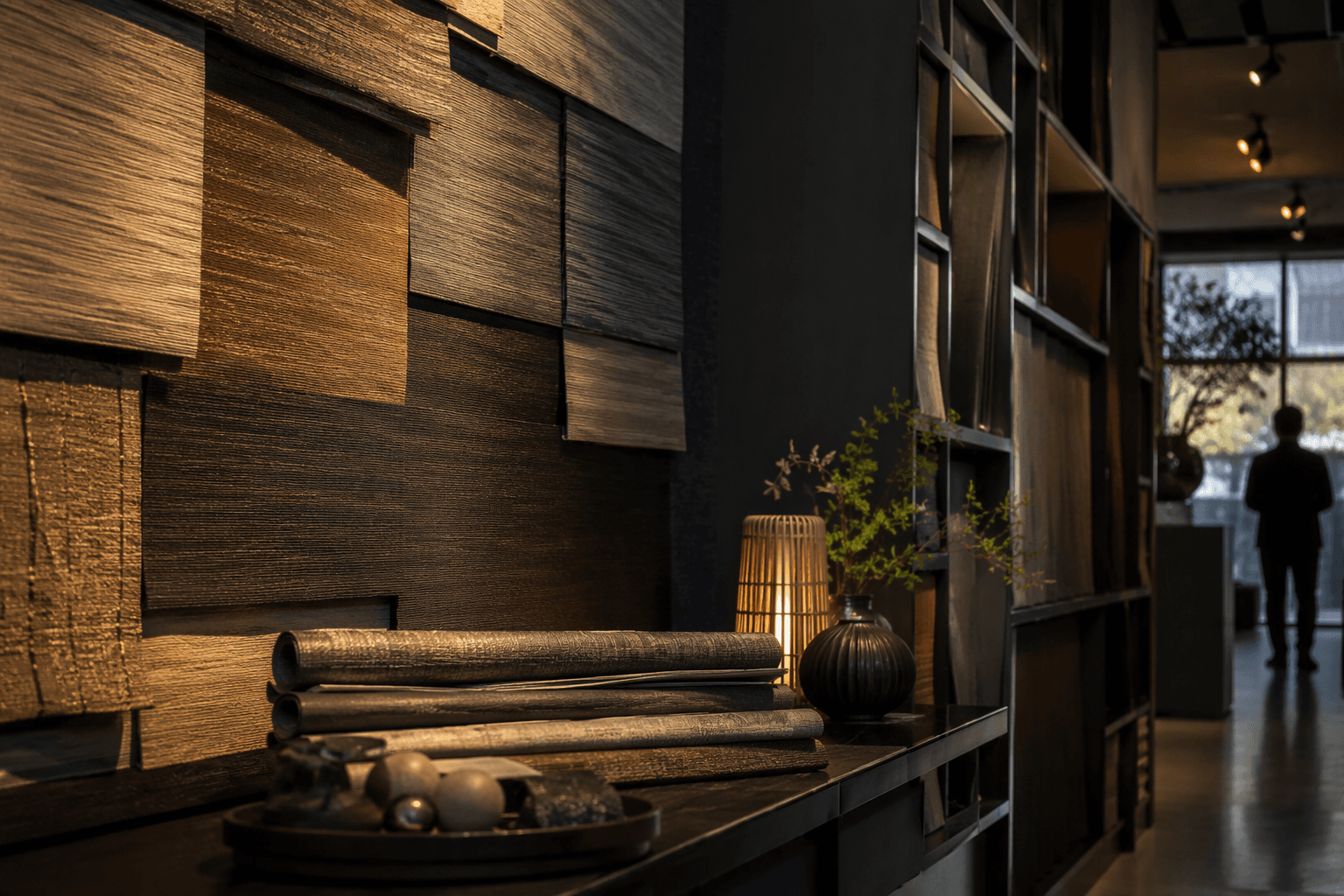
Phillip Jeffries began with 10 grasscloth wallcoverings in Eric Bershad’s garage, and that modest start now underpins a premium design business with reach from New Jersey to London. The family-owned company calls itself “the world’s leader in natural, textured & specialty wallcoverings,” a position built on texture, craftsmanship and close ties to the design trade. In a broader housing market that can swing with interest rates and consumer sentiment, this is the kind of niche where luxury spending still finds room to grow.
From garage samples to a luxury design brand
The company’s origin story stretches back to 1976, when Eric Bershad founded Phillip Jeffries with just 10 grasscloth wallcoverings. Nearly 50 years later, that same material-first identity still defines the brand, which leans on natural-fiber wallcoverings and a made-for-designers sales model rather than mass retail. That matters economically: the company sells into a category where customers are not buying a product for utility alone, but for surface, tone, texture and the finish of an entire room.
Phillip Jeffries’ own materials emphasize that positioning. Its official site promotes new collections such as “Enchanted Garden,” signaling a pipeline of fresh looks that keeps the brand relevant with architects, decorators and homeowners pursuing higher-end interiors. The company’s 2021 post celebrating 45 years in business and saying it was investing in the future reinforces the same message: this is a mature business that still sees runway ahead.
Why customization is the business model
Wallcoverings occupy a different economic lane than ordinary paint or off-the-shelf décor. Phillip Jeffries has built its brand around natural, textured and specialty surfaces that are usually chosen to solve a design problem, create a mood or make a space feel bespoke. That gives the company pricing power in the luxury segment, where buyers often value uniqueness and craftsmanship more than standardization.
Its trade-only approach is central to that model. By selling through the design trade, Phillip Jeffries keeps itself close to the professionals who specify finishes for high-end homes, hospitality projects and commercial interiors. The brand’s social voice fits that strategy too, with Instagram describing it as “Passionate about beautiful walls.” That line is more than a slogan: it reflects a business that sells an aesthetic outcome, not just rolls of paper.
A showroom footprint built for designers
Phillip Jeffries has placed showrooms in key design markets, including Fairfield, New Jersey, New York, Los Angeles, London and South Florida. That geographic spread is important because luxury wallcoverings are often selected in person, where designers want to see scale, color depth and texture under real light. The company’s physical presence gives it access to the places where premium interiors are specified and where relationships matter as much as inventory.
The New York showroom is listed at Suite 1115 in the Decoration & Design Building, with phone number +1 212-401-6281. That location puts the company inside one of the best-known interiors hubs in the country, where trade professionals can compare materials and build project packages around the brand. Its London presence shows that the company is not just a domestic specialty player but part of an international design market that still rewards tactile, high-end surfaces.
What the numbers say about scale and demand
Phillip Jeffries’ Instagram profile shows 555K followers, a sizable audience for a company that sells primarily to the design trade. For a niche wallcoverings business, that following suggests a brand with reach well beyond its showroom footprint and an ability to turn craftsmanship into digital visibility. It also shows how luxury interiors can build consumer aspiration even when the actual purchase still runs through designers and specifiers.
A third-party company profile estimates revenue at $25.7 million, a figure that should be treated as an estimate rather than a firm accounting result. Even so, it points to a business large enough to turn a narrow category into meaningful scale without abandoning its premium positioning. The combination of a long operating history, a global showroom network and a large online following helps explain why this kind of company can keep growing while broader retail spending remains uneven.
Why luxury interiors keep holding up
Phillip Jeffries illustrates a durable pattern in home spending: when consumers trade up, they often move first into the parts of a home that signal taste, not necessity. Wallcoverings, especially the natural and textured kind Phillip Jeffries sells, sit squarely in that discretionary zone. They are a small piece of a renovation budget, but they can change how an entire room feels, which makes them attractive in projects where design identity matters.
That is why a family-owned manufacturer with roots in a garage can still look like a growth business decades later. Its edge comes from scarcity, specificity and the ability to serve designers who need more than a commodity finish. In a market that rewards distinction, Phillip Jeffries has turned craftsmanship into a premium moat.
This article was produced by Prism’s automated news system from verified source data, official records, and press releases, then run through automated quality and moderation checks before publishing. The system is built and supervised by the people who set the standards it runs under. Read our full AI policy.
Did this article answer your question?