Phillips to Supply Containerized WAAM Hybrid Systems for Army On‑Demand Repairs
Phillips Corporation's Federal Division received an order to supply containerized WAAM hybrid systems to the Army, enabling on-demand repairs at the point of need.
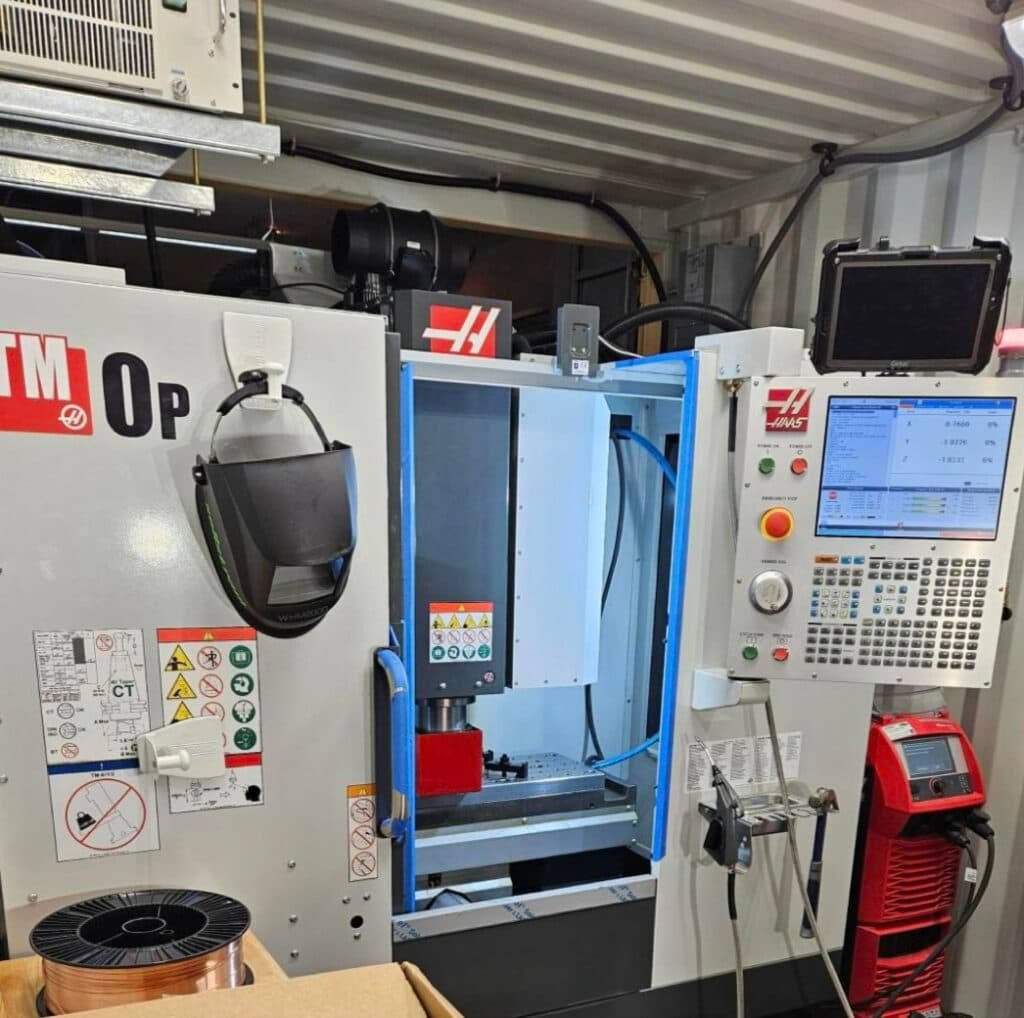
Phillips Corporation’s Federal Division has been tapped to deliver containerized Wire Arc Additive Manufacturing (WAAM) hybrid systems to support the Army’s Metal Working Machine Shop Set (MWMSS) WAAM modification program. The award is an IDIQ/delivery order issued under the Naval Surface Warfare Center Carderock Division, intended to put combined deposition and machining capability closer to where parts fail.
The systems integrate wire-arc deposition with Haas CNC vertical machining centers for in-system post-processing, and are packaged inside shipping container enclosures sized for both expeditionary and depot use. That hybrid architecture bridges deposition and subtractive finishing in a single footprint, allowing a printed weld buildup to be machined to final dimensions without moving a part to a separate shop. The order was received on January 13, 2026.
For 3D printing operators and maintenance shops, the delivery marks a practical step toward fieldable WAAM. Containerized hybrids reduce the logistical friction of moving large parts through supply chains, and they keep repair capability closer to the mission by combining additive filler and precision CNC finishing. That matters to units and commercial outfitters who rely on uptime: a locally repaired axle, bracket, or structural component can cut lead time and shipping burdens compared with backhauling to centralized depots.
Phillips is not new to hybrid WAAM installations; the company has prior hybrid systems in service, including a Navy onboard installation that demonstrated the concept in austere environments. Those precedents help validate the container approach for expeditionary operations and for fixed-site depot sustainment alike. The inclusion of Haas vertical machining centers aligns the package with widely used CNC tooling and workflows, which could simplify operator training and parts integration.

Community implications extend beyond military sustainment. Fabricators, defense contractors, and regional machine shops now have a clearer reference point for how WAAM can be combined with machining for end-to-end part recovery. Suppliers of welding wire, CNC tooling, CAM software, and fixture kits should anticipate demand for compatible consumables and retrofit kits. Training programs that merge welding, CAM, and machine operation will become more relevant as hybrid systems move into operational use.
Logistics, power, and environmental controls remain practical considerations for deployment, so expect operators to evaluate container hookups, ventilation, and floor planning before fielding. For the 3D printing community, the move signals wider acceptance of large-format, metal WAAM plus machining as a sustainment strategy rather than a laboratory novelty.
What comes next is integration and deployment: units will test workflows, technicians will adapt to hybrid toolchains, and suppliers will tune their offerings to match containerized WAAM platforms. For anyone working on metal additive or repair workflows, this order is a cue to align skills, tooling, and supply lines to a sustainment model that prints, mills, and ships fewer parts offsite.
Sources:
Know something we missed? Have a correction or additional information?
Submit a Tip