Physical Intelligence says new robot brain can generalize to unfamiliar tasks
Physical Intelligence said π0.7 could combine learned skills to handle unfamiliar tasks, a step toward robots that need less custom scripting.
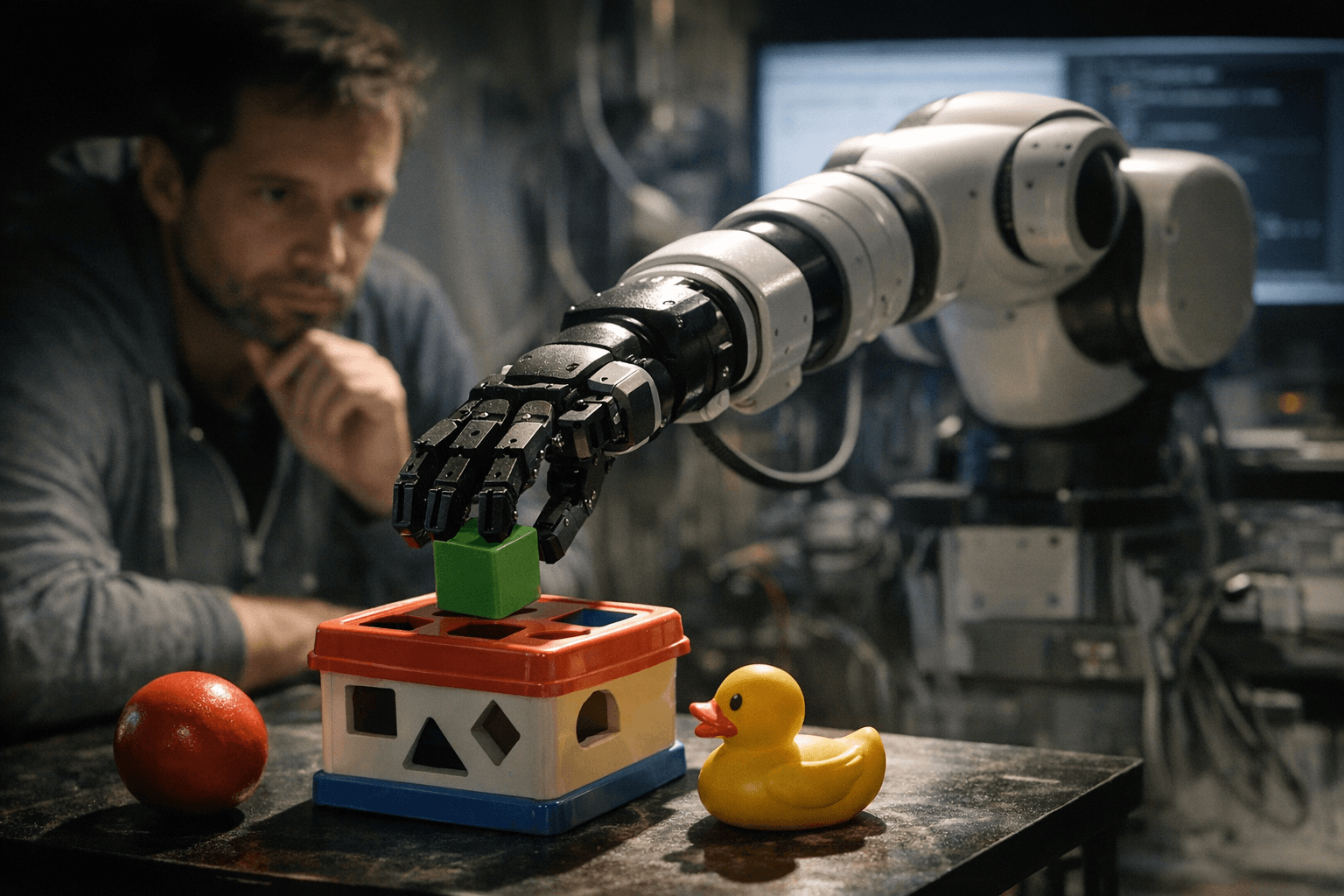
Physical Intelligence has claimed a meaningful advance in robotics with π0.7, a model it said could do more than repeat tasks it was explicitly trained to perform. The company’s pitch is straightforward: give the system an unfamiliar job, describe it in plain language, and it can still complete the work by combining skills it learned in different settings.
That idea, known as compositional generalization, is what makes the result interesting. In plain terms, it means a robot does not need to be taught every single task from scratch. Instead, it can draw on earlier experience and assemble a response to something new. That is a major departure from the way many robots still operate today, tightly scripted and dependent on the exact situations they saw during training.
The real test is not whether a demo looks clever, but whether the machine can hold up outside a lab. That is why the benchmark matters most in places like warehouses, manufacturing lines and service settings, where conditions shift constantly and operators cannot afford to reprogram every time the environment changes. If a robot can adapt from instruction and experience, rather than starting over for each new job, it becomes much more useful and much easier to deploy at scale.
Even so, the claim should be measured against a long history of robotics overpromising. Physical Intelligence described π0.7 as an early step toward a general-purpose robot brain, not a finished system. The advance matters because the field has spent years building machines that could perform narrow tasks well, only to break down when the setting changed. A system that generalizes better would not solve robotics overnight, but it would point the industry toward a different standard: less brittle automation and more flexible physical AI.
The broader implication is competitive as much as technical. If compositional generalization proves reliable in messy real-world settings, it would change how quickly robots can move from the lab into commercial use and how much custom programming they require. It would also raise the stakes for every company trying to build the next generation of robots, because the winner will be the one that turns early capability into dependable performance where the work actually happens.
This article was produced by Prism’s automated news system from verified source data, official records, and press releases, then run through automated quality and moderation checks before publishing. The system is built and supervised by the people who set the standards it runs under. Read our full AI policy.
Did this article answer your question?