Pickford reflects on Everton, England rise in Rooney interview
Pickford’s Everton loyalty and England rise come into focus as Rooney probes how he turned scrutiny into authority. The interview maps a goalkeeper built for pressure.
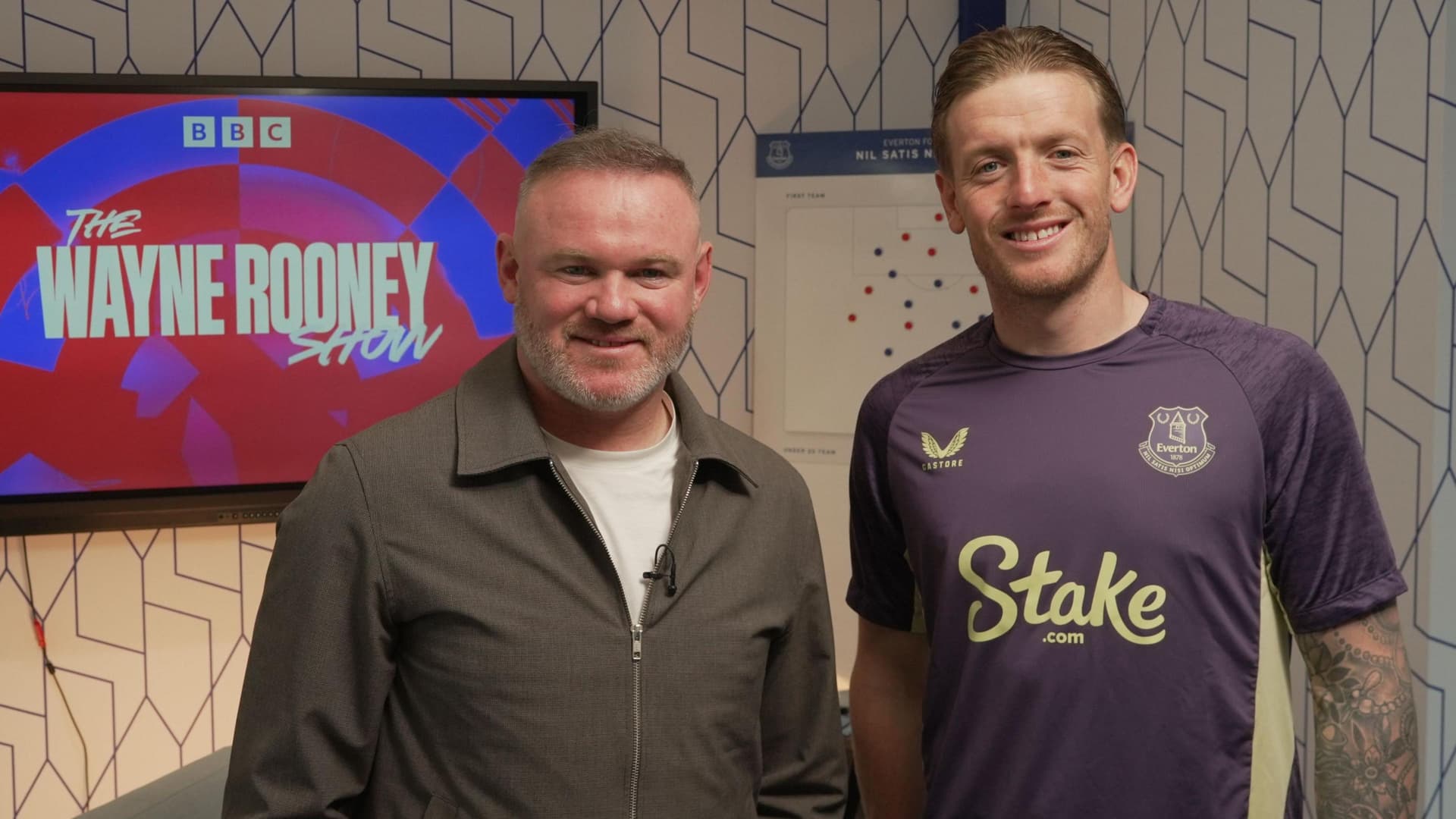
Jordan Pickford’s story is one of staying visible and staying steady. In a wide-ranging conversation on the Wayne Rooney Show, the Everton and England goalkeeper sits opposite a former teammate who understands both the weight of the shirt and the glare that comes with it, and the result is less fan service than a portrait of durability.
Two Everton careers, one shared language
The interview works because Rooney is not speaking to Pickford from a distance. Between them, they have played 550 times for Everton and 202 times for England, and that shared history gives the conversation a rare level of detail and trust. Rooney returned to Everton in 2017 after 13 years away, following a Manchester United career that brought 559 games, 253 goals and 16 trophies, so his perspective on club identity is unusually sharp. That matters here, because Pickford is not just discussing performances, but the meaning of being Everton and England’s first-choice goalkeeper.
Pickford’s language in the interview is plain and revealing: “I'm a passionate lad and I love it at Everton” - Pickford. The line lands because it sounds less like a media talking point than a declaration of belonging, and it helps explain why his reputation has stayed so strong through difficult spells.
From Sunderland arrival to Everton authority
Pickford joined Everton from Sunderland in 2017, still young enough to be defining himself and old enough to know that the Premier League does not wait for comfort. At the time, he was establishing himself at club level while also climbing toward England’s top job, a dual pressure that can flatten players who do not have the temperament for it. Instead, he became a central figure for both club and country, and that progression says as much about his character as it does about his shot-stopping.
His new Everton contract, signed in February 2023, runs until June 2027, a long-term commitment that underlines how important he has become to the club’s plans. For Everton, that deal was more than an administrative update. It signaled that the goalkeeper who had arrived in 2017 had moved from promising recruit to structural pillar, someone the club trusts in seasons shaped by survival battles and scrutiny.
England, Russia and the rise to number one
Pickford’s international breakthrough arrived on one of the biggest stages possible. At the 2018 World Cup in Russia, he wore England’s number one shirt and helped take the team to their first World Cup semi-final since 1990, as well as their first appearance in the final four since 1966. That is a milestone that still frames how he is judged, because it showed England a goalkeeper who could absorb pressure in knockout football and still deliver.
The importance of that tournament goes beyond a single summer. Pickford’s rise was notable because he was still establishing himself at Everton while becoming the national team’s first-choice goalkeeper, a reminder that modern international success is often built in parallel with club instability. He was not merely a beneficiary of England’s improvement; he was one of the players making that improvement possible, in a role where mistakes are magnified and confidence must be rebuilt publicly.
What Pickford’s self-image says about modern goalkeeping
The conversation with Rooney is especially telling because Pickford’s identity is inseparable from how the position itself has changed. A modern goalkeeper is no longer only a line of last resort, but a leader who has to organize, reassure and withstand criticism in plain sight. Pickford’s career, as reflected in this interview, fits that template: he has been asked to be reactive, vocal and emotionally durable, often all in the same match.
That is why his resilience matters as much as his saves. His reputation at Everton has remained strong because consistency in goal, especially through difficult Premier League survival battles, carries value beyond highlight-reel moments. He represents a version of goalkeeping built on concentration and personality, where staying calm through chaos becomes its own form of leadership.
Club identity, national identity and the burden of scrutiny
Rooney’s presence sharpens the themes running through the interview, because he knows what it means to carry the expectations of Everton and England in public. Pickford, by contrast, is living that reality now, and the conversation exposes how club identity and national identity can reinforce each other rather than compete. His affection for Everton is not separate from his England role; it is part of the foundation that lets him handle the demands of both.
That is what makes the piece resonate beyond the usual praise for a first-choice goalkeeper. Pickford comes across as someone who has turned volatility into authority, and that transformation matters in a sport where keepers are often remembered most vividly for their errors. In Everton blue and England white, he has built a career on surviving the noise long enough to lead through it, and that is the clearest measure of his rise.
This article was produced by Prism’s automated news system from verified source data, official records, and press releases, then run through automated quality and moderation checks before publishing. The system is built and supervised by the people who set the standards it runs under. Read our full AI policy.
Did this article answer your question?