Pizza Hut crew members guide outlines federal labor protections and organizing steps
Crew members have explicit federal protections in the Pizza Hut handbook, FLSA wage rules, tip-credit language, DOL referral instructions, and an NLRA carve-out, plus clear social‑media limits tied to SEC rules.
1. Document identification and where these rules come from
The excerpts used here come from an internal section labeled exactly: "COMPUTERS, INTERNET, EMAIL, and OTHER RESOURCES DATE 03/01/22 SUPERSEDES PAGE 26-28 27." That header indicates the material is drawn from a company policy or handbook dated 03/01/22. Several lines in the excerpts are truncated; those gaps are flagged below where they affect interpretation.
2. Federal wage and hour baseline: FLSA compliance and minimum wage
The handbook states plainly that "the Fair Labor Standards Act (FLSA) will be complied with." It also specifies that "The Federal or State statute providing the higher minimum wage will be followed," meaning crew should expect the higher applicable minimum wage to govern pay where federal and state rates differ.
3. Tip mechanics and guaranteed hourly rate
For tipped roles the policy reads: "Tip Credit All Servers and Drivers are subject to a Guaranteed Hourly Rate, which is the base rate plus tips equal to or in excess of the minimum wage." The employer also commits that "The company will maintain records and file reports on tip credit as required by Federal and State statutes." Those lines establish that the company recognizes tip-credit rules and records the calculations, so servers and drivers should watch payroll statements where tip credit is applied.
4. Overtime policy and an ambiguous fragment
The handbook instructs "When required due to the needs of the business, you may be asked to work overtime" and defines overtime as "actual hours worked in excess of 40 in a single workweek." The excerpt also contains a truncated fragment, "Nonexempt employees will be [...] suspend such activity to ensure compliance with the SEC’s regulations or other laws." Because that sentence is incomplete, it is unclear what the handbook intended to require of nonexempt employees beyond overtime; do not assume the missing text. The overtime definition, however, is clear and ties back to FLSA rules.
5. What to do if the Department of Labor shows up
The policy directs that "Any company facility contacted by officials of the Department of Labor, either Federal or State, are to refer any questions or any investigations to the Director of Operations or Director of People & Culture." That means individual crew members should refer DOL inquiries up the chain rather than try to handle them alone; the policy names the internal functions but does not provide contact names or phone numbers in the excerpts provided.
6. Communications, social media and SEC-related limits
The handbook section labeled "COMPUTERS, INTERNET, EMAIL, and OTHER RESOURCES" also states that "The company provides a wide variety of communication tools and resources to employees for [...] material without first obtaining permission." Multiple lines are truncated, but the policy is explicit that "The company may also require employees to delete references to it on a website or blog and to stop identifying themselves as an employee of the company." The employer links those rules to public-company obligations: "Because the national Pizza Hut parent company is publicly held, writing about projected growth, sales and profits, future products or services, marketing plans, or the stock price may violate Securities and Exchange Commission (SEC) rules or other applicable laws." The excerpts also include a truncated sentence that begins, "Company Restrictions Because the national Pizza Hut parent company is publicly held, it may require that employees temporarily confine social media commentary to topics unrelated to the company or that employees temporarily suspend such activity to ensure compliance with the SEC’s", the ending is missing and therefore the scope and triggers for enforcement need confirmation.
7. Your NLRA rights in the handbook
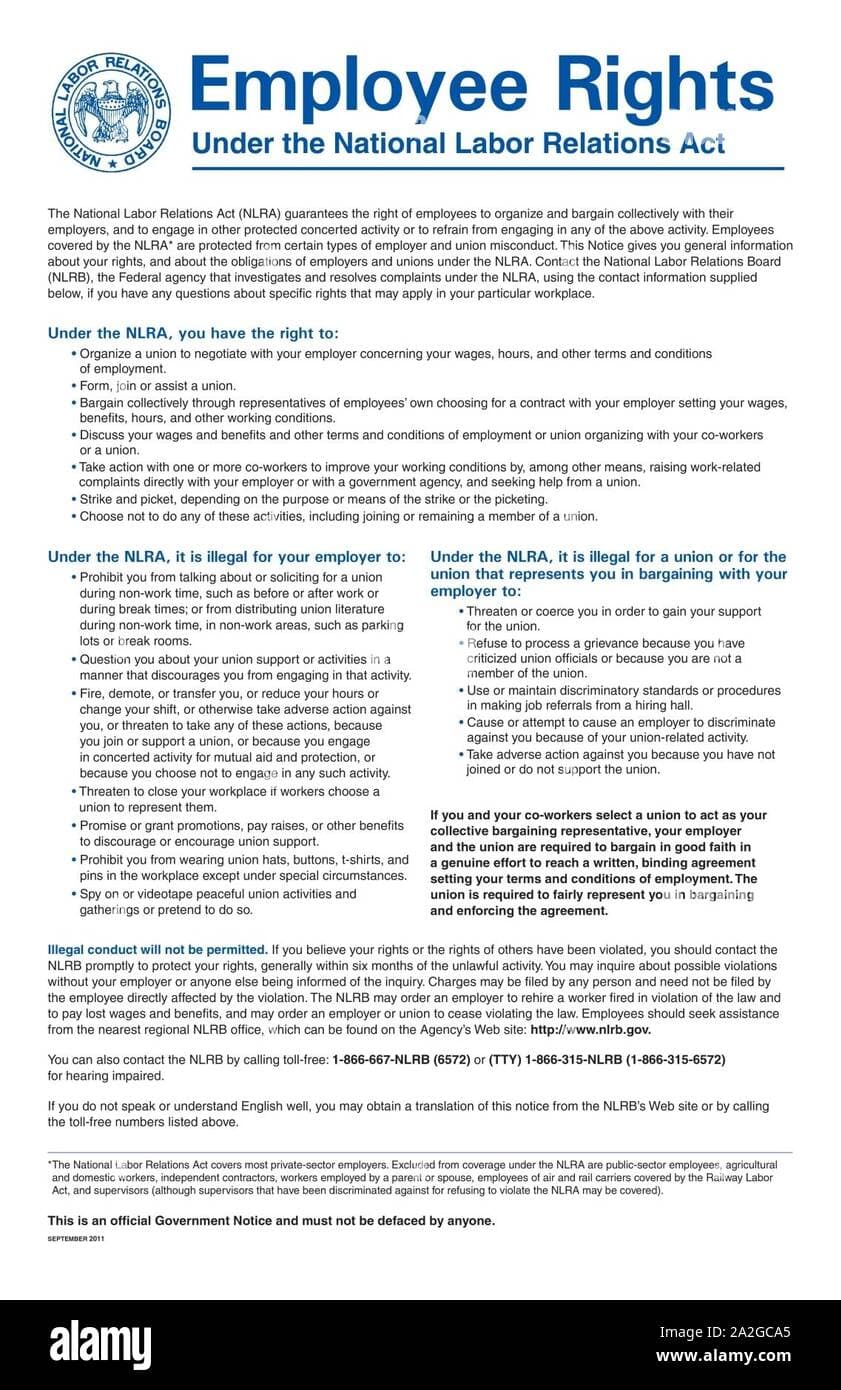
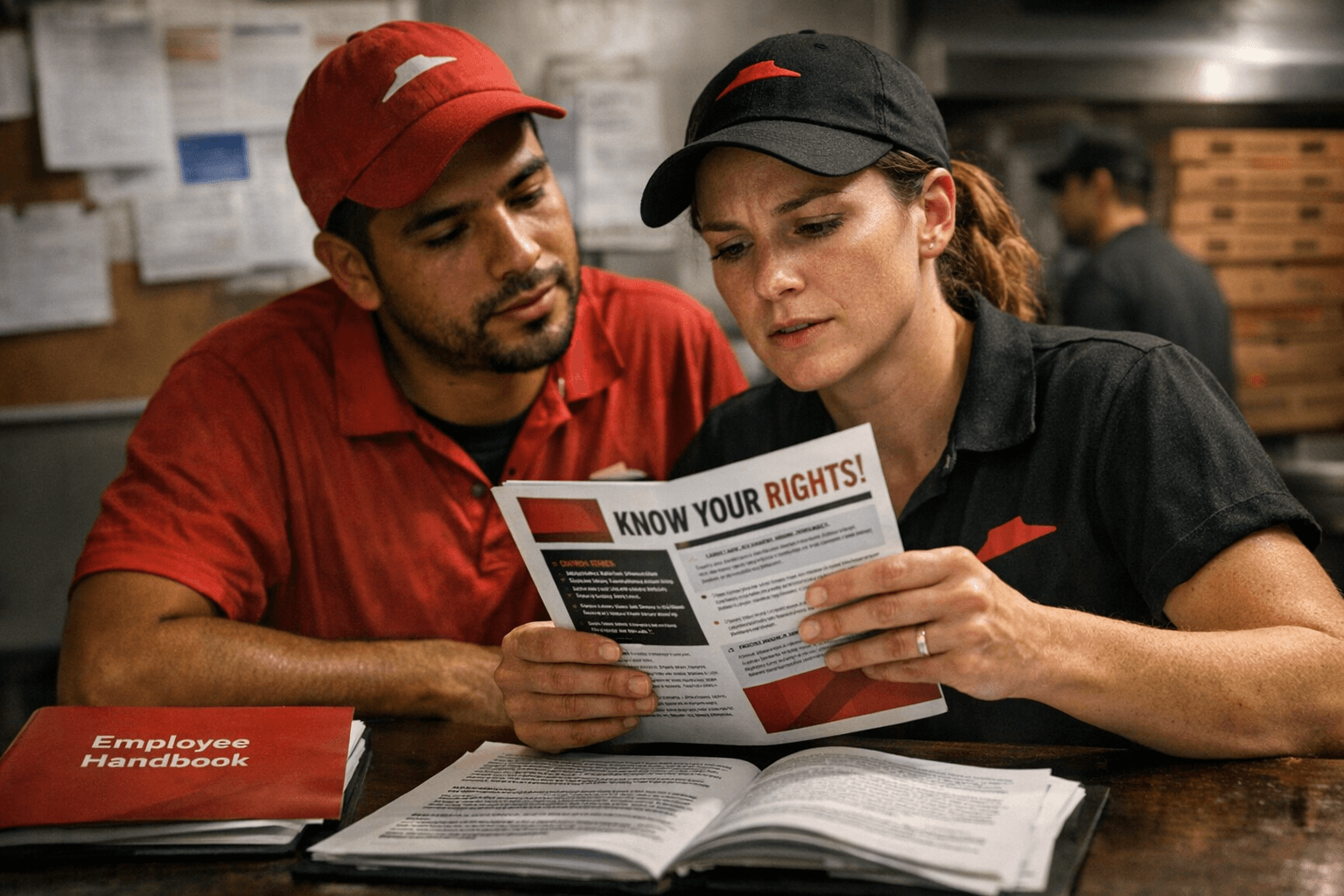
The handbook contains an explicit carve-out protecting concerted activity: "Nothing in this policy is meant to, nor should it be interpreted to, in any way limit your rights under any applicable federal, state, or local laws, including your rights under the National Labor Relations Act to engage in protected concerted activities with other employees to improve or discuss terms and conditions of employment, such as wages, working conditions, and benefits." That language is a clear acknowledgment that employees retain NLRA protections to talk together about wages, working conditions, and benefits.
8. Other legal compliance expectations crew should know
The policy also tells employees that "Employees are expected to comply with all applicable laws, including but not limited to, Federal Trade Commission (FTC) guidelines, copyright, trademark, and harassment laws." In practice that means legal limits on certain communications exist alongside NLRA rights; they are separate obligations (e.g., not posting copyrighted material or engaging in unlawful harassment).
- Begin with shared facts: use the handbook language as the baseline, cite the FLSA, the Guaranteed Hourly Rate wording for servers/drivers, and the overtime definition when explaining issues to co‑workers. Those explicit lines give you neutral, documented topics to discuss.
- Keep the conversation collective and focused: the handbook affirms NLRA protections for "protected concerted activities" to improve wages and conditions; organizing conversations between employees fall within that protection. Framing concerns as group issues (scheduling, tip-credit application, overtime hours) aligns with the policy’s protected examples.
- Be cautious with public posts: because the company warns that "writing about projected growth, sales and profits, future products or services, marketing plans, or the stock price may violate Securities and Exchange Commission (SEC) rules," avoid public social posts that speculate about corporate financials or marketing until you verify whether the topic is safe. The policy also says the company "may also require employees to delete references to it on a website or blog and to stop identifying themselves as an employee," so weigh the benefits of private organizing chats (in person or private messaging) against public posts that could trigger deletion requests.
- Document your facts, not just feelings: the company "will maintain records and file reports on tip credit", if tip-credit calculations or overtime pay seem wrong, keep copies of your own timecards, paystubs, and tip records to support group claims. The handbook’s recordkeeping promise provides a parallel: it shows the company expects recordkeeping, and you should too.
- If the DOL becomes involved, escalate internally as instructed: the policy directs facilities to refer any Department of Labor contacts to the "Director of Operations or Director of People & Culture." If you are organizing and the DOL contacts your store, inform colleagues and follow that referral step while preserving any relevant documentation.
9. How to start an organizing conversation at your store (practical steps)
10. Red flags in the policy and items to verify before escalating
Several handbook lines are truncated in the excerpts, most notably the fragment that links nonexempt employees to suspending "such activity to ensure compliance with the SEC’s regulations or other laws" and the incomplete social‑media permission sentences. Those omissions matter because they could narrow or expand employer authority. Before taking public action based on ambiguous clauses, request the full "COMPUTERS, INTERNET, EMAIL, and OTHER RESOURCES" section (pages 26–28) or ask People & Culture to clarify how and when the company would require deletion or suspension of employee social posts.
11. What this means day to day and next steps for crew
In practice, the handbook gives crew a combination of baseline protections and company-imposed limits: it affirms FLSA compliance, defines overtime, documents tip-credit mechanics, and explicitly preserves NLRA-protected concerted activity, all concrete protections you can cite when organizing. At the same time, the company signals it will police communications tied to public-company rules and can require deletion or de‑identification in certain circumstances. Use the handbook language when opening conversations, keep evidence and records of pay and hours, avoid public posts that speculate about corporate financials, and if enforcement or a DOL inquiry appears, follow the company's referral instruction to the Director of Operations or Director of People & Culture. The handbook excerpts date to 03/01/22 and contain gaps that should be clarified with the full policy before major public steps; armed with those confirmations, crew can organize more securely and with clearer leverage.
Know something we missed? Have a correction or additional information?
Submit a Tip