Plan Birding and Sunset Outings at Yuma Crossing and East Wetlands
Local families, birders and more than 200 volunteers use Yuma Crossing’s 1,400‑acre East Wetlands for sunrise and sunset outings—plan around early mornings, trail surfaces and nearby restrooms.
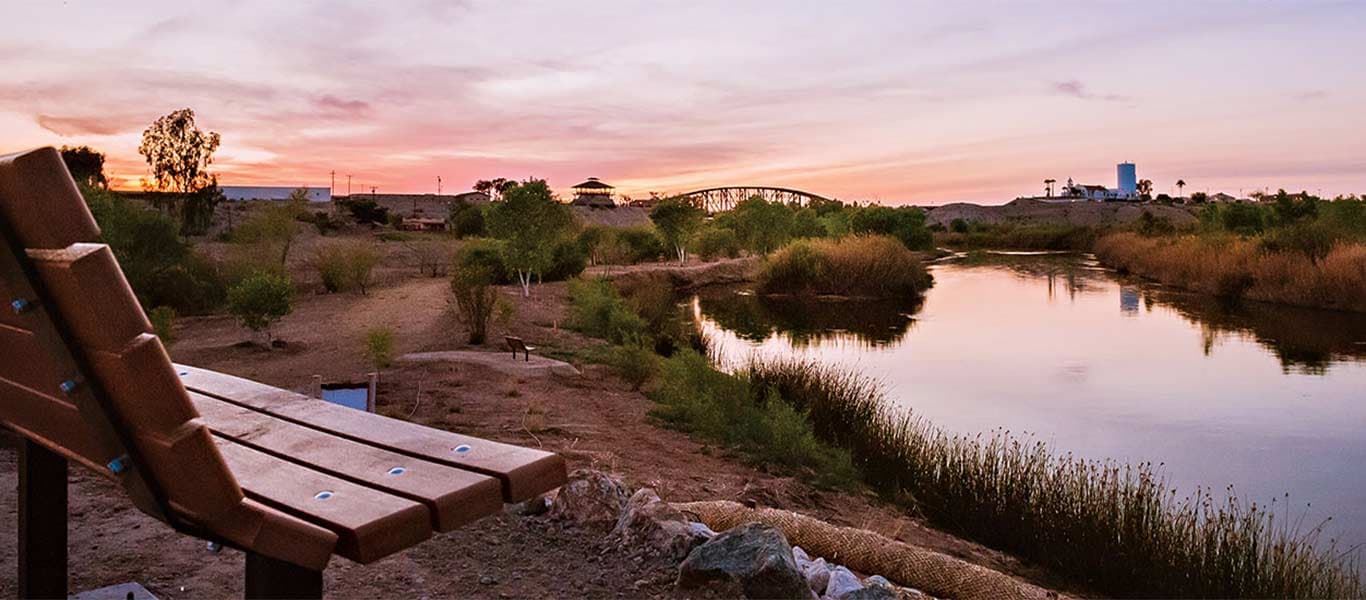
Why this matters “Why this matters: Yuma County’s riverfront — anchored by Yuma Crossing National Heritage Area and the East Wetlands — is both a local conservation success story and one of the best places in the Southwest for year‑round birding, sunset viewing and family outdoor recreation. The riverfront parks, mul” — that original line captures the stakes: the East Wetlands is a large, purpose‑built restoration that supplies river access, nature experiences and community programs along the Colorado River in Yuma. The site’s scale—described in source material as a “1400 acre restoration project”—means the wetlands support both day‑to‑day recreation and longer‑term wildlife recovery efforts.
Where to go and how to get there Access points center on Gateway Park at the Ocean‑to‑Ocean Bridge and the Territorial Prison area in downtown Yuma. To reach Area 1 from Giss Parkway, “exit on the access road to the Territorial Prison State Park and follow the road down the hill to the green park.” To reach Area 2 from Area 1, “keep driving north for a hundred yards to the end of the parking lot, and park close to the round‑about. Walk north around the vehicle gate to reach the East Wetlands Trail and billboard.” To reach Area 3 from Giss Parkway, “take the exit to the Territorial Prison State Park, drive about 0.1 miles, and then turn east just before reaching the guardrail. Drive east less than 0.1 miles and you’ll drive over the canal bridge. Turn right on the levee road that travels between the canal and the wetlands.” Directions for Areas 4–7 in the provided notes are truncated and contain typographical errors, so confirm those step‑by‑step directions on site or with the Yuma Crossing office before you go.
Trails, reported lengths and surfaces Sources list several slightly different measurements, so plan conservatively. One description calls the main loop a “3‑mile loop that circles around a lush riparian area, as well as an unpaved ½‑mile trail that runs along the lower Colorado River.” Another source lists the East Wetlands Loop Trail as a “2.25 mile loop trail” (presented elsewhere as “2 ¼ mile”), while a project case study notes “more than 2.5 miles of pedestrian trails made of decomposed granite” that “follow existing infrastructure such as levees and canals.” The notes also say the trails connect to the newly renovated Gateway Park. Because the materials mention both an “unpaved ½‑mile trail” and decomposed‑granite levee trails, expect a mix of firm decomposed granite on levees and some unpaved river‑edge walking surfaces; verify exact mileage and surface conditions at Gateway Park signage or with Yuma Crossing before planning precise distances.
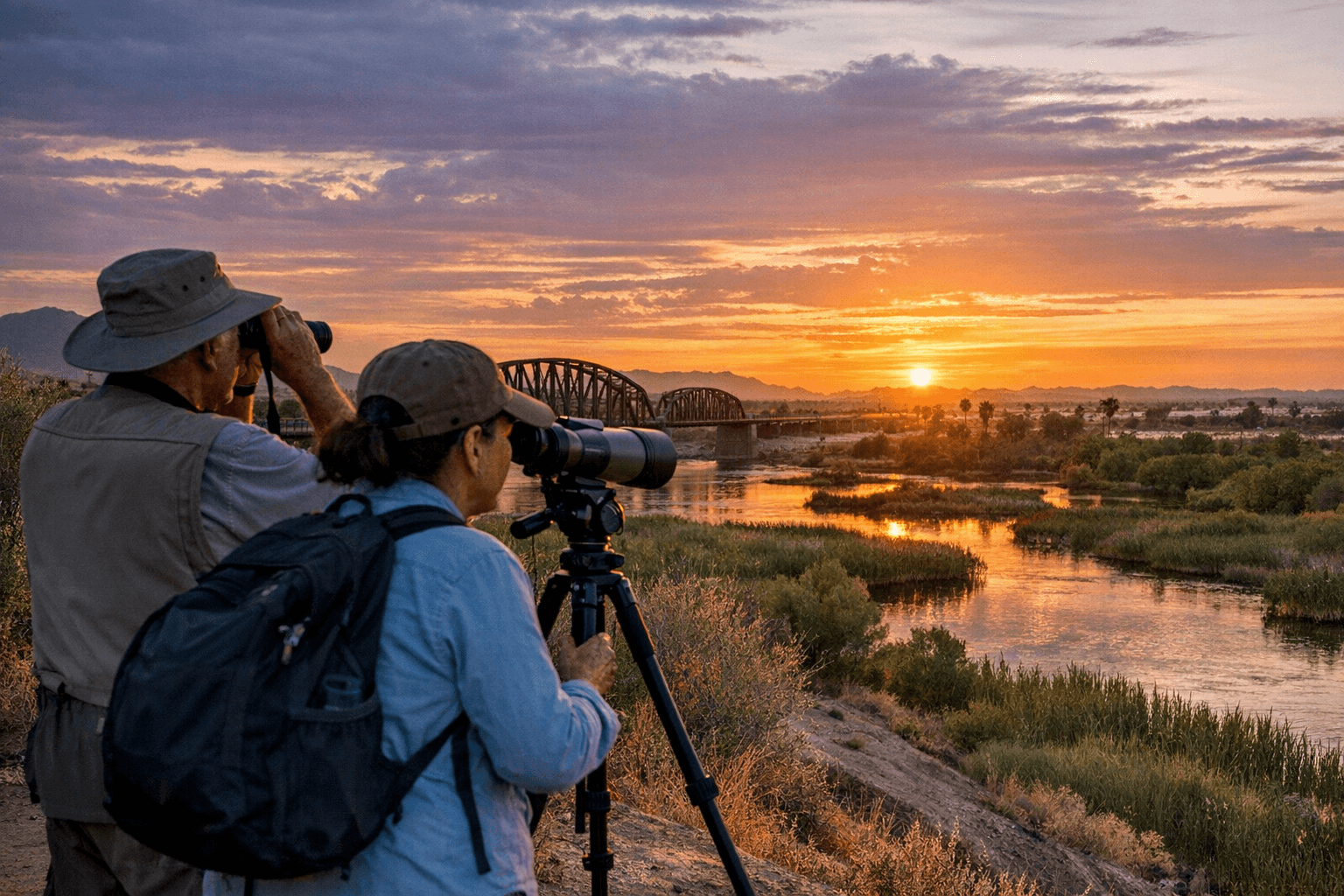
What you’re likely to see — birds and other wildlife The wetlands host a broad list of species noted across field guides and local trail descriptions. Year‑round or commonly heard species along the levee road and wetlands include Cinnamon Teal, Clapper Rail, Least Bittern, White‑faced Ibis, Black‑crowned Night‑Heron, a variety of herons and egrets, Black‑necked Stilt, Marsh Wren and Common Yellowthroat. Winter visitors explicitly listed are Virginia Rail, Sora, Long‑billed Dowitcher, Greater Yellowlegs, Wilson’s Snipe and Northern Harrier. Specialty and charismatic species called out by the Arizona Birding Trail include Abert’s Towhee, Ladder‑backed Woodpecker, Ridgway’s Rail, Yellow‑billed Cuckoo, Gila Woodpecker, Greater Roadrunner, Lesser Goldfinch, Loggerhead Shrike and Vermilion Flycatcher. Nationalparktraveling notes beaver and fox have returned to the area, though “they are elusive and it takes some luck to spot them.” Use early morning observation windows to maximize detections.
Best times and what to expect by season Two complementary timing notes appear in the sources. The Arizona Birding Trail says “The varied habitat makes for good early‑morning birding in all seasons.” TripRanger lists the best months as spring and fall—“March to May and September to November”—because migratory birds are most active then, and recommends early morning as the best time of day while warning that “midday should be avoided as temperatures peak and bird activity decreases.” Nationalparktraveling highlights “spectacular sunrise and sunset views,” so plan a short evening visit if your goal is scenic photography rather than peak bird activity.
Amenities, safety and permit notes The Arizona Birding Trail table lists many “No” entries: no restrooms on site, no drinking water, no visitor center, no camping, picnicking, lodging, concessions, platforms or blinds. It also states “Operational Hours: Open all year, 24 hours a day” and “Admission or Fees: None.” Practical guidance provided in the notes points to nearby facilities: “Restrooms are located at Territorial Prison Park (on the hill below the prison), Yuma, and Paradise Casino.” Southwestbirders flags that a nearby lake “is Arizona State Trust Land and requires a permit to access,” so confirm whether sections you intend to reach fall under State Trust Land rules and obtain any required permit in advance through the Arizona State Land Department. The Arizona Birding Trail also reminds visitors “Safety First!” and to check hiking‑precaution recommendations before heading out.
Restoration, monitoring and community impact The Yuma East Wetlands has been developed as a multi‑partner restoration led by the Heritage Area, Quechan Indian Tribe, City of Yuma and Arizona Game and Fish Department, and is called “a model for wetlands restoration in the desert Southwest.” Monitoring has been integral: the Army Corps’ Section 404 permit required five years of plant monitoring and consultants started vegetation monitoring in 2004 at 12 sites in the YEW, and the design team secured “over $180,000 from the Arizona Water Protection Fund to conduct research in 2007‑2009” on how restoration affected birds, invertebrates, herpetofauna and mammals. The site “engages and educates over 200 volunteers a year” who provide “more than 1,600 volunteer hours” annually; it also “provides recreational opportunities for approximately 220 people per day during the summer and 130 people per day during the rest of the year,” illustrating both ecological and social returns.
Events, guided walks and youth programs “If you enjoy bird watching, check in with the Yuma Audubon Society who hosts seasonal bird walks,” notes the site narrative. Historic programming includes the week‑long Yuma Birding and Nature festival, which “hosts 100‑150 people annually … (held from 2001‑2012),” and the ongoing YEW Youth Cultural Festival, “which began in 2002) and gathers over 80 students from over 12 countries, 4 Indian tribes and 3 communities each year to plant trees, celebrate the healing of the ecosystem, and learn about other cultures.” Confirm current schedules with Yuma Audubon and the Yuma Crossing office if you want to join a guided walk or a volunteer planting day.
- Bring plenty of water and sun protection—there is no drinking water on site.
- Start at Gateway Park or the Territorial Prison parking areas to access levee trails and the East Wetlands billboard.
- Expect mixed surfaces: decomposed‑granite levee trails and at least one unpaved ½‑mile river path.
- Use the early morning window for birds; evenings are best for sunsets and overlooks showing the St. Thomas Indian Mission.
- Restrooms: plan to stop at Territorial Prison Park or Paradise Casino before or after your walk.
- If you plan to enter lake areas, check whether they are Arizona State Trust Land and secure any required permit in advance.
Practical checklist and field tips
Contacts, verification items and quick facts to confirm before you publish or visit Yuma Crossing National Heritage Area contact as listed in the notes: 180 West 1st Street, Suite E, Yuma, AZ 85364; Phone: 928‑373‑5198; Email: yumacrossing@yumaaz.gov. Key verification items based on source discrepancies include the official trail mileage (2.25 vs 2.5+ vs 3.0 miles), exact surface mapping of decomposed granite versus unpaved river paths, current restroom availability, current festival schedules, and the precise State Trust Land permit requirements for any lake access.
A final, practical note The East Wetlands blends large‑scale restoration with everyday recreation: the 1,400‑acre project, volunteer programs, seasonal bird lists and levee connections to Gateway Park make it a working landscape that serves both wildlife and Yuma families. Before you go, confirm the trail length and permit needs with Yuma Crossing, plan for heat and no on‑site water, and time your visit for early morning bird activity or the “spectacular sunrise and sunset views” many visitors report. The partnerships that built the wetlands—Quechan Tribe, City of Yuma, Arizona Game and Fish and the Heritage Area—mean this is a place where civic investment and hands‑on volunteerism continue to shape daily life along the Lower Colorado.
Sources:
Know something we missed? Have a correction or additional information?
Submit a Tip