Ply Inspection, Hand Wash Temperatures and Storage to Protect Cashmere
Preserve cashmere as an investment: simple, timed rituals — inspect ply and construction, hand wash on schedule, de-pill gently, and store cool, dark and breathable.
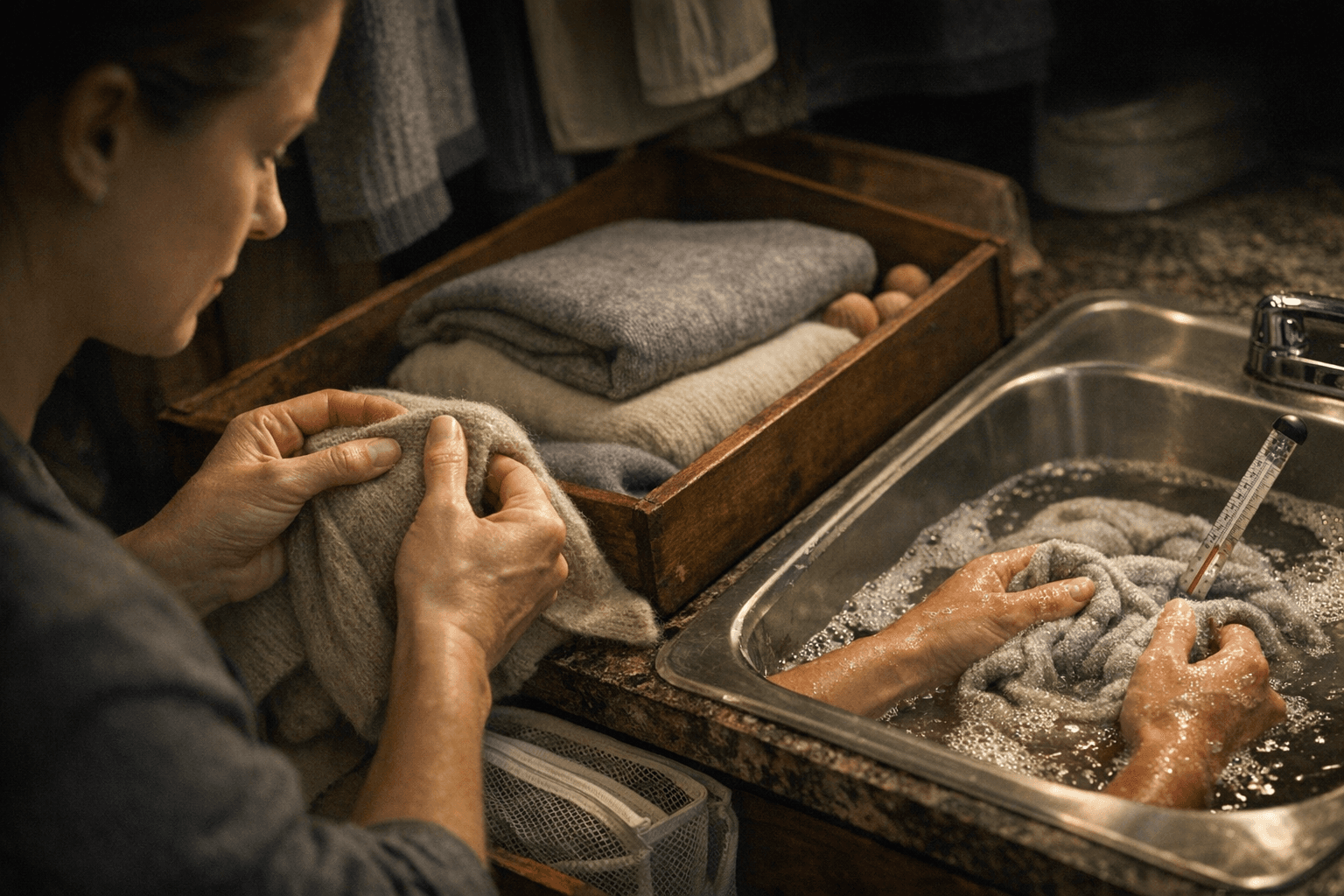
A vote for longevity and quiet confidence
Old Money wardrobe logic prizes utility, status and restraint: a single cashmere sweater that lasts decades is worth more than a closet of impulse buys. That payoff is real and measurable: Bradic Eu states, "When properly cared for, quality cashmere lasts 20-30+ years. Some vintage cashmere is 50+ years old and still beautiful." The benefit is plain — learn five precise rituals and you keep softness, shape and value for seasons, moves and life changes.
The five-minute lede: the routine that pays
Make this your default: Bradic Eu maps a compact, repeatable routine that turns care into habit. Follow these explicit timings: "Hand wash every 5-7 wears (20 minutes)"; "Dry flat overnight (no active time)"; "Fold for storage (30 seconds)"; "De-pill occasionally (5 minutes)"; "Clean before seasonal storage (once yearly)". These are not fuss; they are modest rituals that preserve an investment.
Before you buy: inspect like you mean it
Buying wisely avoids headaches later. Check the label and composition: "Label & composition: confirm 100% cashmere vs blends." Feel the yarn and ask about ply: "Ply: 2‑ply yarn is stronger and pills less; single‑ply drapes lighter but is more delicate." Look at construction details, seek quality finishes and buyer assurances: the Original Report calls for "hand‑linked seams, real horn buttons, and even st" — when something reads like that in a product description, ask the retailer to clarify and show closeups or samples. Better construction equals easier care and longer life.
Hand washing: precise steps and temperatures
Heat and agitation are cashmere's enemy. 4lovingpeople warns, "Exposure to heat can cause shrinkage" and that "Rough washing can stretch or damage the delicate weave." Use Bradic Eu's cadence: wash every 5–7 wears, set aside 20 minutes total for the process. A straightforward sequence to follow:
1. Fill a basin with cool to lukewarm water and an appropriate wool or cashmere wash.
2. Submerge gently and soak, avoiding vigorous rubbing.
3. Rinse in cool water, handle with minimal stretching.
4. Press water out carefully; do not wring.
Then "Dry flat overnight (no active time)" so the garment regains structure without intervention. As 4lovingpeople puts it, "Flat drying helps the garment retain its natural structure and keeps it feeling soft to the touch."
Pilling: prevention and gentle rescue
"Pilling: One of the most common concerns among cashmere owners is pilling—those tiny balls of fabric that appear after wear," notes Cashmerechoice. Pills are a sign of fiber migration, not necessarily poor quality. Bradic Eu lists a practical rule: "De-pill occasionally (5 minutes)" using "proper tools with gentle pressure." Avoid aggressive removal: the problem is clear, "Damages underlying fabric," and the solution is measured: use a soft comb or specialist de-piller with a light hand. Think of de-pilling as maintenance, not a demolition.
Moth protection and deterrents that actually work
"Moths are cashmere's worst enemy. Protect your investment with:" follows a short, specific toolkit in Bradic Eu. Use cedar in blocks, balls or sachets and remember to "Replace annually as scent fades." Dried lavender sachets "repel moths and smell pleasant. Refresh annually." Herbal mixes are also fine: "Combinations of rosemary, thyme, cloves, and lavender work well." One clear don’t: "What not to use: Mothballs (toxic chemicals, terrible smell that permeates cashmere)." Replace deterrents yearly so protection does not lapse.
Storage: the environment matters
Storage is architecture for your knitwear. Bradic Eu prescribes exact ambient parameters: "Temperature: Cool (below 24°C / 75°F)"; "Humidity: Low (moths thrive in humidity)"; "Light: Dark (prevents fading)"; "Air circulation: Some airflow prevents musty odors." Avoid suffocating plastic: "Problem: Traps moisture, prevents breathing" with the simple fix, "Solution: Use breathable cotton bags or boxes." Suggested places include "Main closets, under beds, clean basements (if dry), climate-controlled storage [...]," though choose dry, dark, and ventilated spots over cramped, humid nooks.
- Mistake 7: Using Fabric Softener — "Problem: Coats fibers, reduces softness" — "Solution: Never use fabric softener on cashmere."
- Mistake 8: Aggressive Pilling Removal — "Problem: Damages underlying fabric" — "Solution: Use proper tools with gentle pressure."
- Mistake 9: Storing in Plastic — "Problem: Traps moisture, prevents breathing" — "Solution: Use breathable cotton bags or boxes."
- Mistake 10: Giving Up on Damaged Pieces — "Problem: Discarding repairable cashmere" — "Solution: Investigate professional repair options." These are short, specific commandments; observe them.
Common mistakes to stop doing now
Cut the bad habits that shorten a garment’s life. Bradic Eu lists four clear errors and remedies to memorize:
Repair, provenance and the economics of care
Treat care as ROI. Bradic Eu frames the financial logic plainly: "This longevity transforms the economics:" with the supporting claim that pieces can endure "20-30+ years" or more. When damage appears, pursue mending rather than discarding — skilled repairs preserve fit and value. Cashmerechoice places the emotional stake in similar terms: "Your motivation is simple: you want your cashmere to remain as soft, smooth, and elegant as the day you bought it." For those buying branded care kits, note provenance: Cashmerechoice discloses, "The Cashmere Choice is a family business which we started up in the heart of London in 2001," which explains their commercial perspective.
Tools and small investments worth making
You do not need expensive kit, but you do need the right tools. Between Bradic Eu’s practical recommendations and Cashmerechoice’s curated essentials, assemble: a gentle wool wash, a soft de-pilling tool, cedar or lavender sachets, breathable cotton storage bags and an occasional professional cleaner or mender. Cashmerechoice promises "the essentials we are sharing below" and that "Together, these tools provide a complete solution for cleaning, protecting, and maintaining your cashmere." Buy thoughtfully and prioritize products designed for delicate fibers.
A concluding impression
Cashmere is as much ritual as fabric. 4lovingpeople captures the sentiment: "Proper drying isn’t just a practical step. It’s part of the ritual that helps cashmere stay beautiful and last for years." Follow the concrete timings and don’ts above, and what seems like slow care becomes a signature of restraint and taste. The pieces you preserve will serve as trusted foundations through life changes; to borrow Bradic Eu’s conviction, "The cashmere pieces you care for properly will be with you through life changes, seasons, years. They'll become trusted wardrobe foundations you reach for again and again. That's worth learning to care for properly.
Know something we missed? Have a correction or additional information?
Submit a Tip