Pointe at Bayou Bend opens leasing after 18‑month contamination pause
Pointe at Bayou Bend began taking leasing inquiries after 18 months vacant amid soil contamination and procurement controversy. The reopening affects displaced Clayton Homes residents and Second Ward neighbors.

Leasing inquiries began on January 15, 2026 at the Pointe at Bayou Bend, the 400‑unit affordable housing complex at 800 Middle Street in Houston’s Second Ward, marking the end of an 18‑month vacancy tied to environmental and procurement controversy. Housing authority and city officials said the apartment portion of the site was tested and cleared for occupancy after extensive borings, prompting the move to reopen leasing.
The complex was shuttered after toxic ash was discovered near the development site, triggering federal and state soil testing, violations flagged by the Texas Commission on Environmental Quality and subsequent remediation actions. Officials have described a combination of removal work, engineered caps over certain contaminated spots and deed restrictions limiting future disturbance of those areas. As part of concessions to the community, the housing authority put in place priority access for residents who were displaced from nearby Clayton Homes and agreed to pause development on adjacent lots for at least six years.
Local residents and advocates in the Second Ward had objected to resuming housing at the site until they were satisfied with testing and long term measures. Concerns centered on health risks associated with ash and the sufficiency of monitoring and institutional controls when redevelopment involves capped contamination. The procurement controversy that also enveloped the project complicated trust between the community and public agencies, contributing to the prolonged vacancy.
Officials point to a record of borings and state and federal sampling that isolated the hazardous material to discrete areas and confirmed the portion where apartments sit meets safety standards for residential use. The presence of deed restrictions and engineered caps will limit excavation and require notification to future developers or property owners. The pause on further construction on surrounding parcels is intended to give the community time to see how monitoring and maintenance play out before new work proceeds.
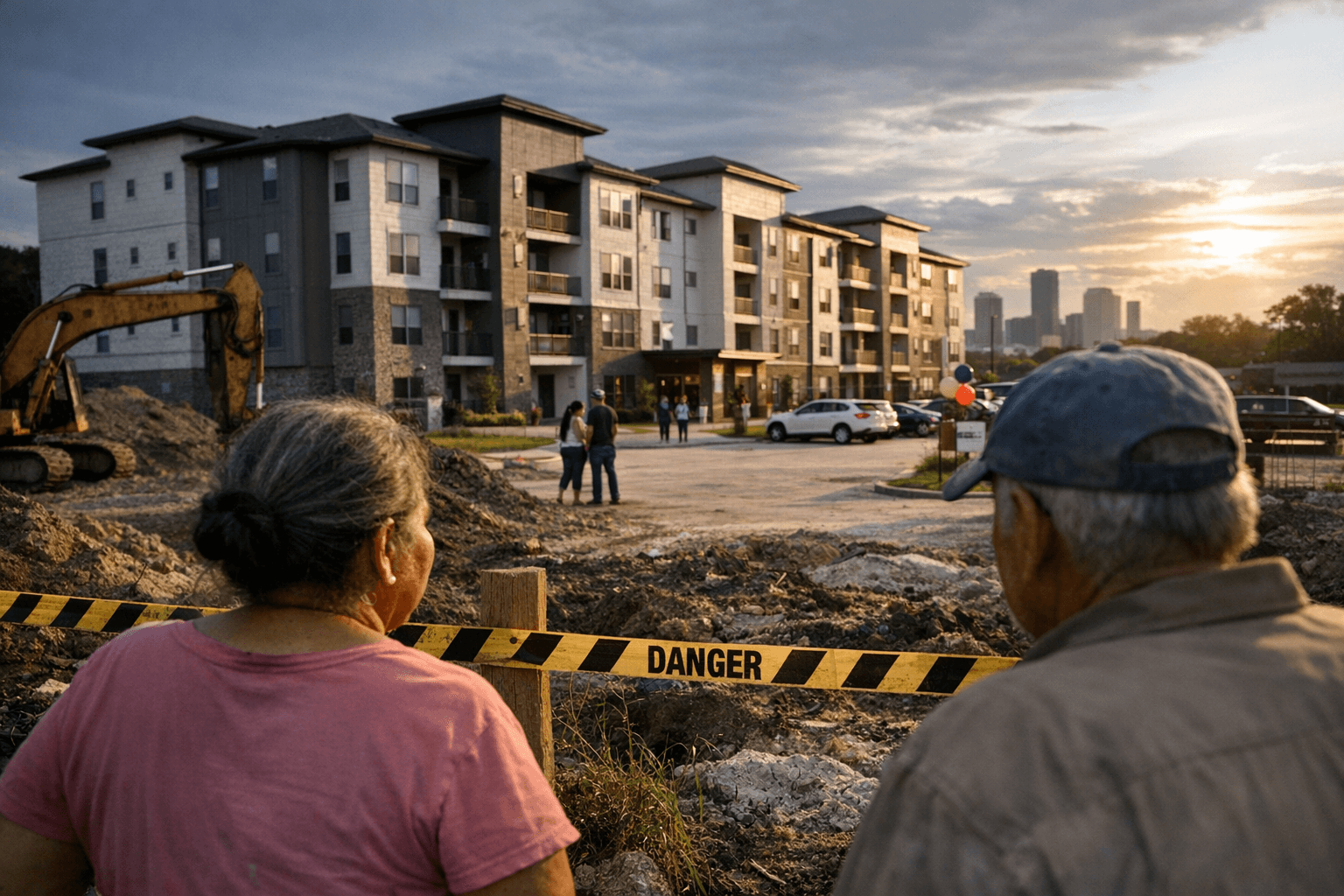
For Harris County residents, the reopening has immediate practical consequences. Displaced Clayton Homes families who were promised priority access may find more housing options within their neighborhood, and rising occupancy could ease local affordable housing shortages. At the same time, neighbors will be watching for continued environmental oversight, timely release of testing data and clear plans for long term monitoring and maintenance of capped areas.
What comes next is sustained scrutiny: follow up testing, enforcement of deed restrictions and implementation of the six‑year development pause will determine whether reopening restores confidence. Community leaders and city officials say ongoing transparency and oversight will be key as tenants move in and the Second Ward watches how remediation measures hold up over time.
Sources:
Know something we missed? Have a correction or additional information?
Submit a Tip