Police seized father’s guns after warning signs in mosque shooter case
Police had already removed guns from the Vazquez home, yet a year later three adults were dead at the San Diego mosque attack site.

Police had already stepped in at the Vazquez home, removed firearms under a restraining order and flagged Caleb Vazquez for alarming behavior tied to Nazis and mass shooters. The deeper question now is how that intervention, made after a welfare check in January 2025, failed to stop the chain that ended with three adults dead at the Islamic Center of San Diego.
Court records show Chula Vista police conducted the welfare check after concerns about Vazquez’s behavior. He was later placed on a psychiatric hold, and the check led to a California gun violence restraining order, a tool that can bar a person from having, owning or buying firearms, ammunition, magazines or body armor. Police then enforced the order by collecting weapons from the home.
Reports describe the surrender as a substantial cache, with the father turning over either dozens of guns or 26 guns. The size of the seizure underscored how seriously authorities viewed the threat at the time. It also set up the central failure in this case: even after the guns were taken, no mechanism appears to have fully interrupted the risk trajectory that court documents and police reporting had already identified.
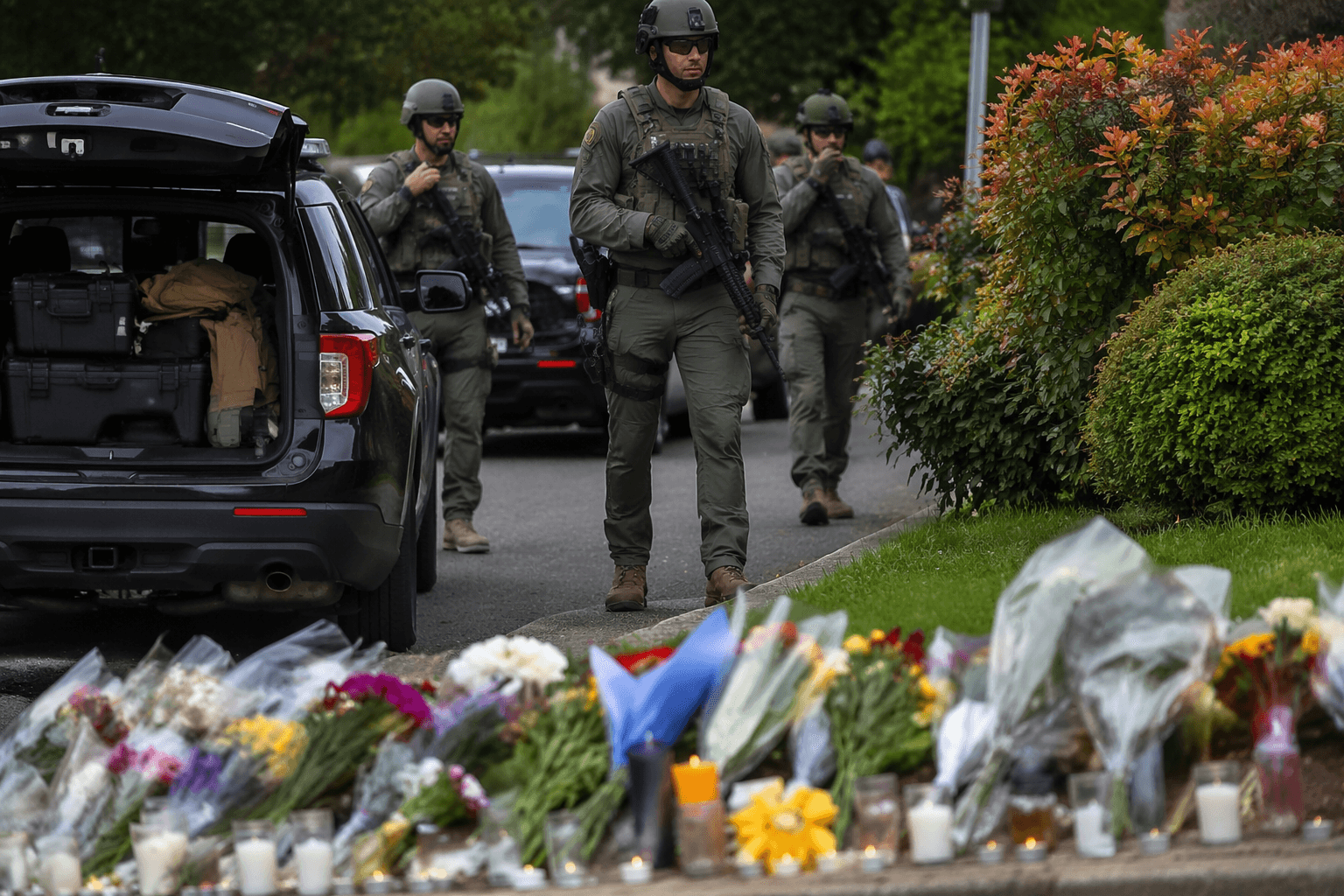
The attack came on Monday, May 18, 2026, at about 11:43 a.m. at the 7000 block of Eckstrom Avenue in Clairemont. San Diego police said the shooting at the Islamic Center of San Diego left three adults dead, while the two suspected teenage gunmen died by self-inflicted gunshot wounds. The city said victim services were available to affected students, parents, employees and community members, and Mayor Todd Gloria said anyone who seeks to do harm in San Diego should expect a swift response and justice.
The case has sharpened scrutiny of California’s gun violence restraining order process, which is meant to be preventive, not merely reactive. In theory, it gives police and courts a way to remove guns from people in crisis before violence erupts. In practice, this case shows the limits of a one-time removal when follow-up monitoring, psychiatric care, school and family oversight, and enforcement do not hold together over time.
Investigators were also examining an online document purportedly left by the suspects as they tried to authenticate their motives. That inquiry may clarify intent, but the timeline itself is already stark: warning signs in January 2025, a gun seizure after police action, and a fatal attack 16 months later at a mosque that had even prepared for an active-shooter threat. The tools existed; the hard part was sustaining the intervention long enough to matter.
Know something we missed? Have a correction or additional information?
Submit a Tip