Poll finds Mamdani more favored by Jewish Americans than Netanyahu
A June AP-NORC poll found 44% of Jewish Americans viewed Zohran Mamdani favorably, compared with 32% for Benjamin Netanyahu.
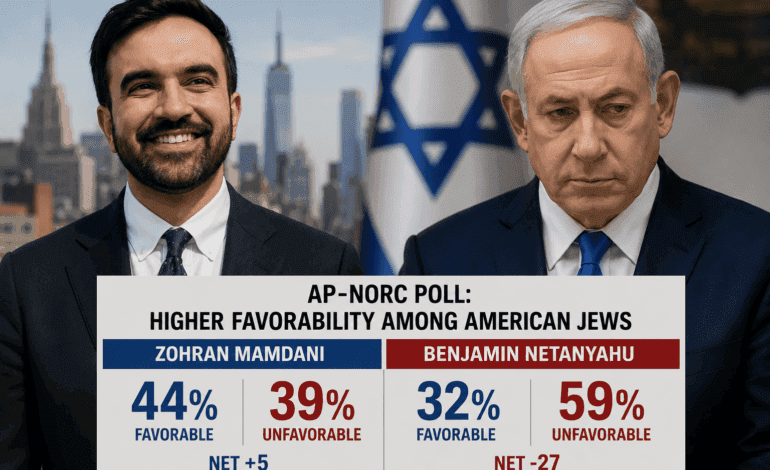
A June AP-NORC poll found Zohran Mamdani with a 44% favorability rating among Jewish Americans, compared with 32% for Benjamin Netanyahu, a striking split that puts New York’s mayor at odds with Israel’s prime minister in the eyes of many Jewish voters. The survey of more than 1,000 Jewish Americans also found 39% viewed Mamdani unfavorably and 59% viewed Netanyahu unfavorably.
The numbers matter far beyond a single matchup. The poll put Mamdani ahead of other prominent figures tested with Jewish respondents, including Donald Trump and Josh Shapiro, underscoring that Jewish political opinion in the United States is not moving in one direction or under one partisan banner. It also adds a new data point to a broader period of criticism from American Jews over Netanyahu’s handling of the Gaza war, which has increasingly shaped debate inside Democratic, Republican, and local politics.
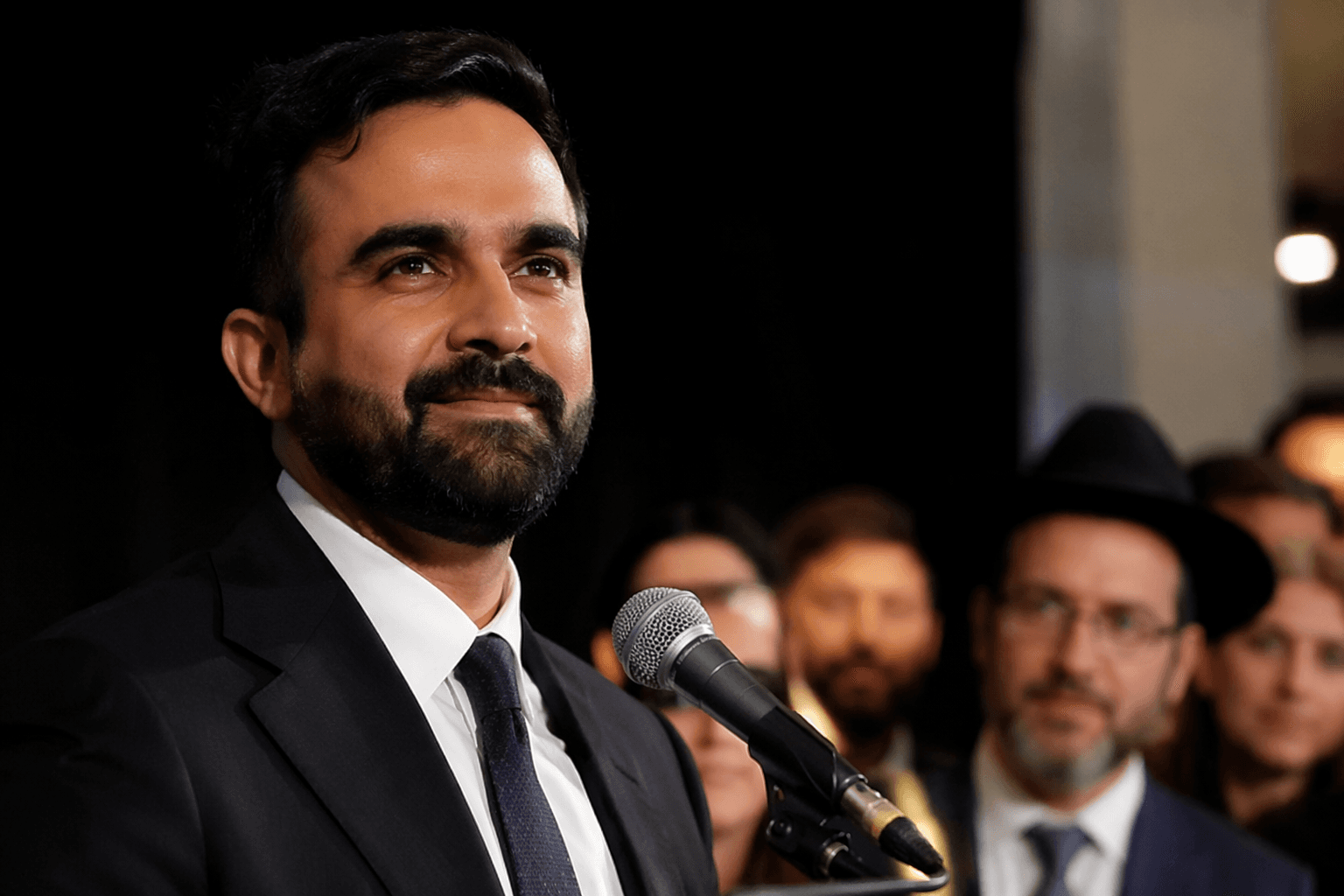
Curtis Sliwa, who ran against Mamdani in the 2025 New York City mayoral race, seized on the result with a blunt reaction: “it’s time for Bibi to go.” The line reflected how quickly the poll has been folded into New York’s political argument, where attitudes toward Israel can still influence local campaigns but no longer map neatly onto a single ideological line.
That tension was already visible in last year’s mayoral contest. Mamdani defeated Sliwa and Andrew Cuomo to win City Hall, and AP’s election coverage put his overall vote share at 50.8%. AP’s borough-by-borough results also showed Sliwa taking 21% in Staten Island, a reminder that his base was concentrated even as Mamdani built a citywide majority.

For politicians who have long treated Jewish voters as politically uniform, the poll cuts against that assumption. Mamdani has been a frequent target of pro-Israel critics because of his outspoken criticism of Israel, yet the AP-NORC results show that, among Jewish Americans surveyed, his standing was still stronger than Netanyahu’s. In New York City and beyond, that makes Jewish opinion less of a fixed bloc than a contested political terrain, shaped by local leadership, national polarization, and the war in Gaza.
This article was produced by Prism’s automated news system from verified source data, official records, and press releases, then run through automated quality and moderation checks before publishing. The system is built and supervised by the people who set the standards it runs under. Read our full AI policy.
Did this article answer your question?