Polymarket faces scrutiny over fake-win videos and marketing tactics
Fake-win clips have turned Polymarket profits into a marketing mirage. Regulators and researchers say the platform has long faced questions about legality, disclosure and manufactured enthusiasm.

Polymarket’s newest problem is not only whether its markets are real, but whether the profits shown on screens are. Viral clips, screenshots and polished promotional videos can make the platform look like a shortcut to easy money, even as questions mount over whether the gains are authentic or even verifiable.
That perception matters because Polymarket has already spent years under regulatory pressure in the United States. On January 3, 2022, the Commodity Futures Trading Commission ordered Blockratize Inc., doing business as Polymarket, to pay a $1.4 million civil monetary penalty, wind down noncompliant event-based binary options markets, and stop offering access to markets on Polymarket.com unless the company complied with the Commodity Exchange Act and CFTC rules. The agency said Polymarket had been operating an unregistered facility or non-designated contract market.
The company later built a separate U.S. structure. CFTC filings show QCX LLC, doing business as Polymarket US, was designated as a contract market on July 9, 2025. A Polymarket US rulebook was then filed with the agency in November 2025, followed by another filing on March 20, 2026. That sequence points to an effort to operate under a different regulatory frame even as the global platform continued to market itself aggressively.
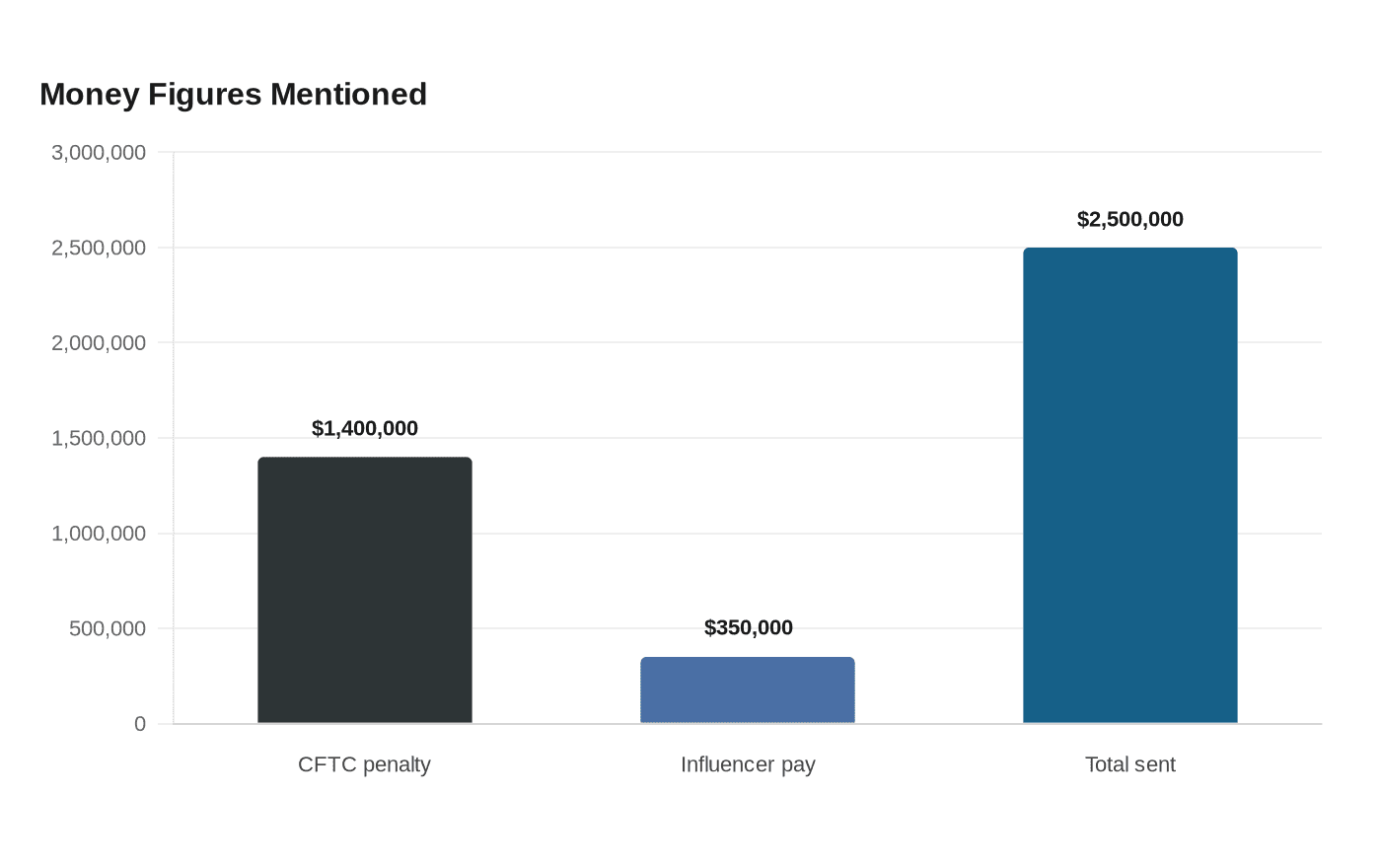
The marketing itself has drawn fresh scrutiny. POLITICO reported on June 5, 2026, that Polymarket chief marketing officer Matthew Modabber used a personal PayPal account to send at least $350,000 to influencers and content creators between January 2025 and February 2026. The same analysis found more than $2.5 million sent to more than 800 recipients over that 14-month span. For a platform that trades on public perception, those payments raise a blunt question: how much of the apparent momentum was user demand, and how much was purchased attention?
Researchers have already warned that the trading tape can be misleading. Columbia Business School published a study in November 2025 finding significant artificially inflated trading activity on prediction markets such as Polymarket, reinforcing concerns that enthusiasm on the screen can be manufactured. Polymarket describes itself as the world’s largest prediction market, and its listings now span politics, sports, crypto, geopolitics, tech, culture, economy, weather and elections.
That breadth gives the platform reach, but it also magnifies the risk of manipulation by image. When a market’s appeal depends on the feeling that other people are getting rich, fake-win videos and influencer spend can distort the product itself. In that environment, the central consumer issue is not just what Polymarket allows people to bet on, but what it convinces them they are seeing.
This article was produced by Prism’s automated news system from verified source data, official records, and press releases, then run through automated quality and moderation checks before publishing. The system is built and supervised by the people who set the standards it runs under. Read our full AI policy.
Did this article answer your question?