Pope Leo XIV and Trump White House Relationship Already Souring, Reports Find
A U.S. official invoked a 14th-century papal takeover as a veiled threat at a closed-door Pentagon meeting with the Vatican's ambassador, new reporting finds.
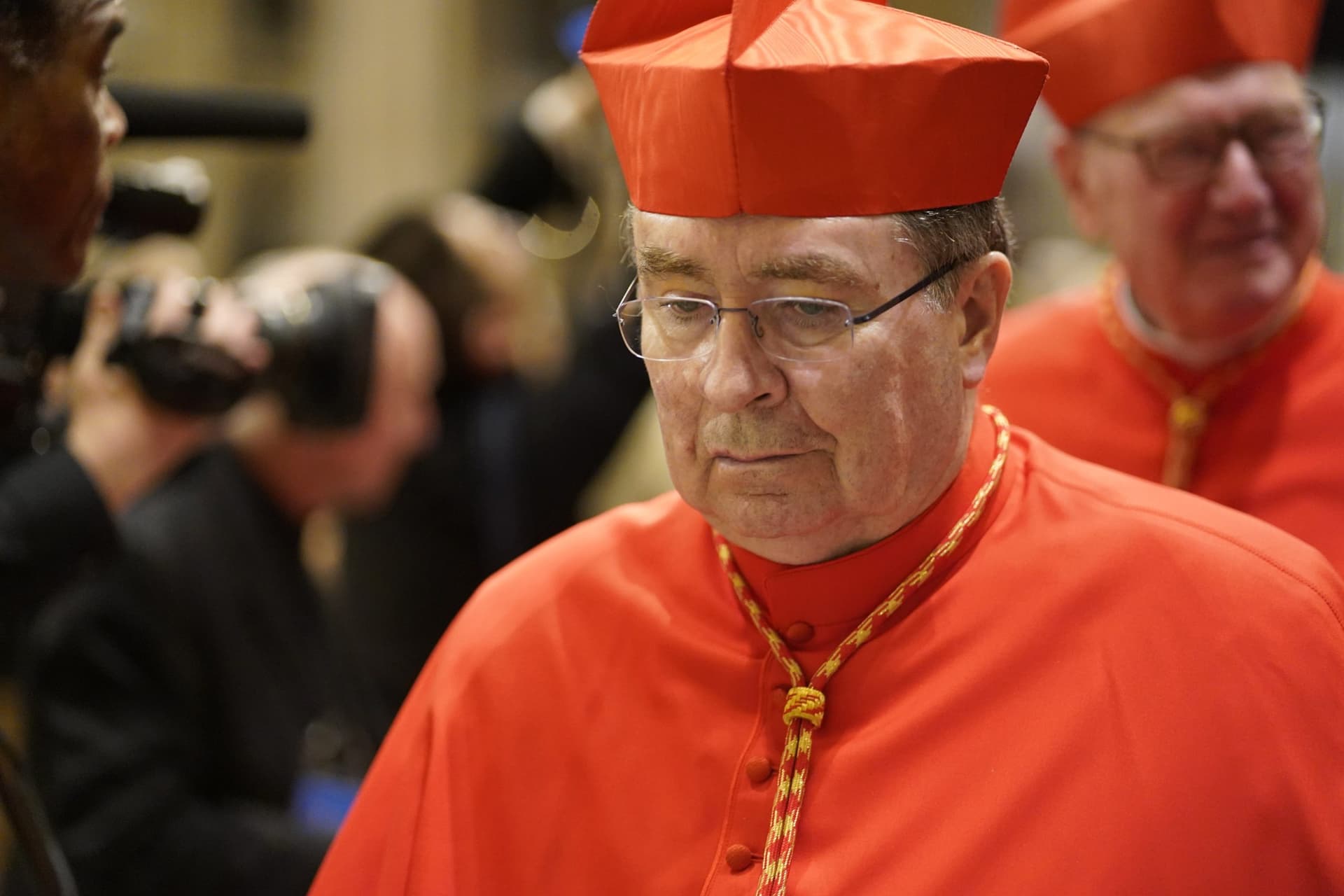
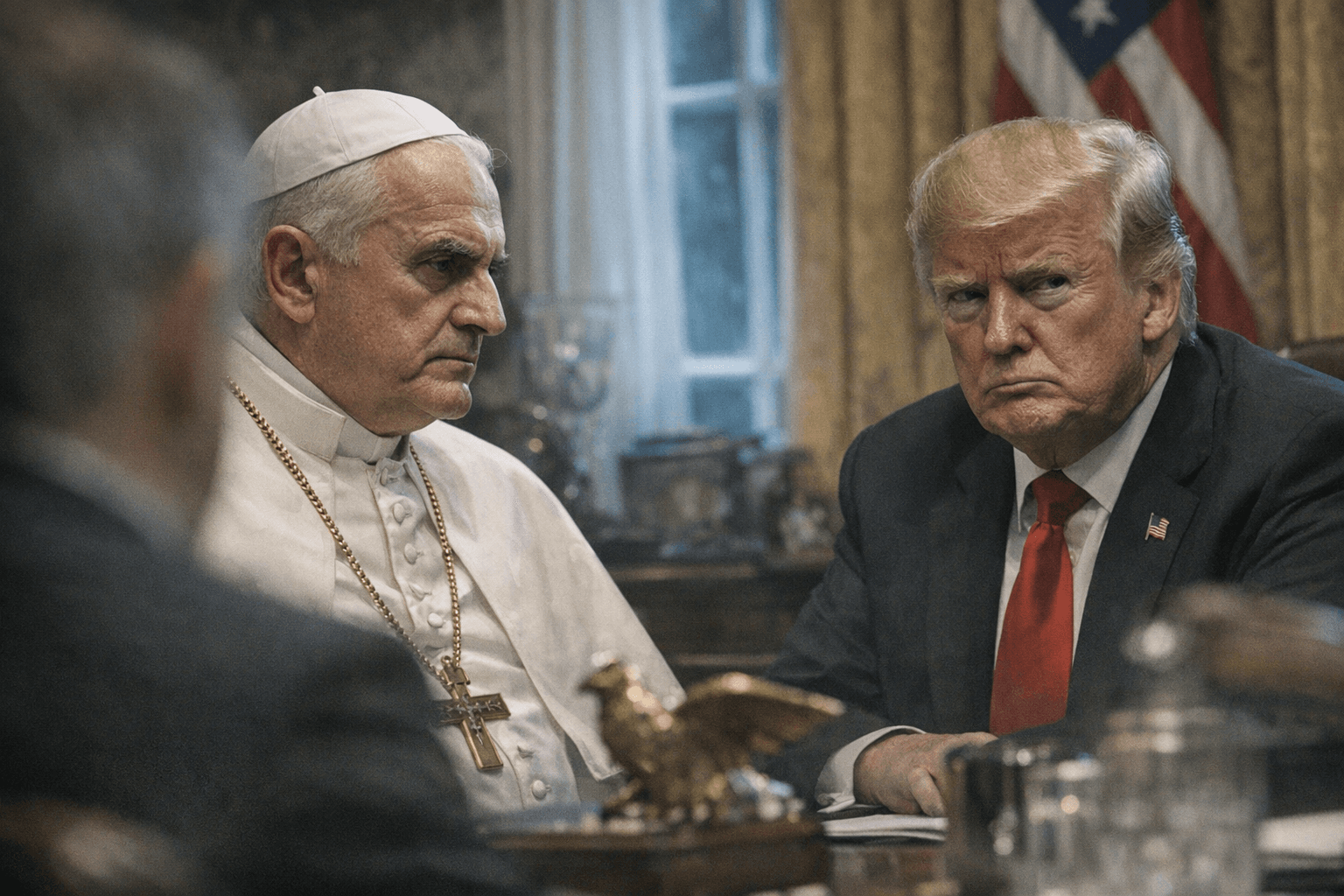
Rome-based journalist Mattia Ferraresi describes the meeting at the Pentagon, for which there is no public record, as the culmination of months of brewing tensions between Donald Trump and Pope Leo XIV. Undersecretary of Defense for Policy Elbridge Colby summoned Cardinal Christophe Pierre, then the Vatican's ambassador to the United States, to the Pentagon in the days following the pope's January "State of the World" address. According to accounts from Vatican and U.S. officials briefed on the encounter, an American official told Pierre that the United States "has the military power to do whatever it wants in the world" and that "the Catholic Church had better take its side." As the meeting grew heated, one official invoked the Avignon Papacy, the 14th-century episode when the French Crown leveraged military power over the Catholic Church. Vatican officials interpreted the purported remarks as a threat to use military force against the Holy See.
At the center of the collision is a pope unlike any the United States has ever had to navigate. Born Robert Francis Prevost in Chicago on September 14, 1955, he became the 267th pope on May 8, 2025, winning election on the fourth ballot of the conclave and making history as the first American-born pontiff and the first from the Augustinian religious order. He holds dual U.S.-Peru citizenship, having served as a missionary and later as bishop of Chiclayo. The combination of American origins and global pastoral experience has produced a pope willing to rebuke Washington without hesitation.
Relations between the United States and the Catholic Church have not recovered since the January meeting, and tensions were not mended by February, when the Holy See rejected the White House's invitation to host Leo for America's 250th anniversary. Vice President JD Vance had personally extended that invitation just two weeks after Leo's election. Rather than Washington, Leo will instead spend July 4, 2026, on the Mediterranean island of Lampedusa, a stopping point for African refugees hoping to reach Europe. One Vatican official told Ferraresi: "The Pope may well never visit the United States under this administration."
The policy divides are substantive. Trump launched a war against Iran on February 28, 2026, and Leo's opposition grew sharper in the weeks that followed, calling Trump's threat to annihilate Iran "truly unacceptable." On Easter Sunday, April 5, Leo urged world leaders to lay down weapons, the culmination of a rhetorical escalation against the Iran war that grew in intensity over Holy Week. On the same morning, Trump posted a profanity-laden social media message threatening further strikes against Iran.
On immigration, the U.S. Catholic hierarchy amplified Leo's rebukes with the USCCB issuing a rare "special message" opposing mass deportations that the pope publicly endorsed. The USCCB's unified message opposing "the indiscriminate mass deportation of people" received approval from more than 95 percent of the voting bishops. Yet polling shows most Catholic voters still support Trump and deportations despite the bishops' concern, a fracture that will define how both parties court the roughly 52 million Catholic Americans ahead of the next election cycle.
The Pentagon called the January 22 meeting "substantive, respectful, and professional," saying officials discussed "issues of morality in foreign policy." Vance, confronted with the reporting while traveling in Hungary, said he would "look into" it. White House press secretary Karoline Leavitt, herself a Catholic, has pushed back on Leo's public criticisms. Cardinal Pierre retired in March 2026.
The account was independently backed up by journalist Christopher Hale, who writes the "Letters from Leo" Substack, and who called the Ferraresi report "an extraordinary piece of journalism." Colby, who is himself a Catholic and previously served in Trump's first administration, declined to address the specific characterizations. No U.S.-Vatican relationship in modern memory has produced a meeting at the Pentagon between a defense undersecretary and a papal nuncio, let alone one in which a medieval siege of the papacy was reportedly invoked as a point of reference.
This article was produced by Prism’s automated news system from verified source data, official records, and press releases, then run through automated quality and moderation checks before publishing. The system is built and supervised by the people who set the standards it runs under. Read our full AI policy.
Did this article answer your question?