Pope Leo XIV urges Cameroonian youth to reject corruption, serve common good
Pope Leo XIV told Cameroonian youth in Douala to reject corruption as huge crowds filled Japoma Stadium, in a country where jobs and public trust remain under strain.
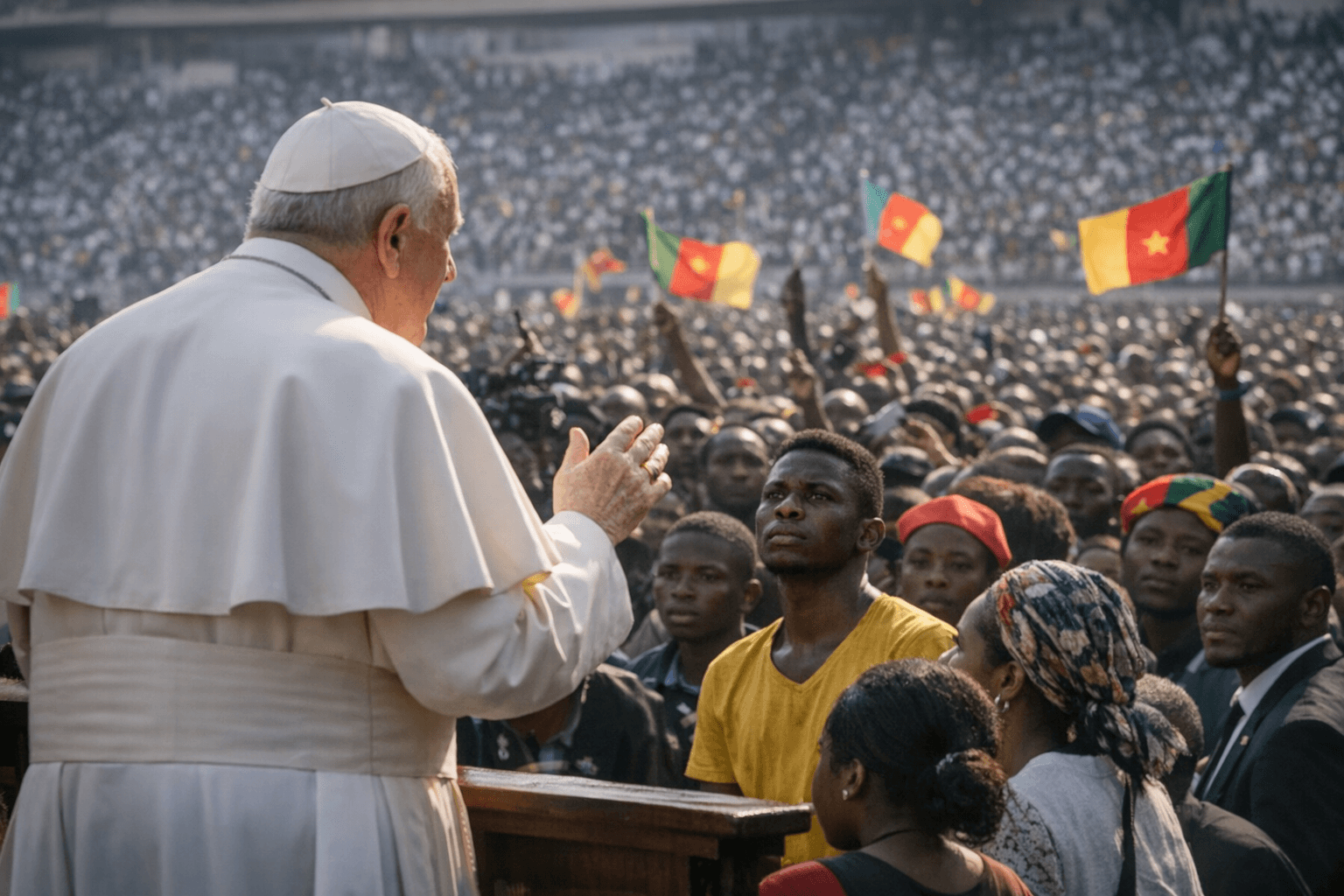
Pope Leo XIV used a mass in Douala to press Cameroonian youth to resist corruption and put the common good ahead of private gain, turning a major stop on his Africa journey into a direct appeal to a generation facing unemployment, political frustration and weak confidence in public life.
The pope celebrated Mass at Japoma Stadium on April 17 as part of his 11-day trip to Algeria, Cameroon, Angola and Equatorial Guinea. Vatican travel documents placed the Cameroon leg of the journey from April 15 to 18, with Douala listed as a one-day stop that also included a private visit to Saint Paul Catholic Hospital and a later meeting with university students and professors at the Catholic University of Central Africa.
The scale of the gathering underscored the reach of the message. Vatican News said around 600,000 faithful joined the Mass in Douala, while other reports put attendance at more than 120,000. Either estimate made the event one of the largest moments of the pope’s Africa trip and gave his remarks unusual visibility in Douala, a port city and commercial center tied closely to trade, mobility and economic life.
In the official homily, the pope linked faith to public ethics, speaking of “signs of justice” in a “suffering and oppressed land” and “signs of peace amid rivalry and corruption.” He also stressed that there is enough bread for everyone if it is shared rather than snatched away, a line that framed corruption as a moral failure with real economic consequences in a country where access to opportunity is often uneven.
Leo’s appeal in Douala followed a stop in Yaoundé on April 15, where he told Cameroonian authorities, civil society leaders and diplomats that the country has the human, cultural and spiritual resources to overcome trials and conflicts. He said serving one’s country means dedicating oneself “with a clear mind and upright conscience to the common good.” That address also recalled earlier papal visits by John Paul II and Benedict XVI and presented Cameroon as capable of moving toward stability and shared prosperity.
The Vatican has described the Cameroon visit as a “messenger of peace” journey, and Archbishop Andrew Nkea Fuanya of Bamenda welcomed the announcement as a beacon of hope. In Douala, the pope’s message reached beyond doctrine. It placed the burden of renewal on young Cameroonians, while also exposing the gap between moral exhortation and the institutional reform, jobs and trust they need to make that appeal stick.
This article was produced by Prism’s automated news system from verified source data, official records, and press releases, then run through automated quality and moderation checks before publishing. The system is built and supervised by the people who set the standards it runs under. Read our full AI policy.
Did this article answer your question?