Pope Leo XIV warns AI threatens workers, truth and peace
Pope Leo XIV’s first encyclical put Silicon Valley on notice, while its biggest names stayed silent as he linked AI to labor, truth and war.

Pope Leo XIV used his first encyclical to warn that artificial intelligence threatens workers, truth and peace, and the sharpest reaction from the American tech world was silence. Sam Altman, Elon Musk and Mark Zuckerberg did not immediately comment, and Amazon, Anthropic, Google, Meta, Microsoft, Nvidia, OpenAI and xAI also stayed quiet, a muted response that suggests the industry has little appetite for an ethical debate it cannot easily control.
The Vatican issued Magnifica Humanitas on May 25 and presented it at 11:30 a.m. in the Synod Hall in Vatican City, with Pope Leo XIV present. The document, signed on May 15, the 135th anniversary of Pope Leo XIII’s Rerum Novarum, was framed as a defense of the human person in the time of artificial intelligence. The encyclical runs roughly 42,300 words and treats AI not as a narrow technology issue but as a test of labor rights, human dignity and political responsibility.
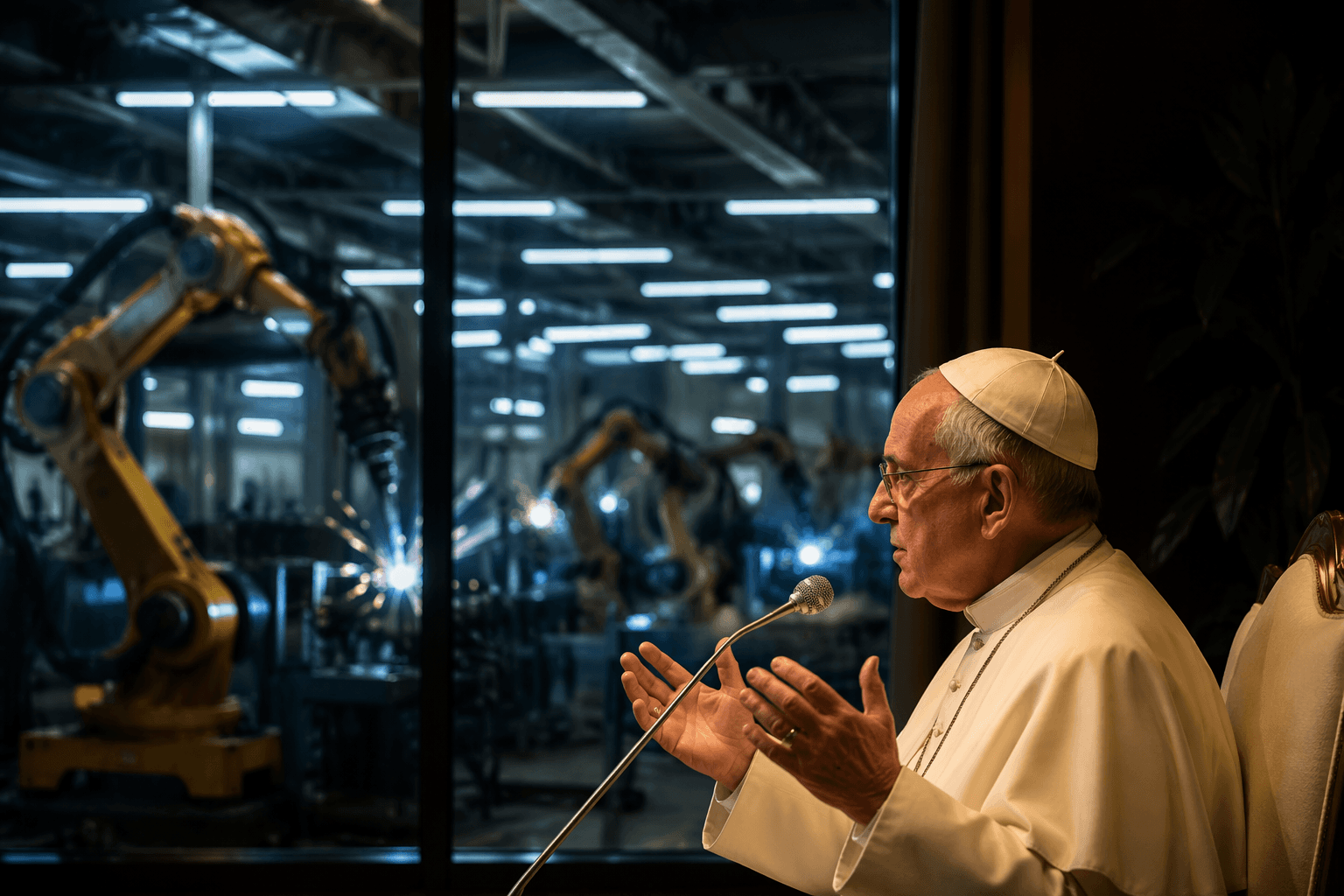
Leo called for tighter regulation of the private companies driving the AI boom, stronger protections for workers facing economic disruption and safeguards against fake AI-generated information. He also voiced alarm over the growing ease with which autonomous weapons systems can be deployed. Governments, he said, should slow down and closely regulate AI development, while building robust legal frameworks, independent oversight and a political system that does not surrender responsibility. He also warned against allowing ownership of AI data to remain solely in private hands.
The silence from most of Silicon Valley stood in contrast to the few voices willing to meet the pope on his own ground. Christopher Olah, a co-founder of Anthropic and head of interpretability research, appeared at the Vatican presentation and welcomed moral voices trying to guide the industry. Yoshua Bengio, one of the field’s best-known researchers, publicly backed Leo’s call for AI to serve the common good. Vatican officials including Cardinals Pietro Parolin, Víctor Manuel Fernández and Michael Czerny, along with theologians Anna Rowlands and Leocadie Lushombo, were also present.
Leo’s warning extended beyond corporate power into geopolitics. He said AI rivalry is being driven by competing powers in a dehumanizing race for supremacy, and he linked the issue to war, education, communication, community and the environment. The Vatican had already made AI a recurring theme in Leo’s June 2025 remarks to a Rome conference on AI, ethics and corporate governance, his November 2025 comments on medicine and his January 2026 warning about algorithmic control and manipulation. The new encyclical places the church squarely inside the national argument over who gets to shape AI risk, and who will answer when that power goes unchecked.
This article was produced by Prism’s automated news system from verified source data, official records, and press releases, then run through automated quality and moderation checks before publishing. The system is built and supervised by the people who set the standards it runs under. Read our full AI policy.
Know something we missed? Have a correction or additional information?
Submit a Tip