Popular macOS Network Monitor Little Snitch Now Available on Linux
Little Snitch, the macOS network monitor trusted since 2003, launched a free Linux version that found Firefox phoning home on a fresh Ubuntu install while LibreOffice stayed silent.
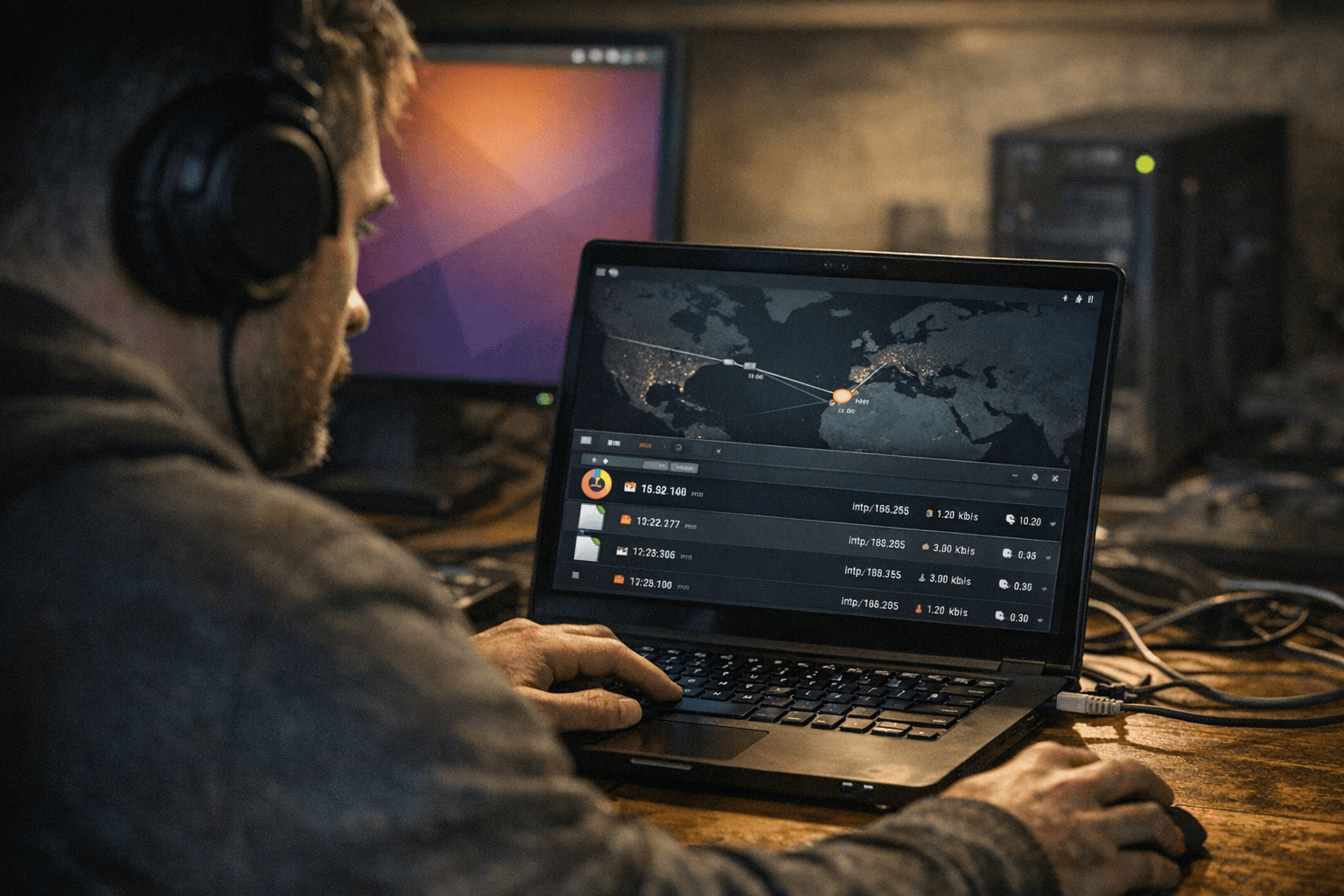
After 25 years as a macOS exclusive, Little Snitch arrived on Linux this week, bringing per-application network visibility to a platform where the closest equivalent had long meant parsing command-line output or configuring server-grade security systems never designed for the desktop.
Objective Development, the Austrian software company behind the tool, released a completely free Linux version, rebuilt from scratch rather than ported. Creator Christian Starkjohann said he built the Linux version out of personal need after installing Linux on old hardware and immediately feeling his system was "naked" without it. The release is framed within a broader context of reducing dependence on foreign-controlled software, with geopolitical concerns influencing Starkjohann's move to Linux in the first place.
The tool monitors outgoing network connections at the application level and shows users which processes are communicating with whom, with options to selectively block connections. That granularity is what separated it from the alternatives Starkjohann evaluated. OpenSnitch, a GNU/Linux application firewall inspired by Little Snitch and available since 2017, existed as an option, but Starkjohann found it didn't provide the straightforward visibility he wanted. His stated goal was simple: see which process is making which connections and, if needed, deny it with a single click. In comparison to OpenSnitch, Little Snitch offers a combination of a mature interface, visualization, and rule engine.
On Ubuntu, Starkjohann found 9 system processes making internet connections over the course of one week. On macOS, the equivalent count was more than 100. Individual app behavior produced sharper contrasts. Firefox, which comes pre-installed as the default browser on Ubuntu, immediately connected to ads.mozilla.org, incoming.telemetry.mozilla.org, "and many more" before a user opened any website. LibreOffice, by contrast, launched without making any network connections at all.
The Linux version is written in Rust and uses eBPF for kernel-level traffic interception, which lets sandboxed code run inside the Linux kernel without modifying it. Rather than a traditional desktop GUI, it uses a web-based interface, enabling users to monitor a Linux server remotely from any device, which is useful for anyone running services like Nextcloud or Home Assistant.
The tool currently runs on Linux kernel 6.12 and later, which in practice means Debian 13, Ubuntu 25.04, Linux Mint 22, Fedora 40, RHEL 10, and rolling-release distributions like Arch and Manjaro. Kernel 5.17 compatibility would extend support to Debian 12 and Ubuntu 24.04 LTS, and the company is inviting contributions from developers with the expertise to close that gap.
The architecture introduces a specific trust question. Two of the three components, the eBPF kernel program and the web UI, are open source and available on GitHub, while the daemon is proprietary but free to use and redistribute. Installing a system-wide traffic monitor that routes all connection data through a closed binary requires a degree of trust in the vendor, a tradeoff that every potential user must weigh.
Objective Development has positioned Little Snitch for Linux as a privacy aid rather than a hardened security tool. The company explains that under heavy traffic, eBPF cache tables can overflow, making it impossible to reliably tie every network packet to a process or DNS name, and that attackers could exploit this limitation to evade detection. For journalists, developers, and self-hosters who want to know what their software is quietly doing rather than stop a determined adversary, that distinction defines exactly what the tool is for.
This article was produced by Prism’s automated news system from verified source data, official records, and press releases, then run through automated quality and moderation checks before publishing. The system is built and supervised by the people who set the standards it runs under. Read our full AI policy.
Did this article answer your question?