Portugal cuts 2026 growth forecast to 2%, still targets balanced budget
Portugal cut its 2026 growth forecast to 2% as storm damage and higher energy costs hit an economy still trying to avoid a deficit.

Portugal trimmed its 2026 growth forecast to 2% from 2.3% and, for now, is still betting it can hold the budget in balance even as storms and energy shocks squeeze the outlook. The downgrade underscores how quickly a small open economy can absorb blows from weather, fuel prices and trade costs at the same time.
The finance ministry said the economy stagnated in the first quarter, hurt by weaker net exports and the destructive storms that struck central Portugal. Storm Kristin hit mainland Portugal on January 31 with winds above 200 km/h, killing at least six people and leaving homes, factories and infrastructure badly damaged. The government initially estimated more than €4 billion in direct reconstruction costs and later approved a €2.5 billion package of loans and incentives to support rebuilding. Joaquim Miranda Sarmento said in February that storm damage would constrain efforts to keep the budget balanced and reduce public debt, even as Lisbon pledged to do everything possible to preserve fiscal discipline.
The new forecast also reflects the pressure from higher energy prices tied to the Iran conflict. Inflation was lifted to 2.5% from 2.0%, while private consumption is expected to soften as disposable-income growth weakens, inflation stays elevated and households keep saving at a relatively high rate. Officials still expect reconstruction spending later in the year, along with EU-funded investment projects, to help offset part of the slowdown, but the balance of risks has clearly shifted. The government also said €2.5 billion in EU recovery funds will be booked as expenditure in 2026, narrowing fiscal room.
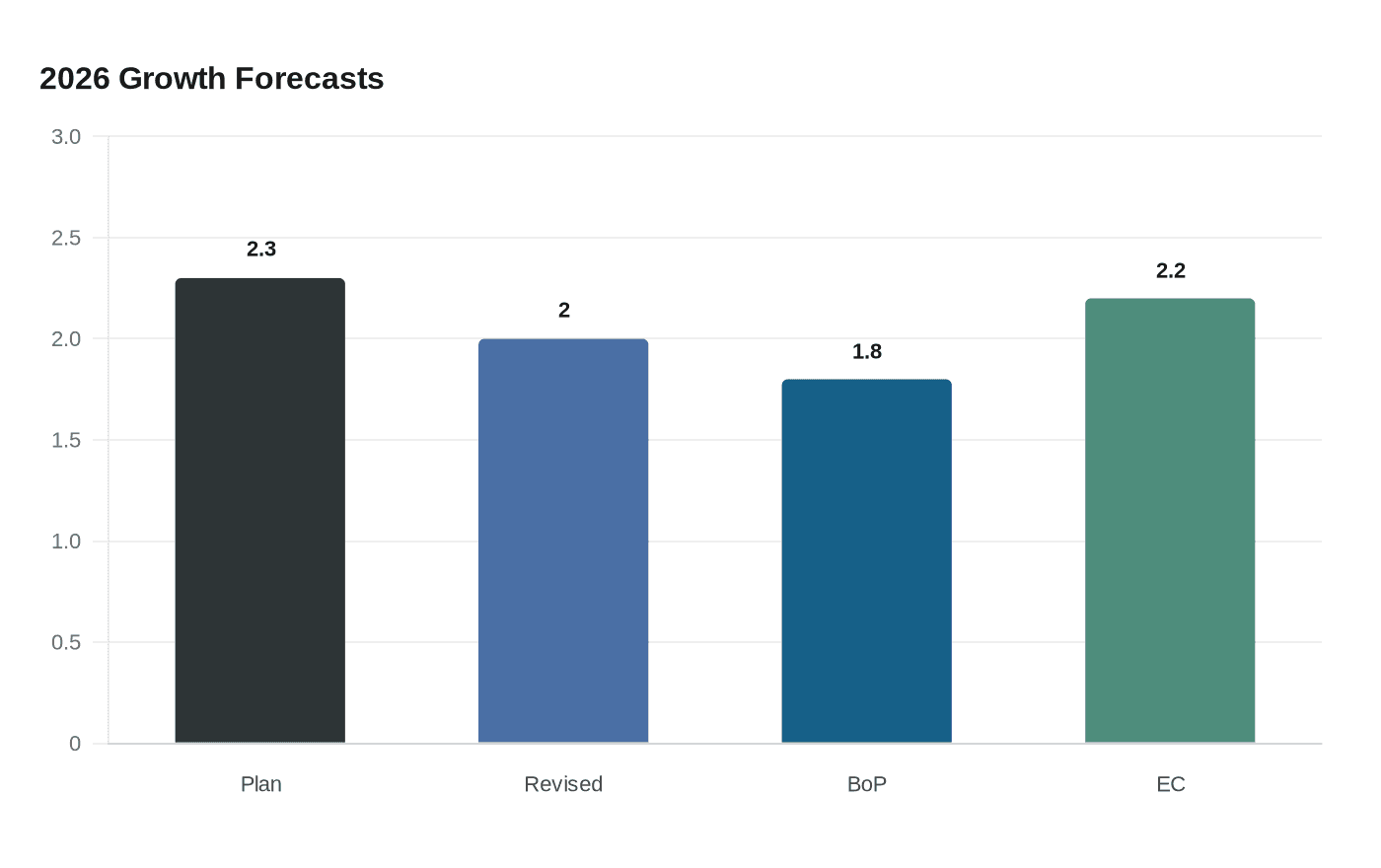
Lisbon’s outlook is still slightly firmer than the Bank of Portugal’s, which in March cut its own 2026 growth forecast to 1.8%. The European Commission is somewhat more optimistic on output at 2.2%, but it sees Portugal running a deficit of 0.3% of GDP next year and debt falling to 89.2% of GDP. That gap shows how much uncertainty still surrounds the path ahead, even after Portugal entered 2026 with unusual fiscal momentum and a plan that had called for 2.3% growth and a 0.1% surplus.
The broader policy challenge is becoming sharper across Europe: governments want to cushion households and companies from higher costs without weakening budget discipline. Portugal’s balanced-budget target is meant to reassure investors and Brussels that the post-crisis repair effort remains intact, but the latest revision shows how storm damage and imported inflation can still reshape the numbers faster than policymakers can rebuild them.
This article was produced by Prism’s automated news system from verified source data, official records, and press releases, then run through automated quality and moderation checks before publishing. The system is built and supervised by the people who set the standards it runs under. Read our full AI policy.
Did this article answer your question?
%3Amax_bytes(150000)%3Astrip_icc()%2FCertificate-of-deposit-2301f2164ceb4e91b100cb92aa6f868a.jpg&w=1920&q=75)
