Post-Starmer Labour leader faces stagnant economy and rising populism
Britain’s growth has returned, but only barely, and inflation is still 3.0% as any post-Starmer Labour leader inherits the same pressure to deliver fast living-standards gains.
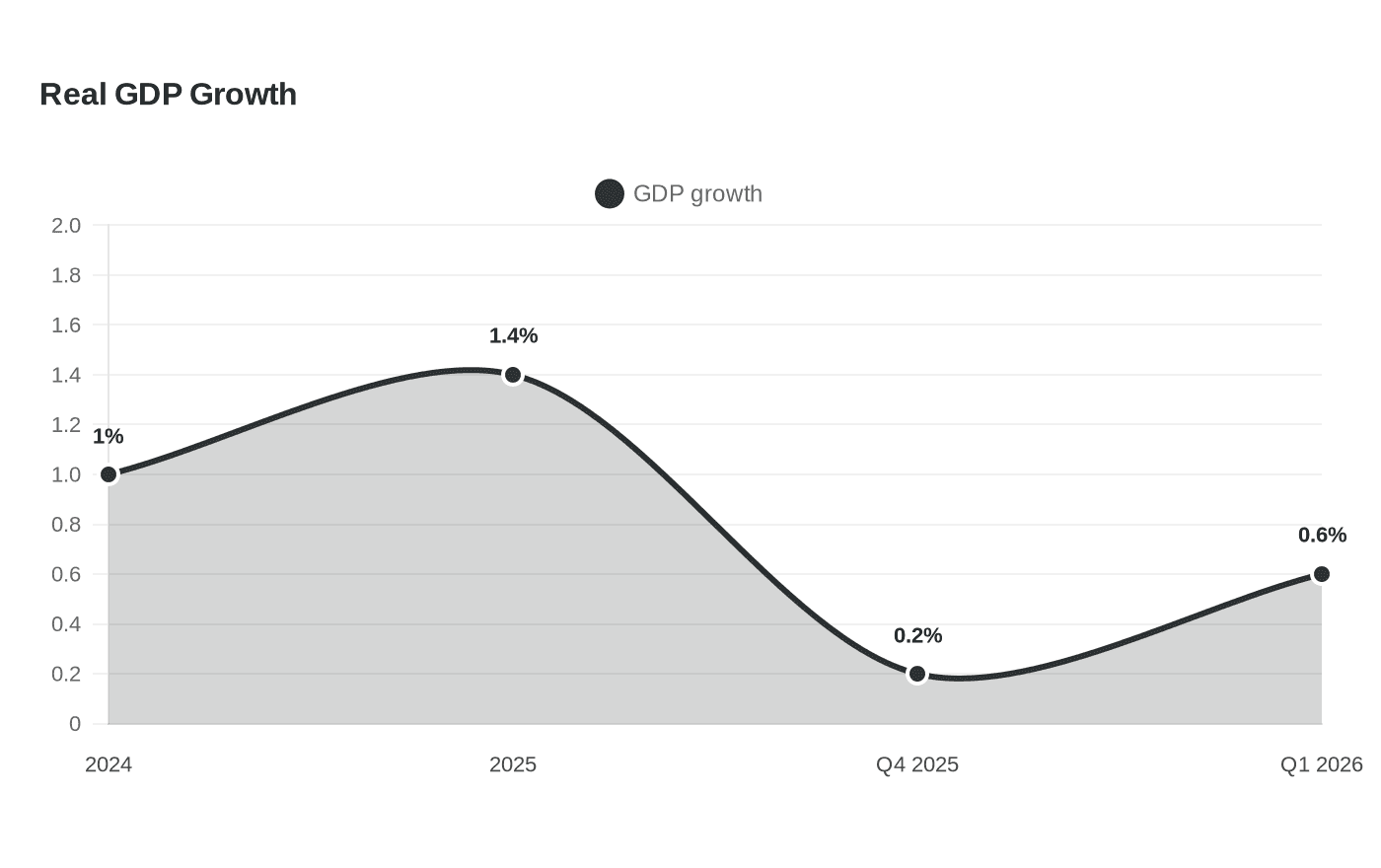
Any Labour successor to Keir Starmer would inherit the same blunt arithmetic: the economy has only recently returned to modest growth, inflation is still sticky, and the labour market is cooling without much urgency. The Office for National Statistics said real GDP rose 0.6% in the first quarter of 2026 after revised growth of 0.2% in the final quarter of 2025, while GDP grew 1.4% in 2025 after 1.0% growth in 2024. At the same time, CPIH inflation was 3.0% in the 12 months to May 2026 and CPI was 2.8%, leaving households with little sense that the recovery has yet translated into easier weekly budgets.
The latest labour market data underline the same point. The Office for National Statistics’ June 2026 labour market release showed employment at 75.0% for February to April 2026 and unemployment at 4.9%. Those numbers do not point to a crash, but they do suggest a labour market that is no longer delivering the kind of easy gains that can quickly lift sentiment. For the next Labour leader, that matters because political patience tends to run thin when growth is weak, prices are still rising faster than comfort, and pay packets are still working hard just to stand still.
Andy Burnham remains the clearest reference point in any discussion of what might come after Starmer. He was elected Mayor of Greater Manchester in May 2017, winning that first contest with 63% of the vote, and Greater Manchester Combined Authority describes the post as the directly elected leader of the combined authority, a role created through English devolution. Burnham’s record in Greater Manchester has been built around ending rough sleeping, promoting green growth, and making the city-region a better place to live and get on, an agenda that points to a more interventionist style than the Starmer project.
That ideological contrast has been visible for years. Burnham contested the Labour leadership in 2010 and lost to Ed Miliband, but the older politics around him still resonates in Labour circles. In BBC coverage, Burnham said Labour had been “too timid” about raising taxes to cut the deficit, a line that captures the more muscular public-spending instincts many in the party associate with him. If Labour faces another period of stagnation or electoral stress, that distinction could matter as much as personality.
The wider political backdrop is no calmer. The 2024 UK parliamentary general election was called on 22 May 2024 and held on 4 July 2024, and the Electoral Commission said the election and the concurrent May 2024 polls were well run. Yet the deeper frustration that fed anti-establishment politics did not disappear with the ballot count. Greater Manchester’s June 2026 vision of becoming a “second city” rival by 2050, with new underground transport services and a flagship station at Manchester Piccadilly, shows the scale of investment some Labour figures believe Britain now needs. Whether voters will allow a new leader enough time to pursue that kind of long-term repair remains the central political test.
This article was produced by Prism’s automated news system from verified source data, official records, and press releases, then run through automated quality and moderation checks before publishing. The system is built and supervised by the people who set the standards it runs under. Read our full AI policy.
Know something we missed? Have a correction or additional information?
Submit a Tip