Practical avian veterinary guidance on psittacosis, zoonotic risks for parrot owners
humans are readily infected: practical steps to spot, test, quarantine, and treat psittacosis so you protect your birds and your household.
Overview and why this matters
“This evergreen guidance is a concise, practical primer for parrot owners and caregivers about psittacosis (also called parrot fever), the avian bacterial disease caused by Chlamydia psittaci that can infect both birds and people.” That opening line from the core guidance captures the key point: psittacosis is a zoonosis that moves between birds and people. The British Columbia Centre for Disease Control is blunt: “Humans are readily infected.” A clinic fact often cited in practice materials puts a surprising number on it: “Approximately 100 people are reported to contract Chlamydophila from birds each year.” Those are the stakes for you as an owner: protecting your flock often protects your family.
What causes psittacosis
The organism appears under both modern and older names in veterinary and public health documents: Chlamydia psittaci and Chlamydophila psittaci. Alberta Health describes C. psittaci as “a non-motile, gram-negative bacilli.” Public-health documents note the bacterium is globally distributed and particularly common among psittacine birds in tropical and subtropical regions. Environmental survival varies by source, but the range is notable: Alberta guidance states the organism “can survive outside of the host for a few days to two months” and is “susceptible to moist heat (121° C for at least 15 minutes) and dry heat (160° C – 170° C for at least one hour).” Huntersville clinic materials echo persistence concerns, noting “It can live for up to weeks, even months, in organic material.”
Which birds and people are at risk
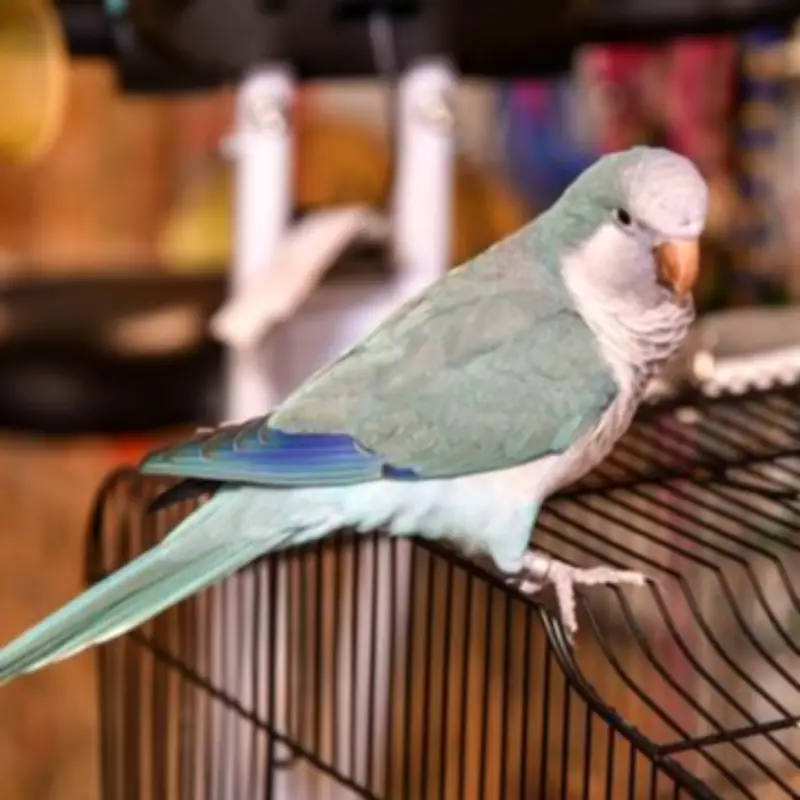
More than 100 bird species can carry the organism, with psittacine birds such as parrots, macaws, cockatiels and parakeets most frequently implicated in the United States. Other birds, including pigeons, turkeys, owls and raptors, have also been diagnosed with chlamydiosis. Baby birds are consistently noted as more vulnerable, and British Columbia guidance warns young birds “may die in the nest or soon after weaning.” On the human side, clinical guidance and clinic materials highlight higher risk among immunosuppressed people, organ transplant recipients, those on high doses of steroids, and the elderly.
How transmission works and incubation
Transmission routes are practical and household-relevant: the bacteria are shed in feces and respiratory discharges, and infection spreads via fecal-oral and respiratory routes; feather dust and respiratory secretions can be airborne. Vertical transmission from parent to egg has been reported but appears infrequent. Incubation is typically short; the BCCDC lists 3 days to 4 weeks while other public-facing guidance notes illness usually begins between 3 days and several weeks, with rare reports of birds not becoming ill for up to a year. Importantly, asymptomatic carriage is common: infected birds can “look perfectly healthy” and yet intermittently shed organisms for weeks to months, creating a hidden risk.
Signs to watch for
Clinical signs in birds can be vague or dramatic. Classic indicators include nasal and ocular discharge, conjunctivitis, sinusitis, green droppings, ruffled feathers, inactivity, fever, weakness, loss of appetite and weight loss. Some birds show respiratory signs such as sneezing, while severe infections may lead to death. In people, symptoms usually resemble influenza with fever, cough, chills and muscle aches. Because signs overlap with other avian respiratory diseases, BCCDC lists differential diagnoses including influenza, herpesviruses, paramyxovirus, Enterobacteriaceae and Pasturella.
Diagnosis: what vets and labs look for
Diagnosis is often challenging and typically uses multiple methods. Alberta’s case definition for a confirmed human case includes any clinical illness plus laboratory confirmation by one of these criteria: isolation of C. psittaci, detection of C. psittaci nucleic acid by PCR in an appropriate clinical sample such as sputum or throat swab, a fourfold rise in IgG titers between acute and convalescent sera collected 2 to 3 weeks apart, or presence of IgM antibody against C. psittaci by MIF at or above 1:16. The BCCDC lists diagnostic tools including culture, antigen or nucleic acid detection, histochemistry, immunohistochemical staining and serology. Canadian avian-veterinary guidance stresses that “a confirmed diagnosis of chlamydiosis in a live bird is sometimes difficult” and recommends more than one type of test combined with careful clinical evaluation.
Treatment basics
Public-health fragments and veterinary notes concur that antibiotics from the tetracycline group are the standard therapy: Alberta guidance states “Treatment of a Case: Antibiotics of the tetracycline group, given for 14 – 21 days.” Your avian veterinarian can tailor therapy and a follow-up plan for the affected bird and the rest of your flock.
Practical case management and clinic capabilities
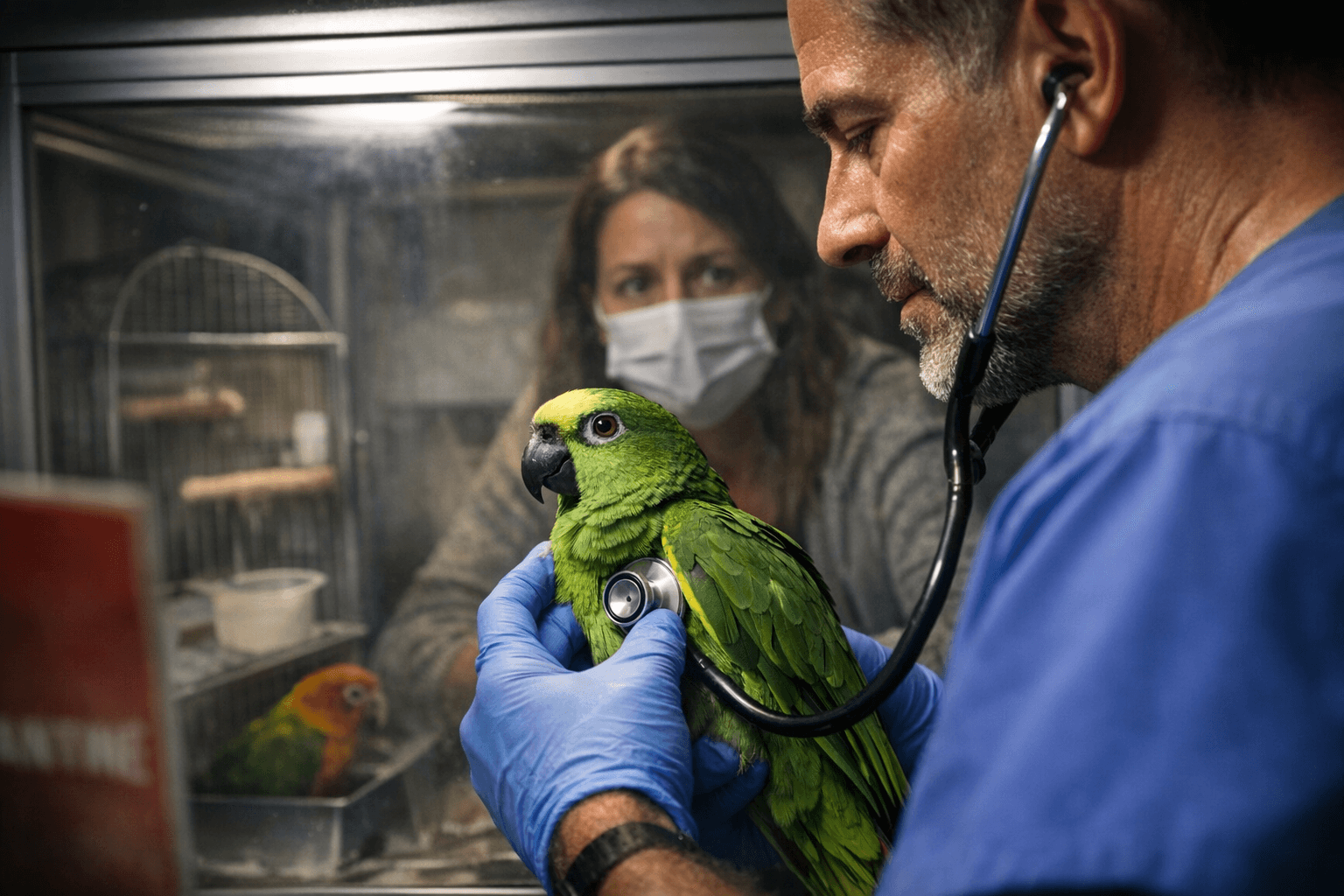
Control recommendations differ by context. Alberta public-health guidance for human cases suggests routine hospital practices and notes “Isolation is not necessary” for hospitalized individuals, while veterinary hospitals commonly maintain isolation wards: Carolina Veterinary Specialists lists “Isolation ward, for hospitalizing potentially contagious animals” among its services. That clinic also highlights in-house resources many owners will find reassuring, including rapid in-house testing for psittacosis, avian hospital cages with supplemental oxygen and nebulization, endoscopy, in-house CBC and chemistry testing and 24-hour nursing care. If you need advanced diagnostics or treatment, board-certified avian facilities can provide those capabilities.
- Avoid birds that are obviously sick; watch for runny eyes, runny noses, diarrhea and ruffled feathers.
- Take new birds to an avian veterinarian soon after purchase for screening.
- Clean cages, food and water bowls every day and disinfect at least once a week.
- Maintain good nutrition, minimize stress and keep purchase and health records for at least a year.
Quarantine, purchase and daily biosecurity
Simple, consistent practices reduce risk. Public guidance ranges on quarantine timelines: Massachusetts recommends keeping new birds in a separate room for 30 to 45 days and testing or treating before adding them to an existing group while Canadian avian-veterinary guidance recommends isolation “for a minimum of six weeks.” Both are defensible and the six-week recommendation is slightly more conservative. Other practical steps spelled out in public guidance include these points:
Reporting and public-health action
If a laboratory confirms infection, public-health rules kick in. In British Columbia, the BCCDC says “All laboratory-confirmed cases should be reported within 24 hours” and notes “Chlamydiosis is a CFIA Immediately Notifiable Disease,” adding that laboratories must immediately contact the Canadian Food Inspection Agency regarding suspected or diagnosed avian chlamydiosis. The BCCDC guidance provides a local reporting line and contact details for follow-up. Alberta guidance indicates public health may investigate procurement sites, ventilation, treatment protocols and sales records when a case occurs.
If you suspect psittacosis: a quick action sequence
1. Isolate the sick bird away from other birds and minimize household exposure.
2. Call your avian veterinarian to arrange testing and treatment as soon as possible.
3. Follow veterinary and public-health instructions about quarantine, cleaning and reporting.
Diagnostic and information gaps to be aware of
The supplied guidance omits some clinical specifics such as exact human drug regimens and detailed test performance data for rapid in-house kits. Public-health documents recommend consulting full guidelines for mandatory reporting procedures and clinicians’ treatment protocols, and avian veterinarians or public-health officers can clarify local incidence and testing logistics.
Bottom line
Psittacosis is a real but controllable zoonosis: “Humans are readily infected,” and both public-health agencies and avian veterinarians expect owners to act promptly. Use quarantine, routine testing for new birds, daily cleaning and veterinary supervision to keep your flock and household safe. If you need specialized care, clinics such as Carolina Veterinary Specialists offer isolation wards and rapid testing to support diagnosis and treatment. Follow public-health reporting rules where they apply and keep accurate records so a suspected case can be managed quickly and effectively.
Know something we missed? Have a correction or additional information?
Submit a Tip