Practical Doga Guide: Safe Short Sessions, Consent, Class or At-Home Practice
Practical doga steps for safe short sessions and consent-focused practice, whether in class or at home.

Doga blends gentle human stretches with dog-friendly movement, short shared breaks, and social time, all centered on consent and welfare. That matters because owners who adapt sessions to a dog’s size, temperament, and comfort reduce stress and risk while keeping practice accessible for busy schedules.
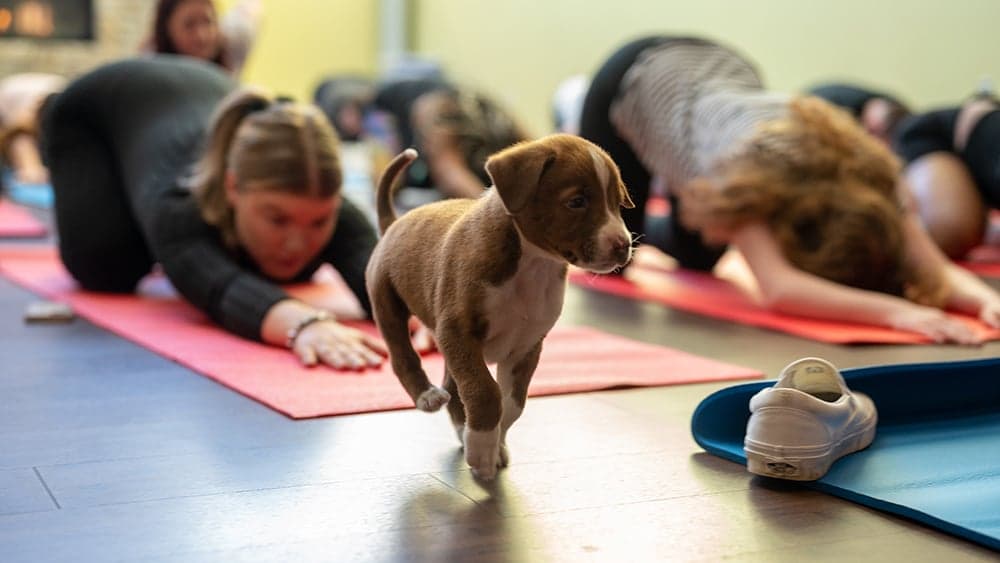
Typical doga sessions favor slow, low-impact movement alongside opportunities for rest and play. Expect brief shared stretches, calm floor work where dogs can join or opt out, and social time after poses. Practices can be folded into everyday routines - easy dog-friendly stretches work well as cool downs during walks or as part of play sessions.
Choosing between a studio class and at-home practice depends on your dog and your goals. Classes are useful if your dog is social, curious, and comfortable around new people and animals, or if you want guided instruction and community. At-home practice suits dogs that are anxious in groups, require one-on-one pacing, or live in busy households. Call ahead to confirm studio policies and puppy/rescue sourcing before signing up, and make sure the environment matches your dog’s social needs.
Safety and consent are central. Let dogs choose whether to participate and avoid forcing poses. Do not lift or compress dogs in ways that could cause discomfort; prioritize short, calm interactions rather than long or intense handling. Watch body language, adapt poses to dog size and temperament, and keep sessions short to avoid overstimulation. These steps protect physical welfare and preserve a positive association with practice.
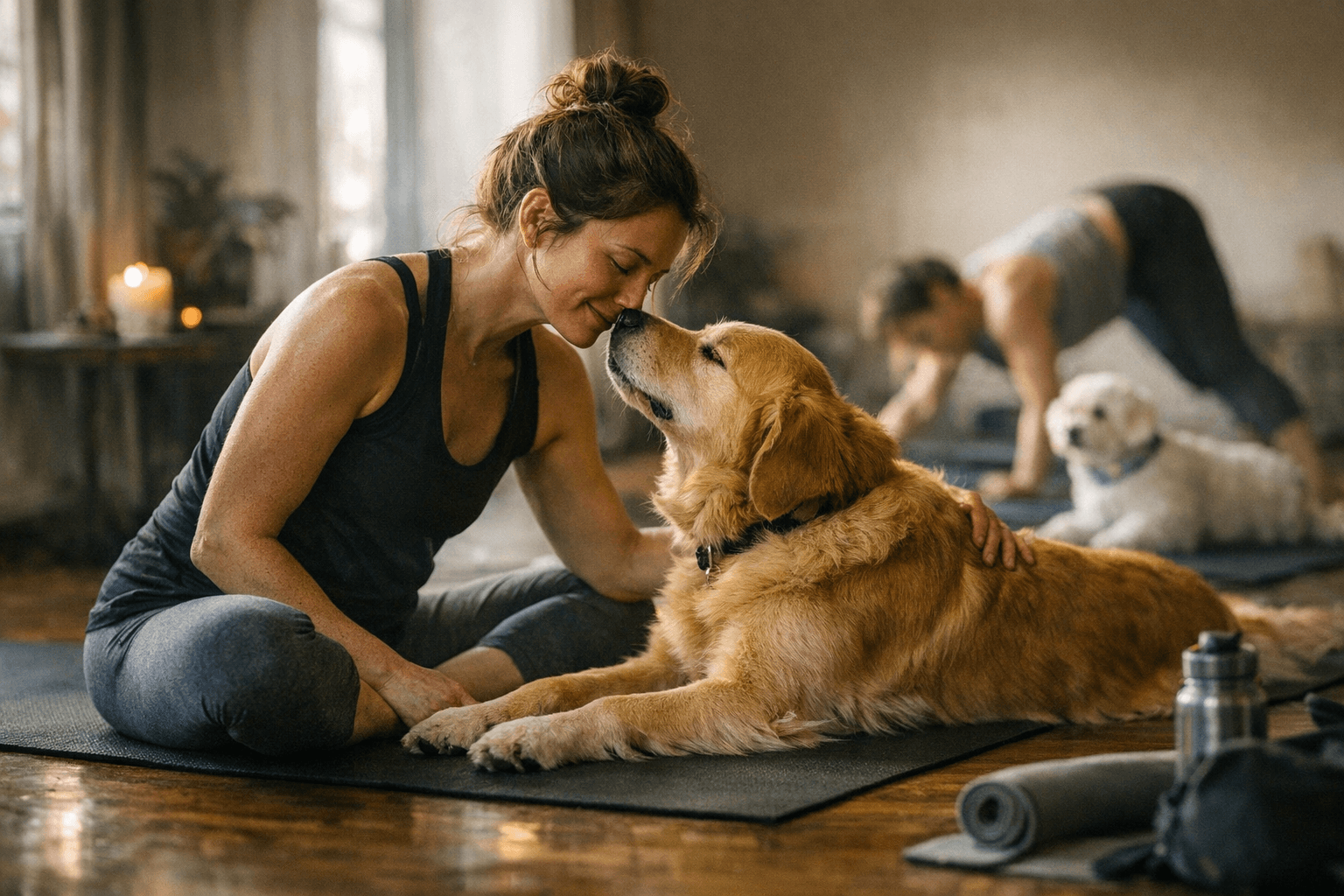
Practical class prep increases safety and comfort. Bring a mat for you and a soft surface for your dog, keep water available, and plan for quick bathroom breaks. Treats and familiar toys help with comfort and motivation, while a calm pace encourages voluntary participation. If practicing at home, set up a quiet space with minimal distractions and break sessions into small, regular moments rather than one long workout.
This approach keeps doga inclusive for puppies, rescue dogs, seniors, and mixed-breed companions by emphasizing choice, modification, and gentle pacing. Expect sessions to be short and flexible, not a strict sequence of poses. For trainers and hosts, clear communication about policies and animal sourcing reassures attendees.
For readers, the takeaway is straightforward: center consent, prioritize short calm sessions, and choose the setting that matches your dog’s temperament. Start small, observe your dog closely, and build doga into walks and play so the practice stays safe, social, and joyful.
Know something we missed? Have a correction or additional information?
Submit a Tip