Preservation Work Stabilizes Marks Rosenwald School, Fuels Local Reuse Plans
Marks Rosenwald School in Marks has been stabilized by recent preservation work, and local leaders are advancing plans to adapt the site for community reuse in Quitman County.
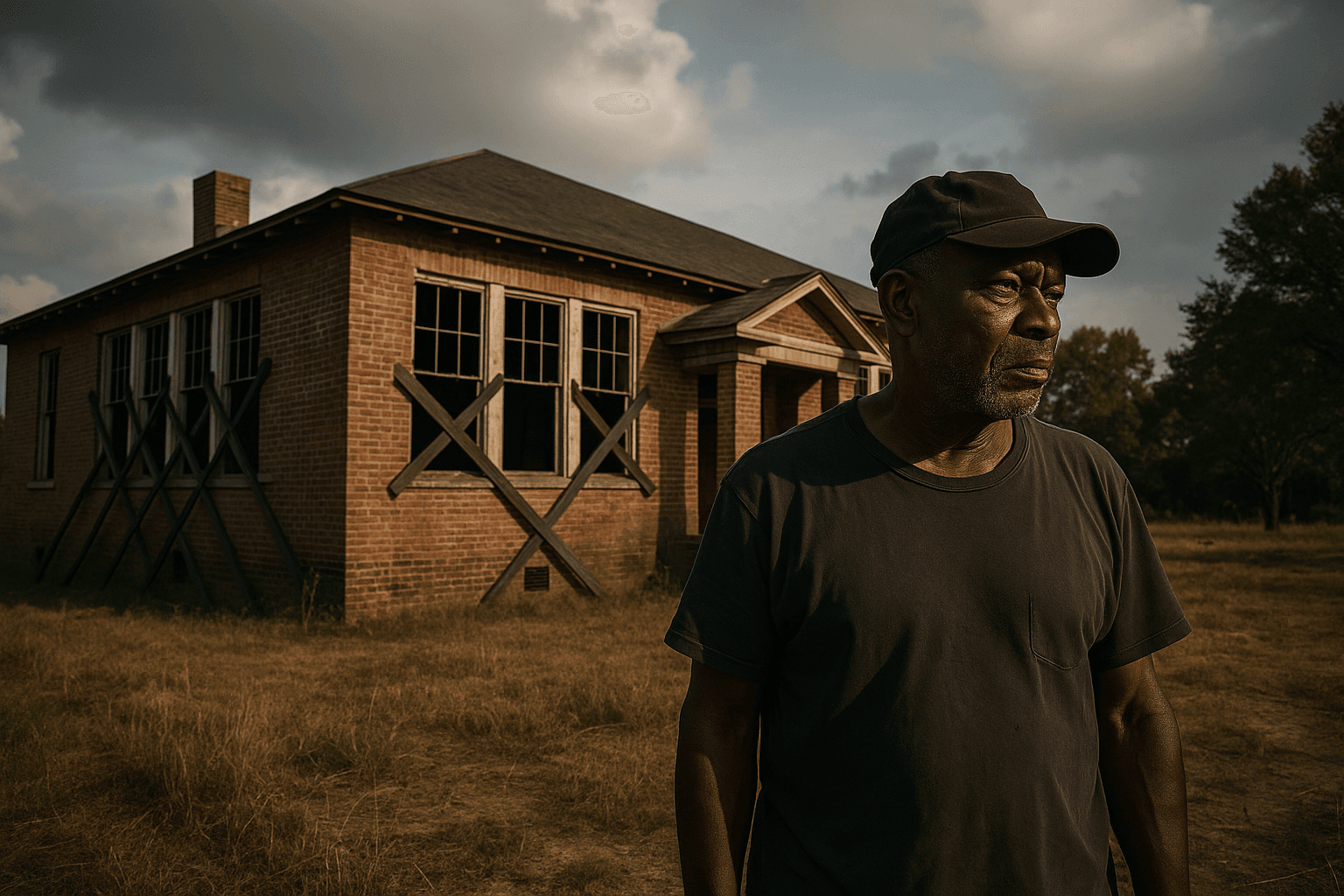
The Rosenwald school building in Marks, Mississippi, "one of the most important tangible links to early 20th-century Black education in Quitman County," has been stabilized through recent preservation work, and local leaders are advancing plans to adapt the site for community reuse, officials say. The building’s stabilization restores a visible piece of Quitman County’s built heritage while opening the discussion over how the site could serve civic and cultural functions in Marks.
Project organizers have not yet announced a timeline, identified funding sources, or named the lead organizations for the proposed reuse. Materials accompanying the preservation update state simply that "local leaders are advancing plans to adapt the site for community reuse" but offer no further details about costs, contractors, or programmatic goals for the adaptive use.
The Marks site sits within the larger Rosenwald school story: the Julius Rosenwald Fund provided seed grants for school construction but required communities to supply public funds and local contributions, often raised through "fried chicken dinners, picnics, and penny drives" or by setting aside portions of wages or cotton crops. The Interstate School Building Service was created in 1928 with Rosenwald Fund support, its plan book For Better Schoolhouses appeared in 1929, and the Rosenwald building program concluded in 1932. The 1954 Brown v. Board of Education decision and postwar consolidation led many Rosenwald campuses to close or be repurposed, leaving survivors scattered and vulnerable.
Preservation practitioners emphasize repair, documentation, and reuse as the pathway to keeping Rosenwald buildings standing. The National Park Service notes preservation activities that include "finding modern grant funds to repair these buildings," "researching and writing the history of these schools," "interviewing people who attended the schools," and "finding new uses for the old Rosenwald buildings." The NPS also stresses that "Historic places reveal the values, needs, and hopes of the people who designed them and the people who used them."
The fragile national picture helps explain urgency in Marks: Rosenwald schools were placed on the National Trust for Historic Preservation’s 2002 list of America’s 11 Most Endangered Historic Places, and risk factors remain concentrated in "mostly impoverished rural or gentrifying areas." Charlene Neuterman, Community Services Director for the city of Cocoa, Florida, describes survivors as rare: "A lot of those schools ceased to exist anymore," she said. "Very few still remain. I don't know how many still remain today, but it's a very small number."
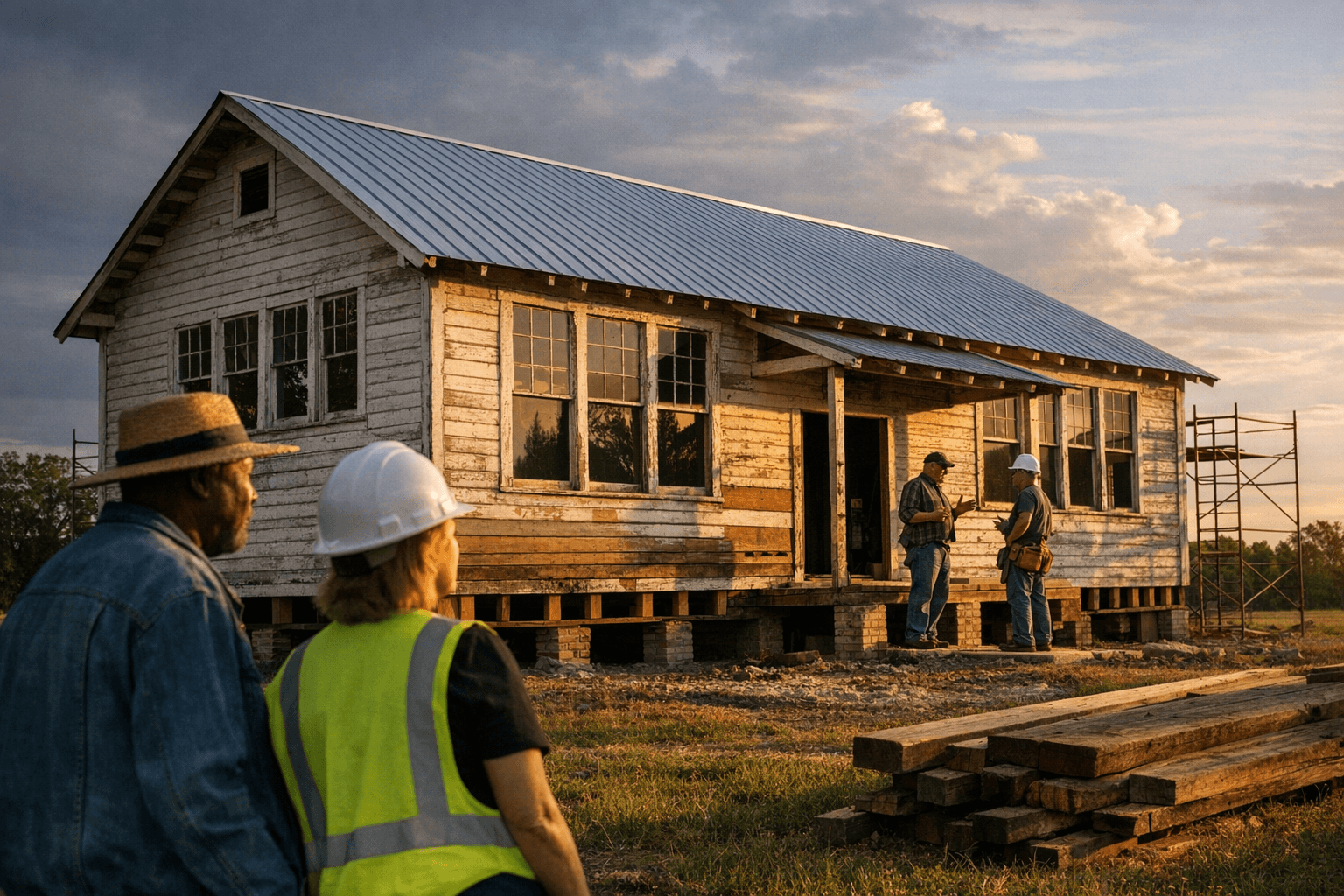
Local preservation in other Southern counties offers concrete models for Quitman County to consider. In Bullock County, Alabama, the Merritt School was saved from demolition, added to the National Register of Historic Places, and a nonprofit formed in 2002 to lead preservation; advocates secured a state grant of $175,000 to strengthen the school's foundation. The Merritt project returned civic function to the building: "this building, originally a symbol of democracy and citizenship, now welcomes community members exercising their right to vote." Auburn University architecture professor Gorham Bird helped identify remaining Alabama Rosenwald sites, his team located 16 of the original 400 structures and "has dedicated the last four years to identifying the remaining Rosenwald school buildings in the state."
Other adaptive reuses include the Columbia Rosenwald School in West Columbia, Texas, now a museum; Carroll School in York County, South Carolina, used for history field trips; and Scrabble School in Virginia repurposed as a senior or community center. A Dailyyonder commenter added that a Pass Christian, Mississippi, Rosenwald school survived Hurricane Katrina and now serves as a senior and community center with a historical marker.
Policy momentum is also underway: Children's Defense reports that "earlier this year the Julius Rosenwald and the Rosenwald Schools Act was signed into law." For Marks, next steps to convert stabilization into a functioning cultural asset include confirming whether the Marks Rosenwald School has National Register status, documenting who funded and carried out the stabilization work, and converting local planning into a fundable reuse proposal that could mirror precedents such as Merritt’s state grant and nonprofit structure.
Sources:
Know something we missed? Have a correction or additional information?
Submit a Tip