Quitman County Sees Rare Blood Moon Total Lunar Eclipse March 3
Quitman County residents saw a rare total lunar eclipse — a full "blood moon" — in the early hours of March 3, 2026, part of a U.S.-wide event that drew statewide attention.
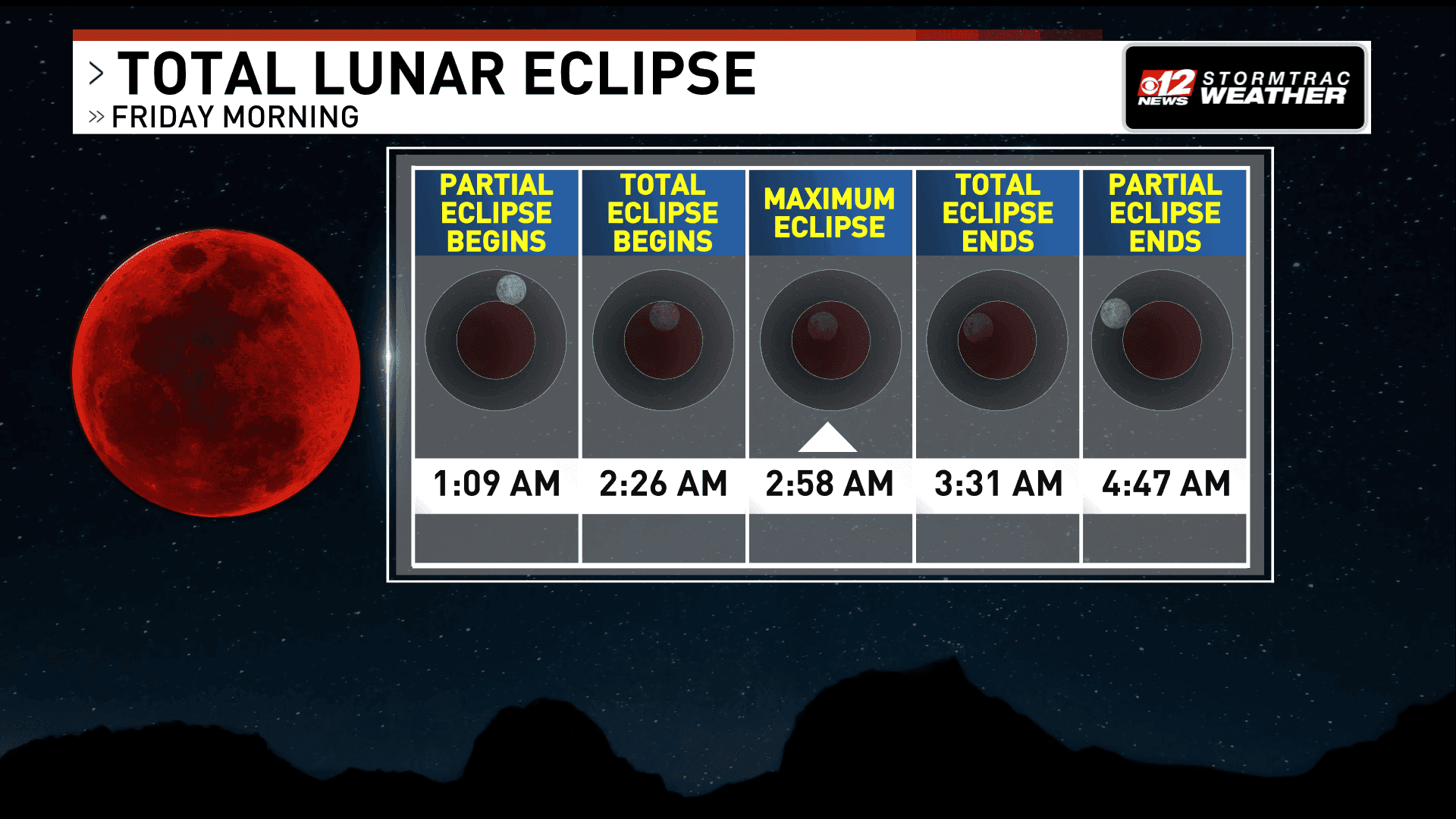
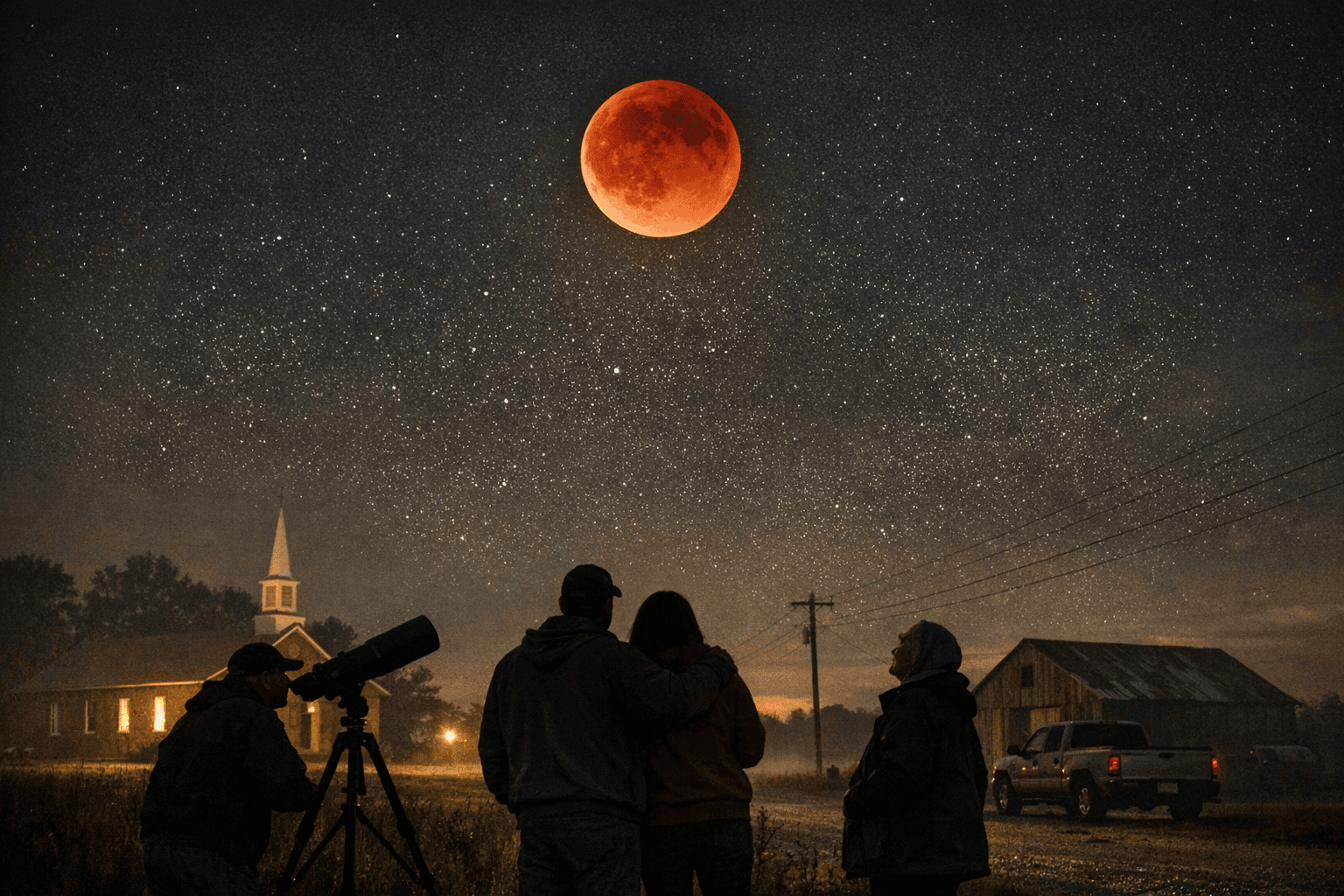
A total lunar eclipse, popularly called a "blood moon," passed over Mississippi in the early hours of March 3, 2026, and was visible in Quitman County as part of an event that drew statewide attention and, by one local account, "offered good viewing conditions." National coverage noted this was the only total lunar eclipse visible in the United States in 2026, giving residents a rare astronomical spectacle.
National timelines place the window of totality in North America late that night and into the early morning. According to a Newsweek summary of NASA times, totality began at 3:04 a.m. PST (6:04 a.m. EST, 11:04 UTC) and ended at 4:03 a.m. PST (7:03 a.m. EST, 12:03 UTC), implying roughly 59 minutes of totality. FOX Weather live coverage recorded the Moon exiting Earth’s umbra "As of 7:02 a.m. ET, the Moon has officially exited Earth’s umbra, marking the end of totality," a one-minute discrepancy with the Newsweek/NASA timeline.
The science behind the red hue was explained in Newsweek with NASA-based detail: "A total lunar eclipse occurs when the Earth moves directly between the sun and moon, aligning all three bodies in a straight line." The report added that the red color arises in Earth’s atmosphere, noting, "The red color is not caused by the moon itself, but by Earth’s atmosphere. As sunlight passes through the atmosphere, shorter wavelengths such as blue and green are scattered. Longer wavelengths—reds and oranges—continue through the atmosphere and are bent toward the moon. This process, known as Rayleigh scattering, is the same effect that causes sunsets on Earth to appear red."
Visibility varied across the country. Newsweek highlighted western states including Alaska, California, Hawaii, Oregon and Washington as places expected to see the most dramatic views, and named Los Angeles, San Francisco and Chicago among cities likely to catch the full red hue. Eastern viewers faced a shorter window before sunrise; FOX Weather warned that "a thick blanket of clouds will leave New Yorkers looking at a wall of grey instead" and reported that "light rain is falling on the Capitol with overcast skies that will prevent a clear view of the eclipse" in Washington, D.C.
Photographers and news outlets offered global perspective. Live Science reported first images from North America, Australia and eastern Asia and cited Space.com in estimating that up to 3 billion people around the world could see part of the eclipse. Live Science and The Guardian published images and timelapses from locations such as Golaghat in Assam, Sanya in China, Manila in the Philippines, Mexico City and Te Whatu Stardome in Auckland.
For viewers in Quitman County and across Mississippi, national reporting underscored accessibility: Newsweek cited NASA saying "The event—commonly known as a 'blood moon'—requires no special equipment to observe and may be the last chance for several years to see a total lunar eclipse with strong visibility from the U.S." The piece added that "binoculars or a telescope can also enhance your view."
Questions remain about how long U.S. viewers will wait for a similar event. Live Science states the next total lunar eclipse visible over North America comes June 26, 2029, and Newsweek suggested the U.S. may not see a comparable event until 2029, while FOX Weather's live feed referred to "the last time until 2028." Local observers in Quitman County seeking a definitive schedule should consult NASA’s eclipse calendar for authoritative dates and for confirmation on whether March 3 qualified as a "super blood moon" based on lunar distance data.
Sources:
Know something we missed? Have a correction or additional information?
Submit a Tip