Prince George's MedStar Luncheon Reunites 15 STEMI Survivors After Door-to-Balloon Care
Fifteen STEMI survivors gathered with physicians, nurses and first responders at MedStar Southern Maryland Hospital Center in Clinton during American Heart Month in February 2026.
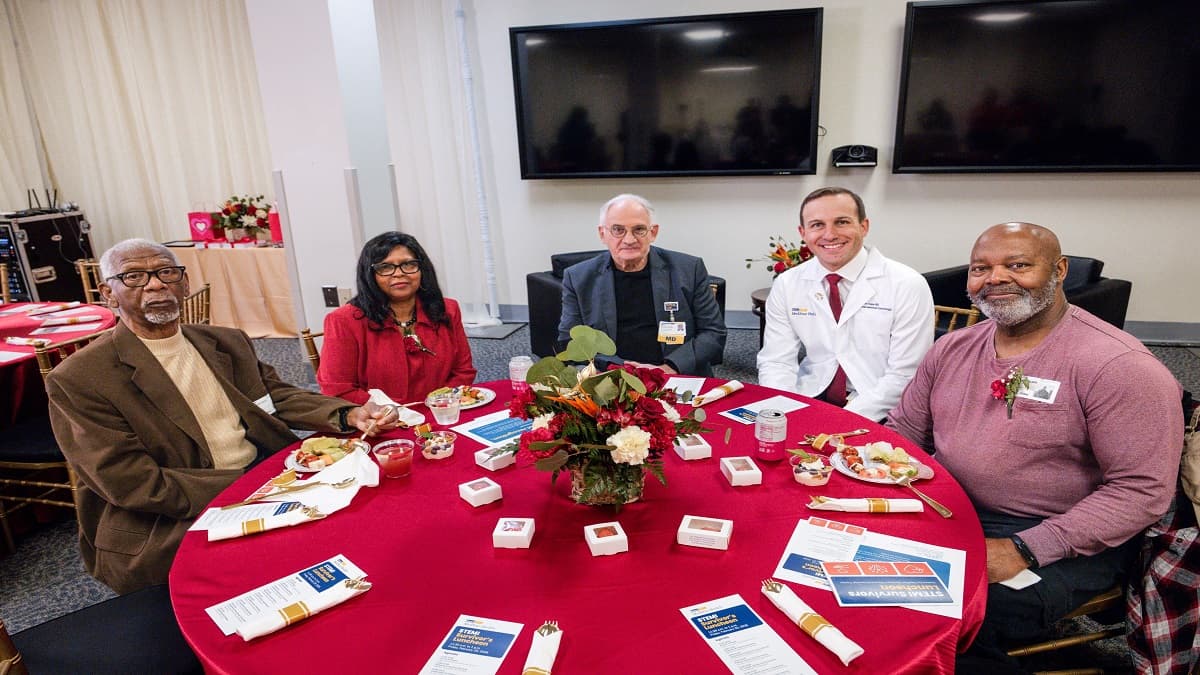
At MedStar Southern Maryland Hospital Center in Clinton, Md., 57-year-old Christopher Butcher and 14 other STEMI survivors sat down with the physicians, nurses and emergency responders who treated them at a Heart Month luncheon in February 2026. The event reunited patients and care teams to mark American Heart Month and to share recovery stories and gratitude for lifesaving treatment.
Organizers described the gathering as both celebratory and educational, with survivors speaking about "second chances" and clinicians reflecting on rapid-response systems. "Their stories are all different, but the outcomes are blissfully the same," organizers said in event materials distributed at the luncheon, which drew 15 former STEMI patients to the hospital’s conference space.
MedStar Southern Maryland highlighted clinical performance data while the teams and survivors talked. In January 2026 the hospital’s door-to-balloon, or D2B, average was 43.5 minutes, compared with a national benchmark of 90 minutes; hospital materials noted that 43.5 minutes is well under that 90-minute benchmark and underscored that "saving a patient's life can happen in minutes." Last year, the hospital’s cardiac catheterization lab treated 173 patients with STEMI, the most severe type of heart attack caused by complete coronary artery blockages.
Brian Case, MD, medical director of the cardiac catheterization lab, framed the metric work in human terms at the luncheon. "But today isn't about metrics or awards. D2B is not just a number. It's about impact. Behind every door-to-balloon time and every quality benchmark is a person, a family, and a future preserved because a system worked exactly as it should," he said, attributing the lab's performance to coordinated teams across EMS and hospital departments.
Event materials and staff described typical STEMI arrival modes and cath lab care: patients often arrive by ambulance or medical flight, clinicians thread a catheter to the blockage, inflate a balloon to open it, and insert a tiny mesh stent to hold the artery open and restore blood flow. Christopher Butcher, a father of two from Virginia who was rushed to MedStar Southern Maryland after suffering a heart attack while bicycling, spoke at the luncheon; he has no recall of a passerby administering CPR or of the emergency transport to the hospital.
With 15 survivors in attendance, a January 2026 D2B average of 43.5 minutes and 173 STEMI cases treated last year, the luncheon in Clinton highlighted how MedStar Southern Maryland's rapid-response cardiac system has translated procedural speed into recovered lives during American Heart Month.
Know something we missed? Have a correction or additional information?
Submit a Tip