Progressive Drills to Improve Short Returns and Third-Ball Attacks
A practical drill package targets short returns and third-ball attacks, offering progressions, coaching cues, and troubleshooting to sharpen flicks, pushes, and early-loop opportunities.
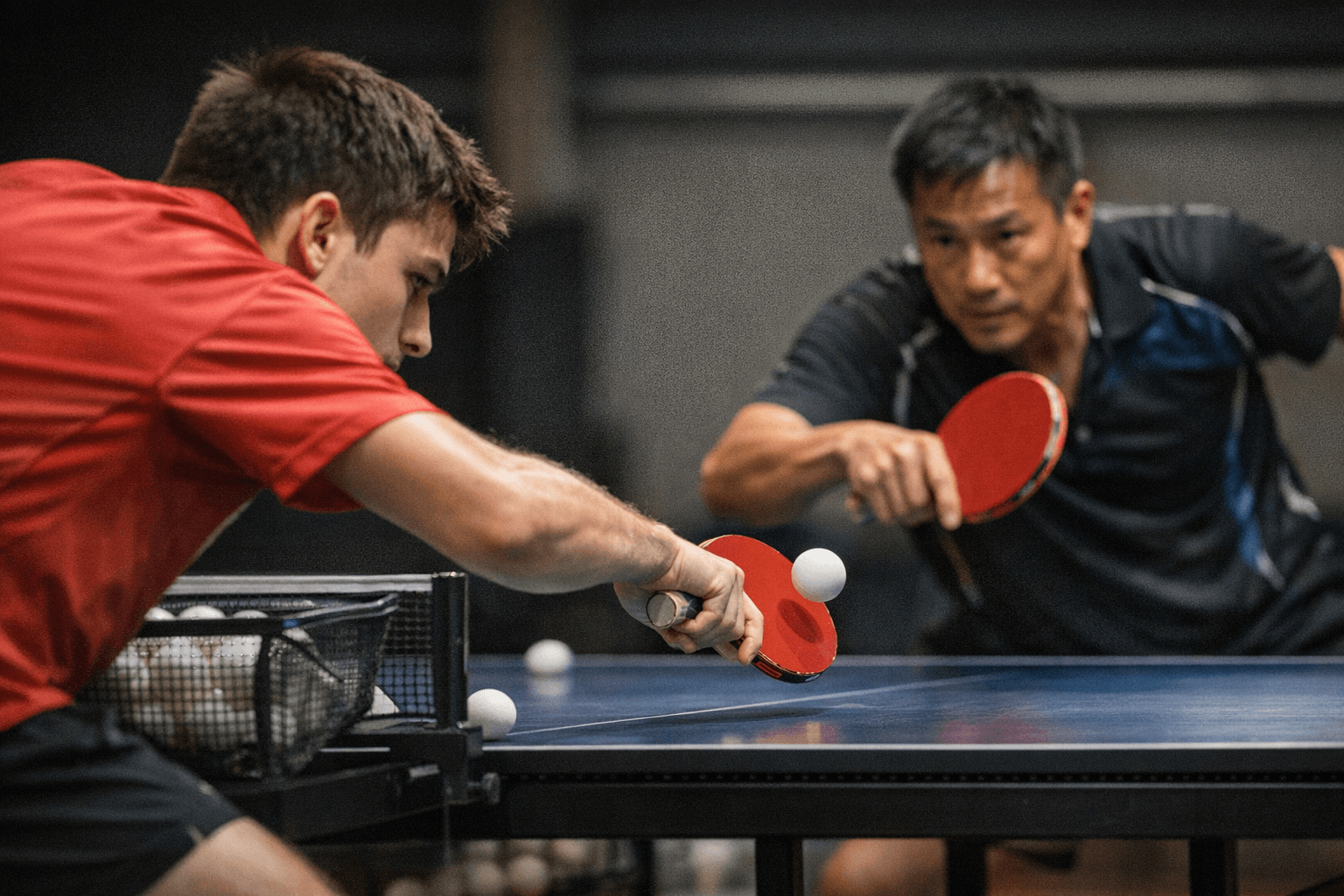
Short returns and the third-ball attack are a club player's high-impact lever; tighten those two elements and matches swing fast. The drills collected here prioritize realistic timing, grip and racket angle control, and footwork so players can turn short serves and pushes into first-attack opportunities rather than scrambled defense.
Start with progressive warm-ups that activate the wrist and forearm: light wrist circles, forearm pronation-supination sets, and shadow flicks with no ball to groove contact points. For beginners, warm-up sets of three minutes work; intermediate and advanced players add resistance or increase tempo. The goal is consistent contact slightly in front of the body with a compact swing.
Partner drills should begin with short pushes and gentle short blocks. One player serves or pushes short while the partner practices short returns that either stay low or flick to the elbow area. Progress the drill from passive cooperative exchanges to alternating controlled short pushes and third-ball attacks. Recommended practice progression is: beginner to intermediate to advanced, increasing reps, shorten recovery, and add deceptive serves. Practice rep ranges can start modestly and build: aim for dozens of quality contacts per session rather than hundreds of low-focus repetitions.
Multi-ball routines develop the forehand reverse flick and backhand flick off short serves. Feeders should vary spin - backspin, backspin with sidespin, and dead short balls - and deliver balls to different heights. Focus on racket angle (slightly closed face for heavy backspin, more neutral for short no-spin), contact point (just forward of center), and weight transfer - step in with the front foot to add body momentum to the flick.
Timing drills that replicate realistic serve patterns help players make split-second choices: flip, push short, or loop. Use sequences where a short serve is followed by a short push and then a longer push to force decision-making under pressure. Decision-making exercises train recognition - read paddle angle and ball trajectory in the last 30-40 cm - and response. Add footwork ladders tied to short-return attacks so the body moves into position for a forehand reverse flick or a compact backhand flick.
Troubleshooting addresses common errors: late contact suggests stepping earlier and watching the ball into the racket; misreading spin calls for a more closed racket angle and softer touch on backspin; and overreaching is often caused by poor recovery steps. Equipment choice affects flicks: grippy inverted rubbers with moderate tack and a blade with reasonable dwell - typically an all-wood or medium-flex blade - help execute short flicks more reliably than extremely stiff carbon constructions.
For clubs, structure sessions that rotate players through warm-up, partner drills, multi-ball, timing sequences, and decision-making rounds. That sequencing builds muscle memory, timing, and on-table instincts so short returns become a springboard to the third-ball attack rather than a defensive scramble.
Know something we missed? Have a correction or additional information?
Submit a Tip