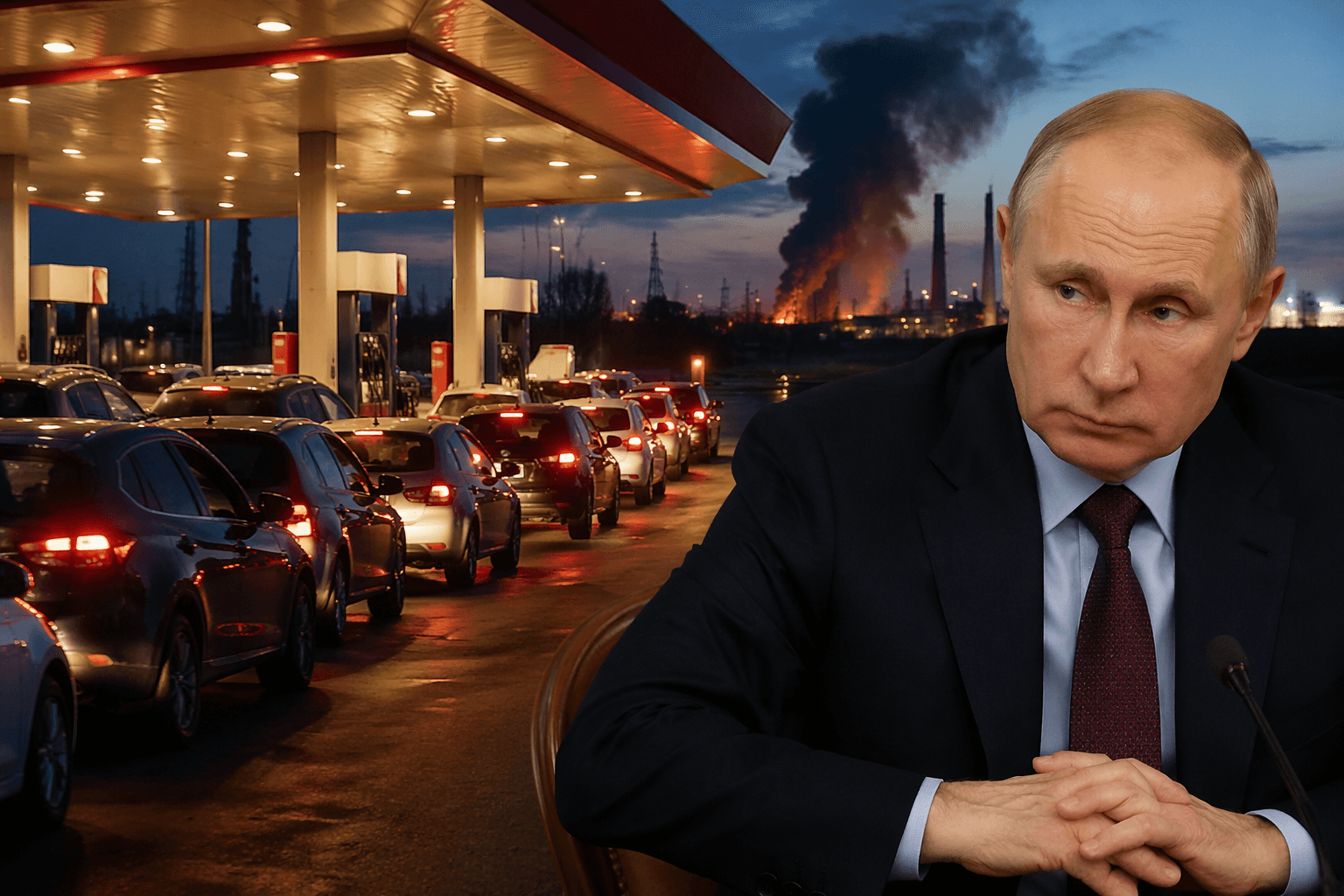
Putin admits Russian fuel shortages after Ukrainian drone strikes
Putin said fuel shortages had hit Russian regions as queues formed at gas stations. Ukraine’s drone campaign is now squeezing Russia’s civilian supply chains and refinery output.

Vladimir Putin acknowledged that fuel supply problems had created shortages in Russian regions, a rare public admission that Ukraine’s drone campaign is inflicting costs far from the front line. He said a task force was working to keep supplies moving, while the Kremlin weighed a complete ban on diesel exports as the fuel crunch spread through Moscow and the regions.
Putin tried to soften the message by saying gasoline reserves stood at 1.7 million metric tons and that July production should exceed June levels. He also said queues were still forming at gas stations and that the farm sector needed guaranteed fuel supplies for the harvest season, a sign that the pressure was reaching both households and the agricultural economy. The debate inside the government was already visible: Deputy Prime Minister Alexander Novak had earlier said there was no need to ban diesel exports.
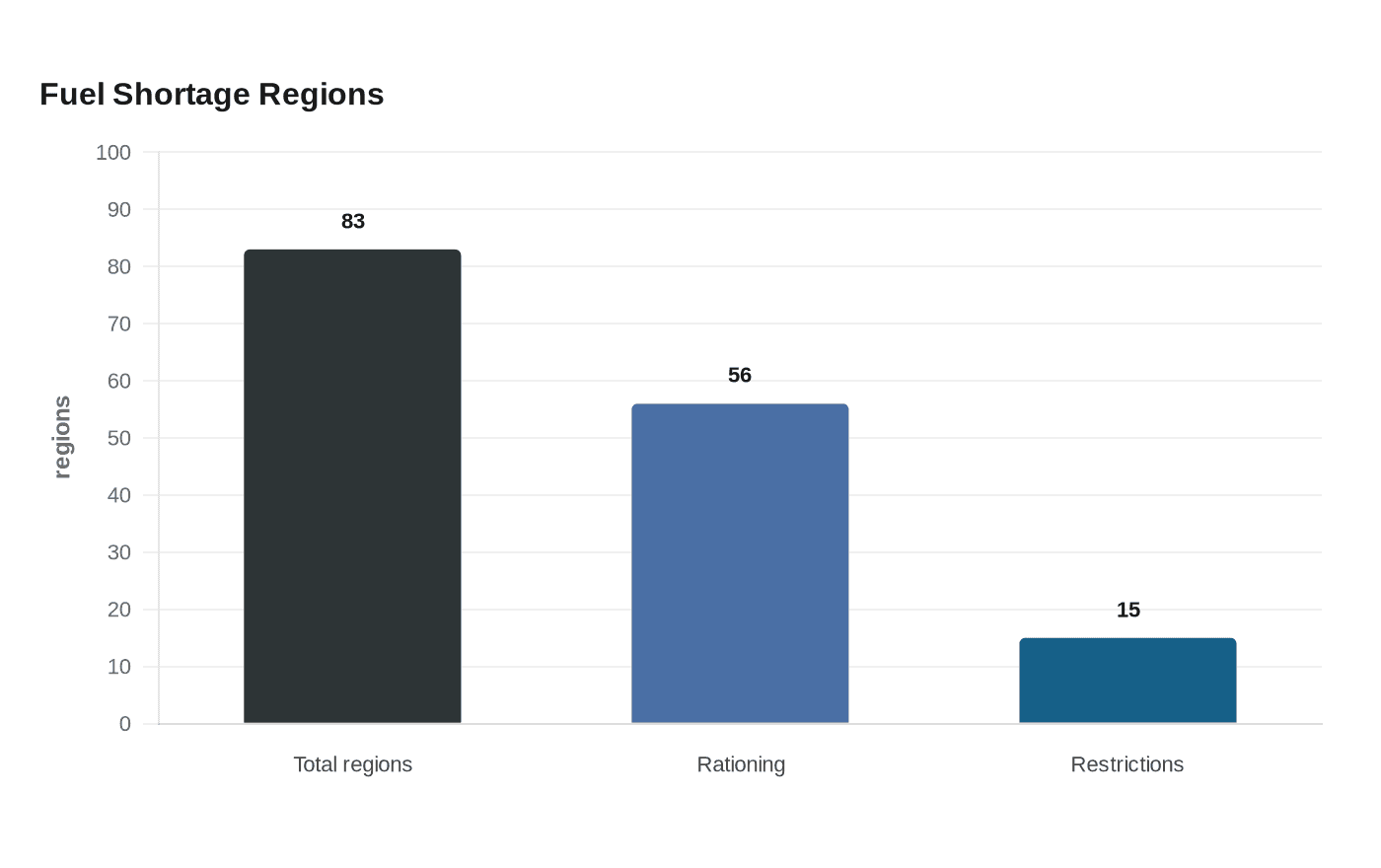
The shortage was already widening across Russia. More than half of the country’s 83 regions were struggling with gasoline shortages, and Zone.Media mapped fuel rationing in 56 regions as of June 26. At least 15 Russian regions introduced fuel-sales restrictions on June 23. Moscow was also in talks with Kazakhstan to import about 50,000 metric tons of AI-92 gasoline to ease supply gaps caused by refinery outages and unscheduled repairs.
The sharpest disruption came from the June 16 drone strike on Gazprom Neft’s refinery in the Moscow area, the largest fuel supplier to the Moscow region. The attack sparked a fire, halted operations and damaged a primary refining unit that accounted for 53% of the plant’s capacity. The refinery processed 11.6 million metric tons of oil in 2024 and produced 2.9 million tons of petrol and 3.2 million tons of diesel, numbers that show how even one hit can reverberate through civilian distribution networks and military logistics.
Ukraine has doubled its attacks on Russian refineries since the start of 2026, forcing full or partial shutdowns and cutting output of gasoline, diesel and jet fuel. Kyiv’s strikes on the Moscow refinery and on Russian-controlled Crimea have been part of a broader effort to raise the cost of Russia’s war and force the Kremlin to defend energy infrastructure deep inside its own territory. Putin told viewers the shortages were not critical and that damaged facilities were being restored fairly quickly, but his own comments underscored how the war’s domestic price is now visible at the pump, in the fields and in the Kremlin’s emergency supply plans.
This article was produced by Prism’s automated news system from verified source data, official records, and press releases, then run through automated quality and moderation checks before publishing. The system is built and supervised by the people who set the standards it runs under. Read our full AI policy.
Did this article answer your question?