Putin Says US Ukraine Draft Could Form Basis For Peace
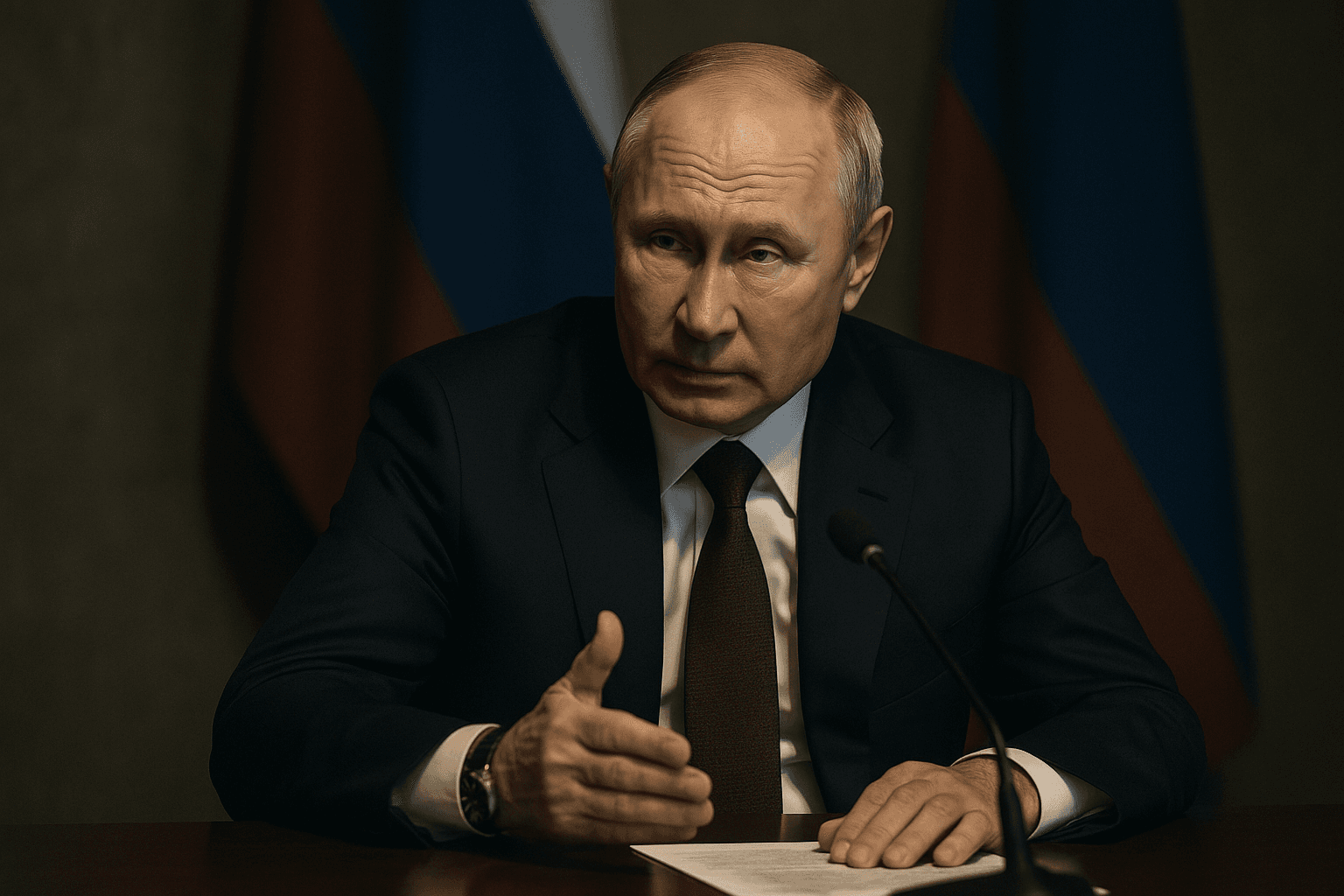
Speaking in Bishkek, President Vladimir Putin said a draft peace plan discussed between the United States and Ukraine could serve as a starting point for a future settlement, but he spelled out conditions that Kyiv and many Western capitals reject. His demands, including the withdrawal of Ukrainian forces from territories Moscow contests and formal international recognition of Russia’s territorial gains, raise the prospect of renewed fighting and heightened geopolitical and market uncertainty.

In remarks delivered in Bishkek on November 27, President Vladimir Putin told attendees that a draft peace plan being discussed between the United States and Ukraine could form the basis for a future agreement, while simultaneously restating firm preconditions that Kyiv and much of Europe consider unacceptable. Putin said any legally binding accord would have to include the withdrawal of Ukrainian armed forces from territories Russia contests and require international recognition of the territorial changes that Moscow has sought to solidify since 2014 and more aggressively since 2022.
Putin further characterized Ukraine’s leadership as illegitimate, and said an agreement with Kyiv would need broader international acknowledgement to be valid. He warned that if Ukrainian forces did not withdraw, Russia would pursue its objectives by force. The comments come as diplomats meet in Geneva and elsewhere to discuss ceasefire frameworks and long term settlement options, and as tensions escalate over terms that many in Kyiv and across Europe view as tantamount to capitulation.
The immediate diplomatic effect is to harden the negotiating terrain. Moscow’s insistence on recognition of territorial gains undercuts the core position of Ukraine and its Western backers, who view the preservation of sovereignty and territorial integrity as non negotiable. International law scholars and Western officials have repeatedly rejected annexations carried out under military coercion as invalid, and that legal friction means any deal premised on recognition would face strong political and legal headwinds in capitals across the Atlantic.
The economic stakes are substantial. A negotiated settlement that rewarded Russia with international recognition of territorial gains would reshape sanctions regimes that since 2022 have targeted Russian banks, energy revenues, and elite wealth. Conversely, renewed or escalated fighting would likely boost defense spending pressures across Europe, increase financial market volatility, and sustain upward pressure on energy price risk premia. Investors and policymakers are watching for changes in risk assessments that could influence sovereign borrowing costs, currency markets, and commodity prices. For economies in Europe that remain closely tied to energy markets, even a small uptick in geopolitical risk can translate into higher fuel prices and larger inflationary headwinds.
Beyond immediate market moves, Putin’s stance reinforces a longer term trend toward protracted, negotiated settlements that freeze front lines while leaving core legal and diplomatic disputes unresolved. The pattern since 2014 has been periods of intense negotiation, intermittent ceasefire arrangements, and renewed hostilities, with wide implications for European security architecture and for the rules that govern territorial change in the post Cold War era.
Policy makers now face a stark trade off. Pressing Kyiv to accept Moscow’s terms would risk political backlash and weaken resistance to territorial aggression elsewhere. Refusing to engage on those terms risks prolonged conflict with attendant humanitarian costs and economic fallout. The Geneva discussions will test whether Western diplomacy can bridge that divide or whether Putin’s conditions, publicly reiterated in Bishkek, will harden into red lines that foreclose compromise and invite further military action.
This article was produced by Prism’s automated news system from verified source data, official records, and press releases, then run through automated quality and moderation checks before publishing. The system is built and supervised by the people who set the standards it runs under. Read our full AI policy.
Did this article answer your question?