Quince files antitrust suit accusing UGG owner Deckers of sham trade-dress campaign
Quince says Deckers filed “hundreds” of trade-dress suits to lock down more than 50% of the U.S. sheepskin footwear market and keep prices 50–100% above rivals.
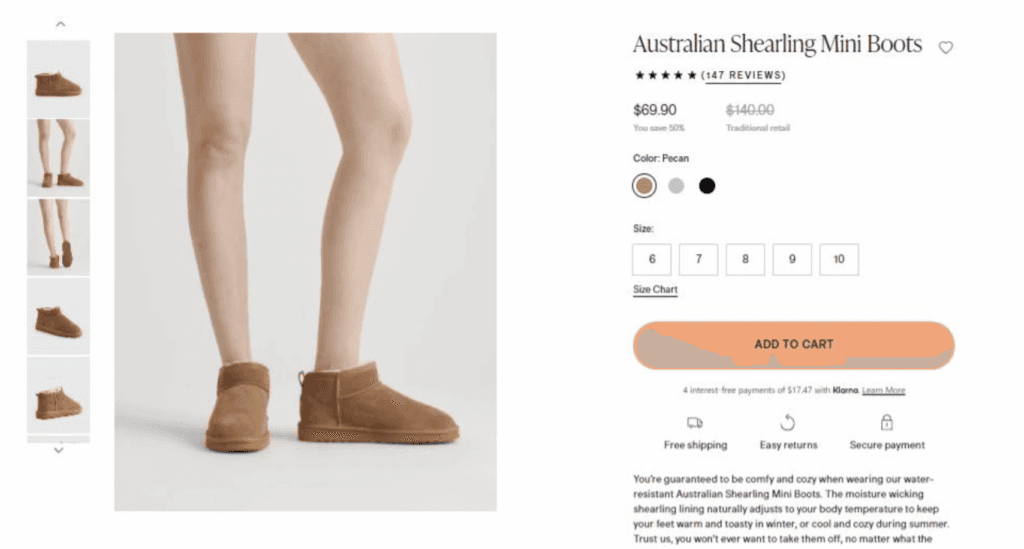
Last Brand Inc., doing business as Quince, filed an antitrust and monopolization complaint in federal court accusing Deckers Outdoor, owner of UGG, of using a campaign of trade-dress litigation to exclude competitors and preserve supracompetitive prices. The complaint, reported Feb. 23–24, 2026, alleges Deckers controls more than 50% of the U.S. “Sheepskin Casual Footwear Market” and forces a price premium of “typically 50% to 100% higher than competing products.”
Quince’s filing—parts of which were reproduced in reporting by Pymnts and Bloomberg—frames Deckers’ enforcement as a mechanism for entrenchment. The complaint says “each successful enforcement action entrenches Deckers’ position,” and adds that “prices are elevated because Deckers’ exclusion of lower-priced competitors removes downward pricing pressure.” The filing further warns that “when lower-priced alternatives are removed through sham litigation pressure, consumers face narrower choice sets skewed toward Deckers’ higher-priced products.”
Trade reporters have seized on the scale and method Quince alleges. MLex described Deckers’ approach as a “litigation assembly line” that churns out “meritless suits designed to insulate its market dominance from competition,” while World Trademark Review said Quince accuses the UGG maker of “weaponising hundreds of boilerplate trade dress suits” in the U.S. The complaint was filed in California federal court, with reporting most specifically identifying the U.S. District Court for the Northern District of California.

Quince’s antitrust claim arrives against a backdrop of aggressive Deckers enforcement. Deckers sued Emu Australia in December 2010, a dispute that was dismissed with prejudice by stipulation on Aug. 25, 2011. In 2011 Deckers pursued action against Dangdang for alleged counterfeit sales on Chinese platforms. In 2016 Deckers sued Sydney-based Australian Leather; a 2019 ruling ordered Australian Leather to pay US$450,000 in damages and about US$3 million in legal fees, and the U.S. Supreme Court declined to hear the appeal after the Australian government filed a friend-of-the-court brief. Deckers also litigated Quince in 2023, asserting unregistered trade dress and design patent rights including US Patent D927,161 for the Classic Ultra Mini Boot; Afslaw summarized that the court found some asserted trade dress generic while the design patent survived.
The new complaint frames past litigation as the pattern, alleging “hundreds” of suits without listing an exact tally in the excerpts reported. The public record available so far does not include a docket number, the full complaint text, or a statement from Deckers; those gaps will shape the case’s early procedural skirmishes. If Quince can prove that repetitive trade-dress litigation was used as an exclusionary tool rather than a legitimate IP defense, the suit would force a legal reckoning over where brand policing ends and antitrust liability begins—a showdown with real implications for pricing and choice in the U.S. sheepskin footwear market.
Know something we missed? Have a correction or additional information?
Submit a Tip

