Quitman County Preserves Marks' Role in 1968 Poor People's Campaign
Marks' role in the 1968 Poor People's Campaign is being preserved with Mule Train Trail markers, interpretive signage and reunions that honor local history and support cultural tourism.
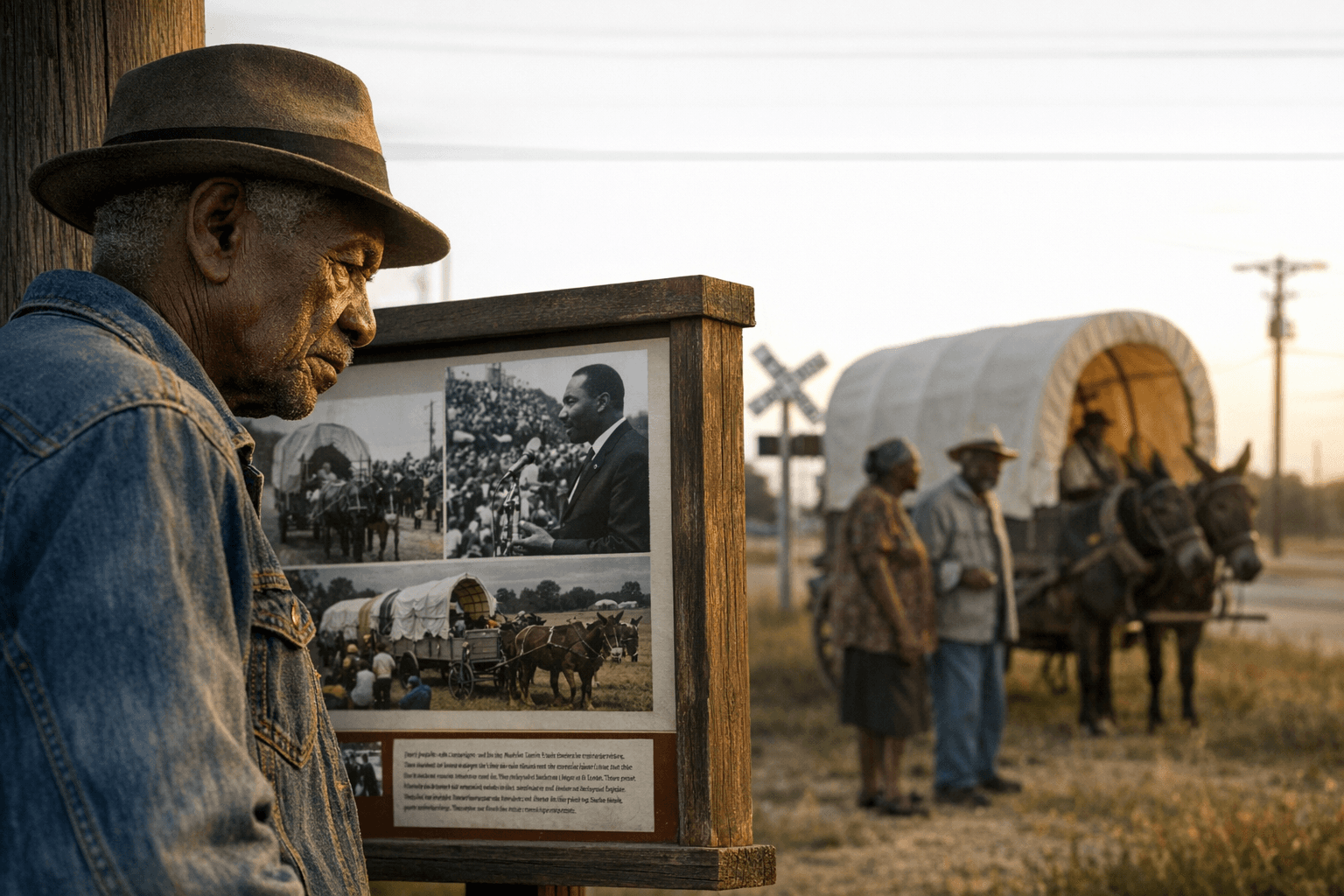
Marks, a small river town in Quitman County, played a pivotal role in the 1968 Poor People's Campaign as the departure point for the Mule Train caravan that linked local demands for economic justice to a national movement led by Dr. Martin Luther King Jr. County leaders and community groups have worked to preserve and interpret that legacy through Mule Train Trail markers, interpretive signage, multi-day reunions and symposiums that bring residents and visitors together to remember and learn.
Quitman County’s preservation work includes planning for trail markers and signage that identify key sites in Marks and provide context for the Mule Train’s journey to Washington, D.C. Local commemorations have evolved into multi-day reunions and symposiums that pair storytelling with historical interpretation, and those events increasingly inform school programming and community education efforts. The Mule Train story has also become central to cultural tourism initiatives and appears frequently in grant applications and heritage preservation projects aimed at both conserving local memory and drawing visitors.
The practical effects reach beyond heritage alone. Preserving the Mule Train history creates opportunities for economic activity on Marks’ Main Street, supports small-business vendors during events, and gives Quitman County a clearer narrative to use when seeking funding for preservation and community development. Local organizers emphasize that heritage tourism and educational programming can generate revenue and awareness that help underwrite broader services, while sustaining the town’s sense of place.
There are public health and social equity implications tied to this work. The Poor People’s Campaign began as a challenge to poverty and structural inequality, and Quitman County’s efforts to interpret that history foreground current conversations about social determinants of health. By elevating the Mule Train story, community leaders aim to connect past demands for fair wages, housing and opportunity to contemporary campaigns for better access to healthcare, economic supports and policy responses that reduce preventable illness and improve well-being.
Preservation projects already figure in local and regional grant proposals, where the historical narrative bolsters requests for funding that can include educational outreach and community services. As Quitman County builds out signage and programming, educators and civic groups are integrating the Mule Train’s lessons into curricula and public forums to deepen civic knowledge and support civic engagement.
For residents of Marks and Quitman County, safeguarding the Mule Train legacy is both an act of remembrance and a strategic investment. Continued marker installation, symposiums and cultural tourism efforts promise to keep local voices at the center of a national story while helping marshal resources that address long-standing economic and health inequities.
Sources:
Know something we missed? Have a correction or additional information?
Submit a Tip