Raffia Bags Define Chic Spring Style From Runway to High Street
Raffia has graduated from market baskets to runway-ready statement bags—seen across SS25 shows and carried into spring 2026, from couture price tags to under-$300 high-street finds.

1. Runway momentum: why SS25 sealed raffia’s comeback
The weave stormed Spring/Summer 2025 catwalks—Hermès, The Row, Cult Gaia, Ulla Johnson, Zimmermann and Simon Miller all showed raffia-leaning pieces—turning what felt like a beach trope into a material moment for city dressing. Photographs from SS25 framed woven and crochet textures alongside tailored separates, proving the fiber works as well with blazers as it does with breezy kaftans. This runway saturation is the foundation for the trend’s migration into retail and street style.
2. Toteme’s pivot: raffia as a collection centerpiece for spring 2026
“Much to our delight, Toteme has also dipped its toes into raffia for the season, going as far as making it the centerpiece of their spring 2026 collection,” reads the editorial take—and it’s telling. Toteme’s elevation of raffia from accessory to collection motif signals the material’s creative potential: think sculpted bodies, textural contrasts and pieces meant to be styled with silk or trenches. The brand’s move cements raffia as more than a seasonal novelty; it’s now a deliberate design choice for luxury labels.
3. Luxury houses and cult-status pieces shaping the visual language
High-fashion names have given raffia runway cred and cult cachet: Hermès referenced the woven-basket lineage, Loewe’s leather-trimmed basket reached “cult status,” and Prada’s brightly hued crochet raffia tote “continues to dominate off-duty style.” Valentino’s vacation-ready stripe note—“The style memo? Stripes forever.”—shows how designers are marrying pattern language with natural texture. These house edits pivot raffia beyond craft into considered, wardrobe-defining accessories.
4. Contemporary names doing the heavy lifting for everyday chic
Brands like Hunting Season, Muuñ and Lié Studio are singled out for “chic and roomy everyday basket bags,” filling the gap between couture experiments and commuter practicality. Hunting Season’s leather‑trimmed raffia tote exists in both editorial and product pages (explicitly priced at EUR 425 in a Scandinavian shop list), proving that the basket silhouette can be refined and ready for daily wear. Labels such as DÔEN and Manebì also contribute playful, lightly bohemian iterations for those seeking artisanal texture without ceremony.
5. High-street democratization: under-$300 and widely available
Raffia’s runway-to-high-street arc completes with accessible picks—Madewell, Banana Republic and Sézane are each cited as “all for under $300” and “equally great beach bags,” making the trend affordable and easy to trial. That price tier matters: it invites shoppers to test slouchy totes or minis without sacrificing the runway look. The trick is to treat these as style experiments—pair them with smarter wardrobe anchors to avoid anything too literal.
6. Silhouettes and treatments: the season’s most recurring shapes
This year’s assortment ranges from the classic woven basket to slouchy totes, minimal minis, crochet forms, bucket bags and top-handle reinterpretations. Vogue Scandinavia’s shop picks include explicit silhouettes—crochet raffia, leather-trimmed totes and braided leather detail—while runway iterations pushed playful shapes and metallic handles. The diversity proves the material adapts, so whether you want a structured Chloé top-handle moment or a relaxed slouch from The Row, there’s a raffia grammar to match.
7. Concrete product picks and price tiers from the shop lists
If you want immediate examples, the Scandinavian shop roundup offers clear tiers: Manebì’s raffia sunset bag (EUR 165) and Maje’s striped raffia basket (EUR 98) sit at entry-level prices; Mid-tier choices include Malene Birger’s Miro shoulder bag (EUR 260) and Skall Studio’s Nura straw bag (EUR 220); aspirational buys include Cult Gaia’s Interwoven tote (EUR 744), Neous’ braided-leather raffia hybrid (EUR 1,050), Moschino’s Love me wicker bag (EUR 1,595) and Chloé’s Summer Banana leather-trimmed embroidered raffia tote (EUR 1,690). These figures demonstrate how the same material can read casual or couture depending on construction and brand positioning.
8. Styling rules: what to pair with raffia now
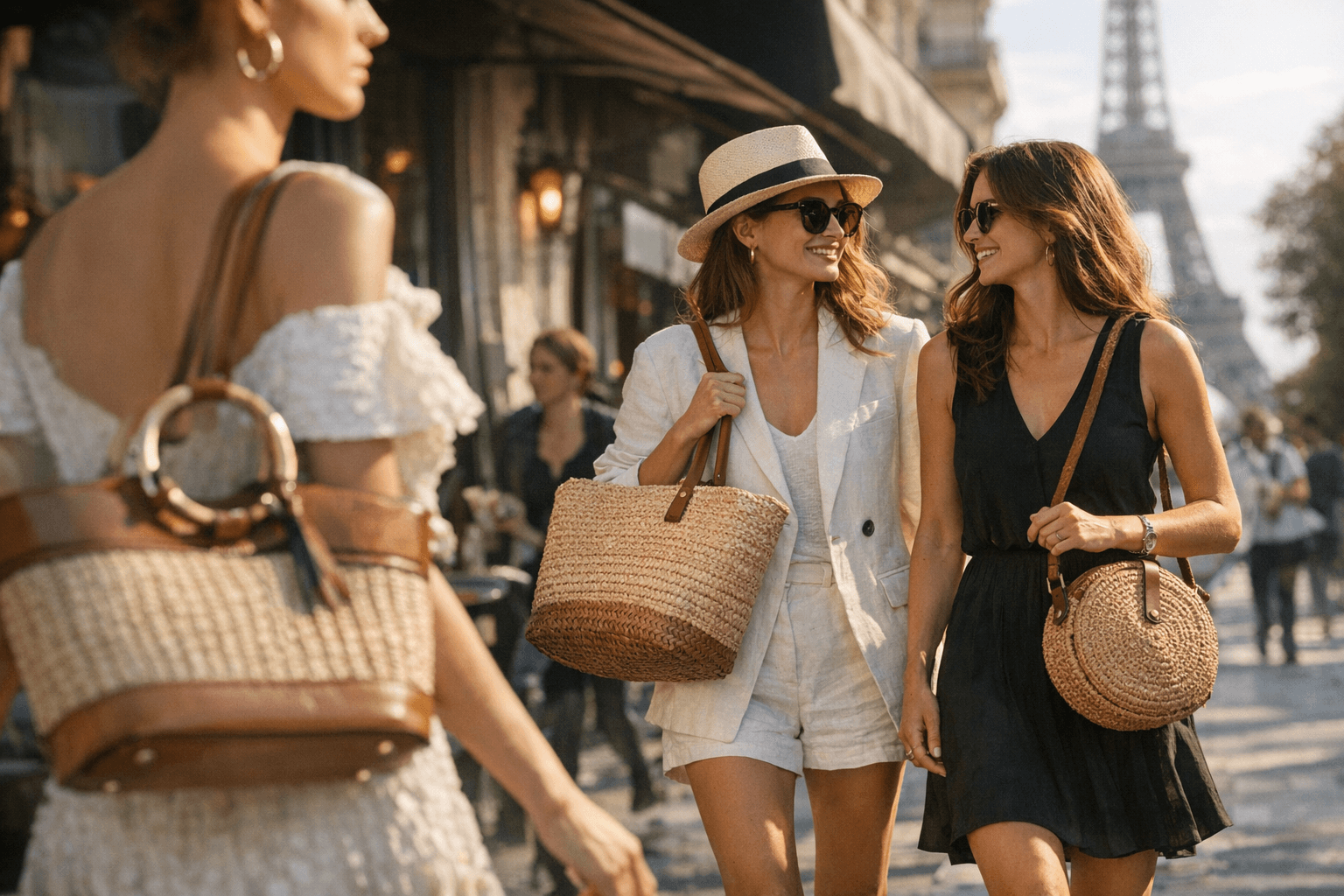
Raffia’s “organic texture works beautifully with seasonal staples – think linen kaftans, cotton shirting, silk maxi dresses – while its earthy finish lends a subtle sophistication to any look,” reads the styling note, and it’s a practical blueprint. Toteme’s editorial suggestion that raffia “adds a textural touch to a sumptuous silk outfit or timeless trench” shows the most modern pairing: luxe fabrics against rougher weave create a tactile contrast that reads elevated, not beach-bound. Valentino’s stripe cue—“The style memo? Stripes forever.”—offers a vacation shorthand: nautical motifs plus natural weave is immediate holiday polish.
9. Sustainability and material virtue as a selling point
Raffia’s technical pedigree helps the trend feel less frivolous: “Better still, raffia is sustainably sourced and biodegradable, making it a conscious choice for the modern traveller,” a highlight that reframes raffia as a considered material choice. That ecological cast paired with handcraft narratives makes woven bags feel like a responsible purchase—particularly when compared to synthetic summer totes. Still, sustainability claims vary by maker; treat this as a material advantage rather than an automatic sustainability guarantee for every label.
10. Cultural lineage: the Jane Birkin basket and the French-girl aesthetic
The woven basket’s cultural shorthand runs deep: “Anyone with an iota of fashion knowledge… the woven basket is just as synonymous with the late Jane Birkin,” the copy reminds us, naming the “other Birkin” as shorthand for the Riviera, the effortless French-girl aesthetic and spring-time elegance. That lineage explains why a raffia carryall feels inherently chic—the association is as much sartorial memory as it is design. Designers are tapping that archive while updating shapes for modern life.
11. Function meets fashion: why raffia works beyond the beach
“Raffia bags strike a rare balance between function and fashion, thanks to their lightweight, textural appeal – ideal for everything from coastal escapes to city weekends,” reads the social excerpt—and it’s true in practice. The season’s best pieces are load-bearing and lens-flattering: roomy enough for weekend essentials, handsome enough to finish a polished outfit. In short, raffia has become a pragmatic way to inject seasonal texture without sacrificing utility.
12. Investment logic: crochet raffia as perennial and reimagined
“If you prefer to make an investment in something timeless rather than trend-driven, a crochet raffia bag is an excellent choice. This classic piece makes its appearance on the runway nearly every spring season,” the Scandinavian note advises, making the case for a considered buy. Crochet constructions, leather trims and braided details are the versions likeliest to age well stylistically—and to bridge seasons. The market’s split between under-$300 entries and multi-thousand-euro statements lets you decide whether to experiment or invest.
13. The takeaway: how raffia defines spring’s style posture
From SS25 runways to Toteme’s spring 2026 centerpiece, raffia has moved from prop to protagonist—available as a market-friendly Maje find or as a Chloé embroidered tote. Its versatility—workable with silk, trenches and linens; sustainable by nature; available across price bands—makes raffia one of the season’s rare democratised luxuries. Wear it with a tailored coat or a silk slip: either way, raffia now signals considered, springtime chic and is here to stay as a texture that elevates, not dates, your wardrobe.
Know something we missed? Have a correction or additional information?
Submit a Tip