Rare blue-fronted lorikeet photographed and heard in Indonesia after 12 years
After 12 years without a confirmed image, the blue-fronted lorikeet was photographed and heard on Buru, exposing how little is known about its fragile mountain habitat.

The blue-fronted lorikeet emerged from Buru’s highlands with a lime-green flash, a blue hindcrown and a high-pitched call that conservationists had not documented in the wild for 12 years. The April sighting, the bird’s first photographs since 2014 and only the second record in more than a century, offered a rare jolt of evidence that Charmosyna toxopei still survives on the Indonesian island where it is found nowhere else on Earth.
The search was punishing. An Indonesian-led expedition climbed through sharp limestone, biting insects and trackless slopes to reach Mount Kapalatmada’s remote highlands, spending 14 days in the terrain before capturing the bird on camera and recording its voice for the first time. The team included Sumaraja, a Birdtour Asia guide and tour leader; Adam Miller of Yayasan Planet Indonesia; James Eaton of Birdtour Asia and author of Birds of the Indonesian Archipelago; John Mittermeier, who directs Search for Lost Birds at American Bird Conservancy; and partners from Kanal Buru. Local climbers from the Wanadri Mountain and Jungle Explorer Association had mapped a new route to the mountain’s 2,700-meter summit the previous autumn, making the April effort possible.
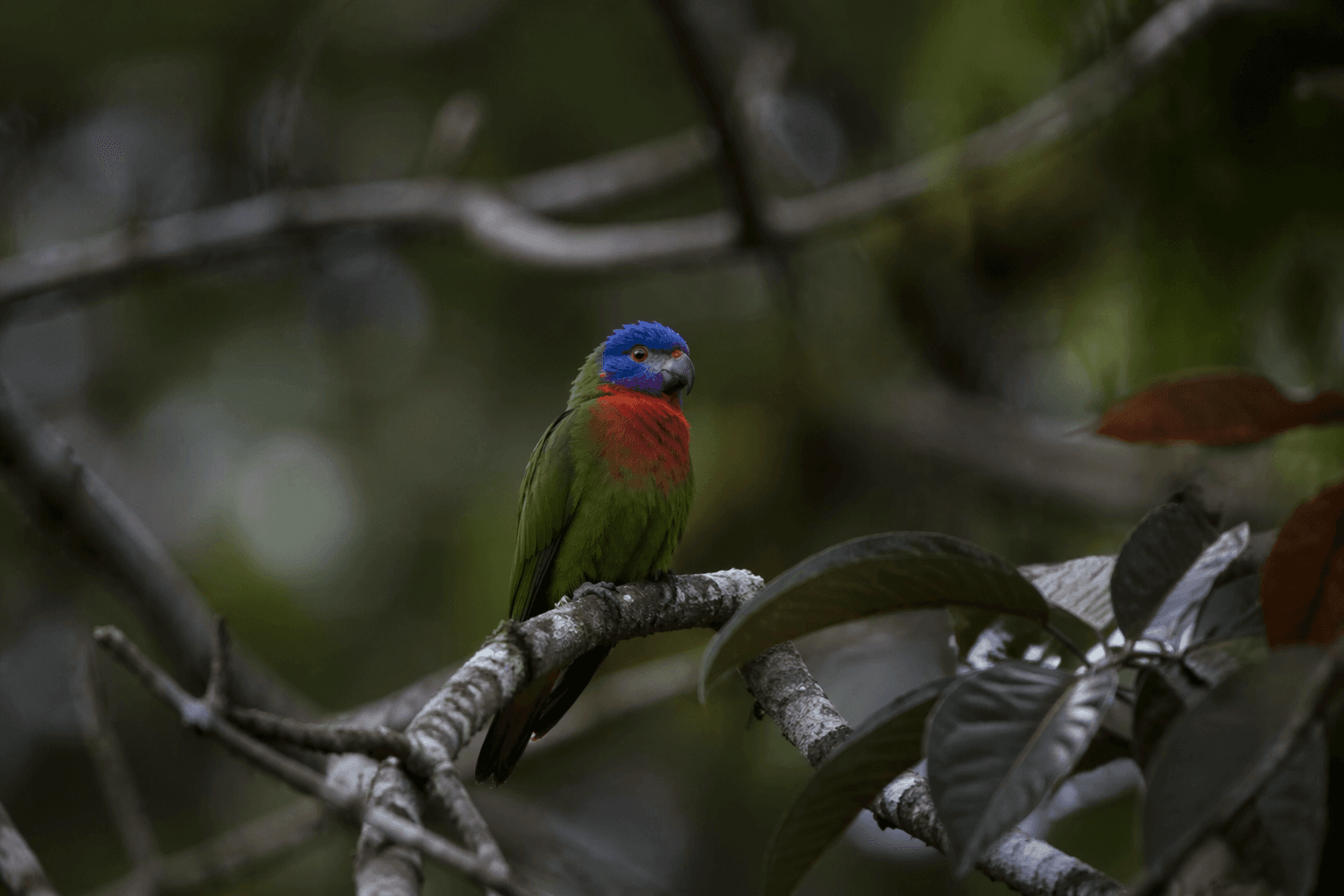
The lorikeet’s rediscovery is as much a conservation warning as a victory. BirdLife International said the bird’s highland habitat was under pressure from deforestation, and surveys by Konservasi Kakatua Indonesia from 2023 to early 2025 documented logging-related destruction between 500 and 1,200 meters, along with hunting of parrots and other birds for consumption and trade. Benny A. Siregar, the Maluku coordinator at Burung Indonesia, said the species appeared to face threats that remain largely unknown, while also warning that it was probably exceedingly small and vulnerable.
For scientists, the sighting also underscored how much remains hidden in Buru’s montane forests. The species was first described from seven specimens collected in the 1920s by Lambertus Johannes Toxopeus at 850 to 1,000 meters on the west side of the island near Lake Rana, then went unrecorded for nearly 90 years despite searches in lower forests. The last confirmed photographs before 2026 were taken by Craig Robson and a Birdquest tour in November 2014, and those images had stood as the only known photos until this expedition. The bird’s recovery in the record does not yet prove a stable population; it may instead show that the species survives in places earlier searches could not reach.

Its shifting conservation status reflects that uncertainty. The IUCN Red List listed the lorikeet as Critically Endangered in 2000, then reclassified it as Data Deficient in 2024 because reliable information on population size, trend and range was too thin. Search for Lost Birds added the species to its lost-birds list in 2024, a reminder that rediscoveries can redirect funding and attention, but they can also mark the last narrow window to protect a habitat before logging, roads or land conversion close it for good.
This article was produced by Prism’s automated news system from verified source data, official records, and press releases, then run through automated quality and moderation checks before publishing. The system is built and supervised by the people who set the standards it runs under. Read our full AI policy.
Know something we missed? Have a correction or additional information?
Submit a Tip