Recognizing Early Parrot Health Problems: Vet Guide to Subtle Signs
Learn the subtle early signs of parrot illness, behavioral and physical cues, and practical vet-focused steps to catch problems before they worsen.
Parrots are masters of masking illness. Spotting early, subtle changes in behavior and appearance gives you a huge advantage: quicker vet diagnosis, less stress for your bird, and better outcomes for your flock. Below are the key signs to watch for, practical monitoring tips, and clear guidance on when to call a vet.
1. Quietness or change in vocal behavior
Notice if your parrot suddenly talks, sings, or squawks less, or if calls sound weaker or raspier. Parrots are social animals and use vocalizing to communicate health and mood; an abrupt drop in chatter often precedes visible illness. Record baseline vocal habits so you can tell your vet when the quiet began and whether it came with other symptoms.
2. Reduced activity and energy
If your bird spends more time perched and less time hopping, climbing, or playing, treat that as a red flag. Lethargy shows up as fewer flight attempts, less curiosity for toys, or reluctance to step up, changes that owners often normalize as “just quiet days.” Track daily activity levels and note whether inactivity coincides with molting, temperature changes, or mood shifts; persistent reduction over 24–72 hours warrants veterinary attention.
3. Loss of appetite or changes in feeding
A sudden refusal of favorite foods, picking at seeds, or decreased crop fullness are among the most actionable early signs. Appetite changes often precede weight loss; that weight can be subtle, so keep a small kitchen scale or avian scale and weigh weekly. If your bird’s intake drops and it shows no improvement within 24–48 hours, contact your vet, early nutritional support is frequently the difference between a quick recovery and a longer hospital stay.
4. Ruffled, unkempt, or oddly positioned feathers
Momentary fluffing is normal, but persistent ruffled feathers, dull plumage, or a refusal to preen suggests the bird is conserving heat or lacks the energy to groom. Also watch for uneven molting, sudden bald patches, or excessive feather shredding, these can signal illness, stress, or skin infection. Photograph feather changes and note whether the bird is avoiding baths, which helps your vet distinguish between behavioral and medical causes.
5. Breathing changes and respiratory signs
Subtle breathing changes, tail bobbing, open-mouth breaths, wheezes, or clicking noises, are major warning signs. Unlike brief snuffles from dust, true respiratory distress may come with a strained posture, head bobbing in rhythm with breaths, or nostrils that produce discharge. Reduce household irritants (smoke, aerosol sprays) and, if signs persist or worsen, seek immediate veterinary care; respiratory problems can progress rapidly.
6. Drooped posture and wing droop
A bird that sits low on the perch, hunches, or lets a wing hang lower than normal is often trying to hide weakness or pain. Wing droop can be neurologic, musculoskeletal, or systemic; posture changes reflect an overall energy deficit. Avoid forcing activity, keep the environment quiet and consult your avian vet for an exam and possible diagnostics such as weight checks and radiographs.
7. Subtle changes in bathroom habits and droppings
Even small shifts in color, consistency, or frequency of droppings are valuable clues. A single runny stool might be dietary, but persistent watery droppings, decreased urates, or unusually dark stools indicate metabolic or digestive issues. Collect a photo or sample (wrapped and refrigerated if instructed) to share with your vet, lab analysis of droppings often speeds diagnosis.
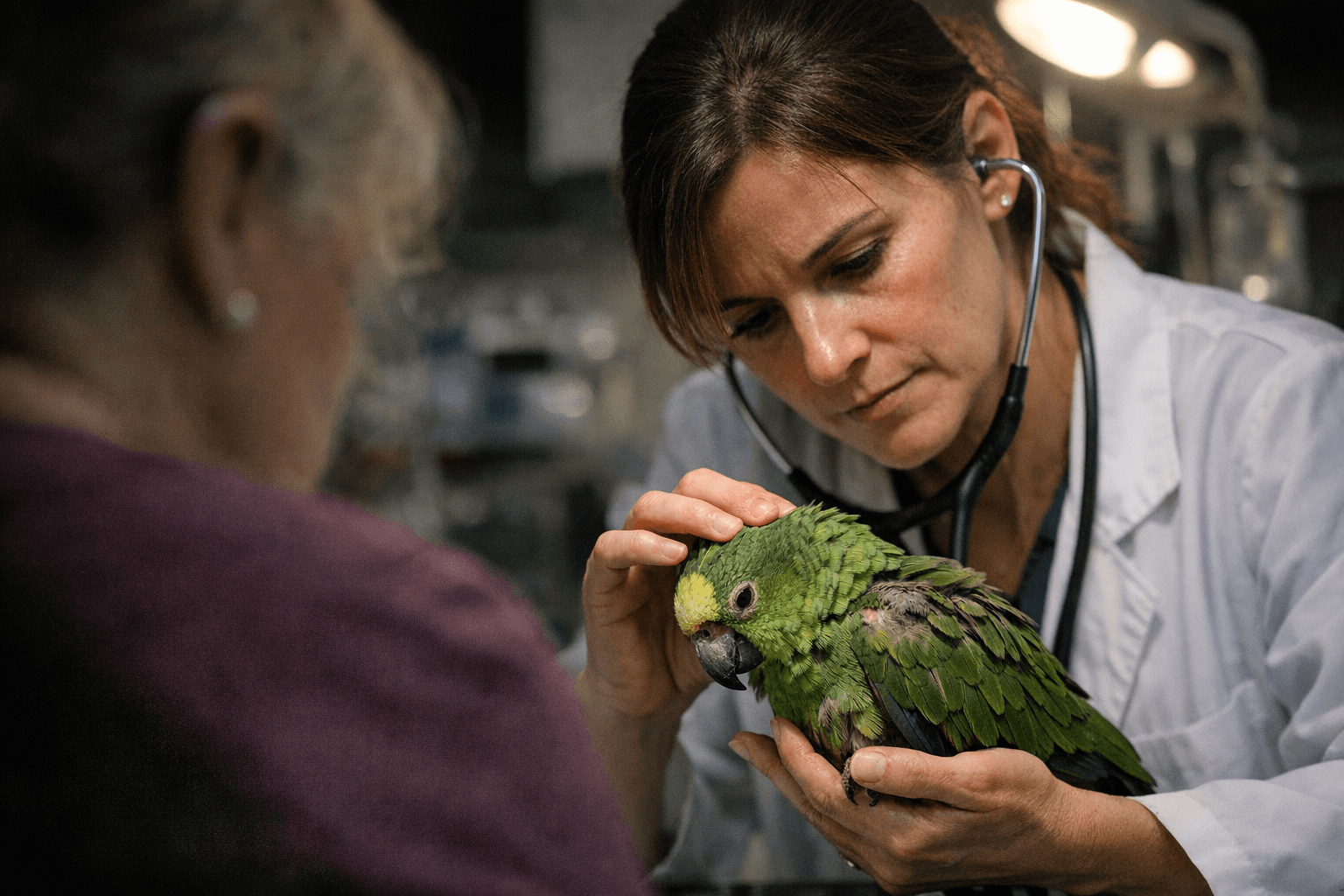
8. Behavioral shifts: hiding, aggression, or altered sleep
Look for a bird that suddenly hides in the corner of the cage, bites more, or sleeps more than usual. Behavioral changes can be responses to pain, discomfort, or cognitive decline; they also affect bonding with you and the flock dynamic. Keep a simple log: note changes in sleep patterns, aggression episodes, and any new avoidance of favorite people or perches, this contextual record helps vets trace triggers like environment or social stress.
- Do a 60‑second body scan: posture, breathing, feather condition, and alertness.
- Weigh weekly and log the number; a continuous trend is more telling than one-off numbers.
- Take short videos of odd behavior or breathing, movement and audio can show things you’ll forget.
9. How to monitor: practical, low-effort routines
Establish simple daily checks to make early detection routine rather than a scramble:
These low-effort habits create a baseline you and your vet can use to spot deviations quickly.
10. What to tell your vet and how to prepare for a visit
When you call, be concise and factual: when the change started, what you observed, what you’ve tried, and any recent diet or environment changes. Bring fresh photos, weight logs, and a sample of recent droppings if requested. Preparing a small carrier with a towel, familiar perch, and a warm but ventilated space reduces stress during transport, quiet, dark travel is usually best.
11. Emergency signs that need immediate care
Rapid breathing, collapse, bleeding, severe disorientation, seizures, or open‑mouth breathing at rest are emergencies. These signs indicate that the bird’s condition is acute and requires immediate veterinary attention. If possible, wrap the bird gently in a towel, keep it warm, and minimize handling until you reach the clinic.
12. Community relevance and what you can share with fellow keepers
Early detection benefits the whole parrot community, sharing non-identifying photos and descriptions on local forums or with your avian group often yields fast advice and support. When you report symptoms to others, include species, age, and exact behaviors; this specificity helps others compare notes with similar cases and avoid false reassurance. Community knowledge shortens diagnostic guesswork and helps you find reputable vets or care tips quickly.
Practical closing wisdom Trust your sense of “off.” Parrots are subtle actors, small changes in voice, posture, appetite, or feathers can preface bigger problems. Build simple daily habits, quick scans, weekly weights, photos and short videos, and call your avian vet sooner rather than later when a pattern emerges. The faster you catch a subtle sign, the simpler the fix tends to be, and your bird gets back to being the loud, feathered character you love.
Know something we missed? Have a correction or additional information?
Submit a Tip