Record-Breaking Heat Wave Scorches Western U.S. in Mid-March 2026
Phoenix hit 105°F this week, shattering its March 19 record by 9 degrees, as parts of southern California ran 35°F above normal in the West's most punishing winter heat wave in decades.
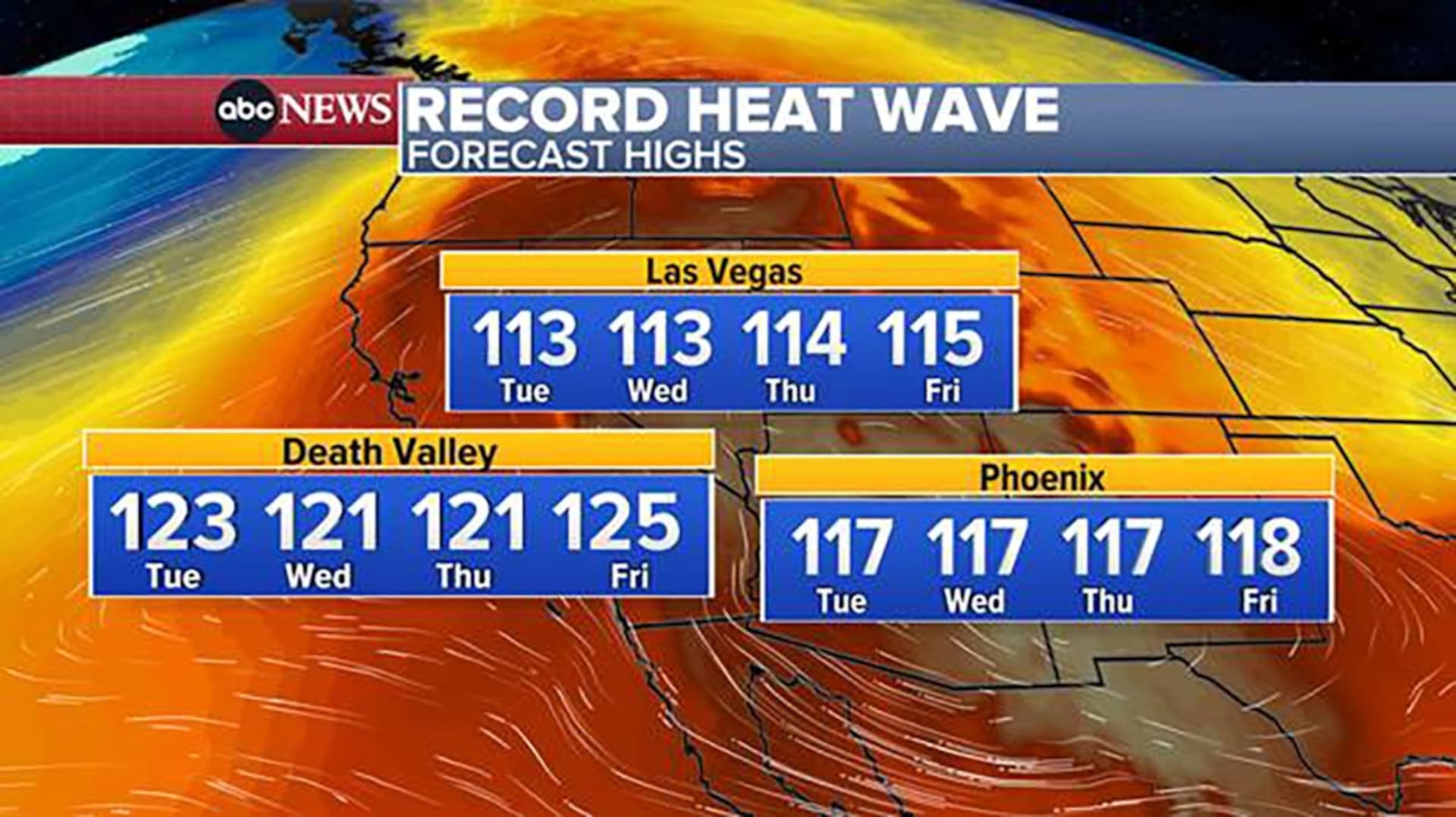
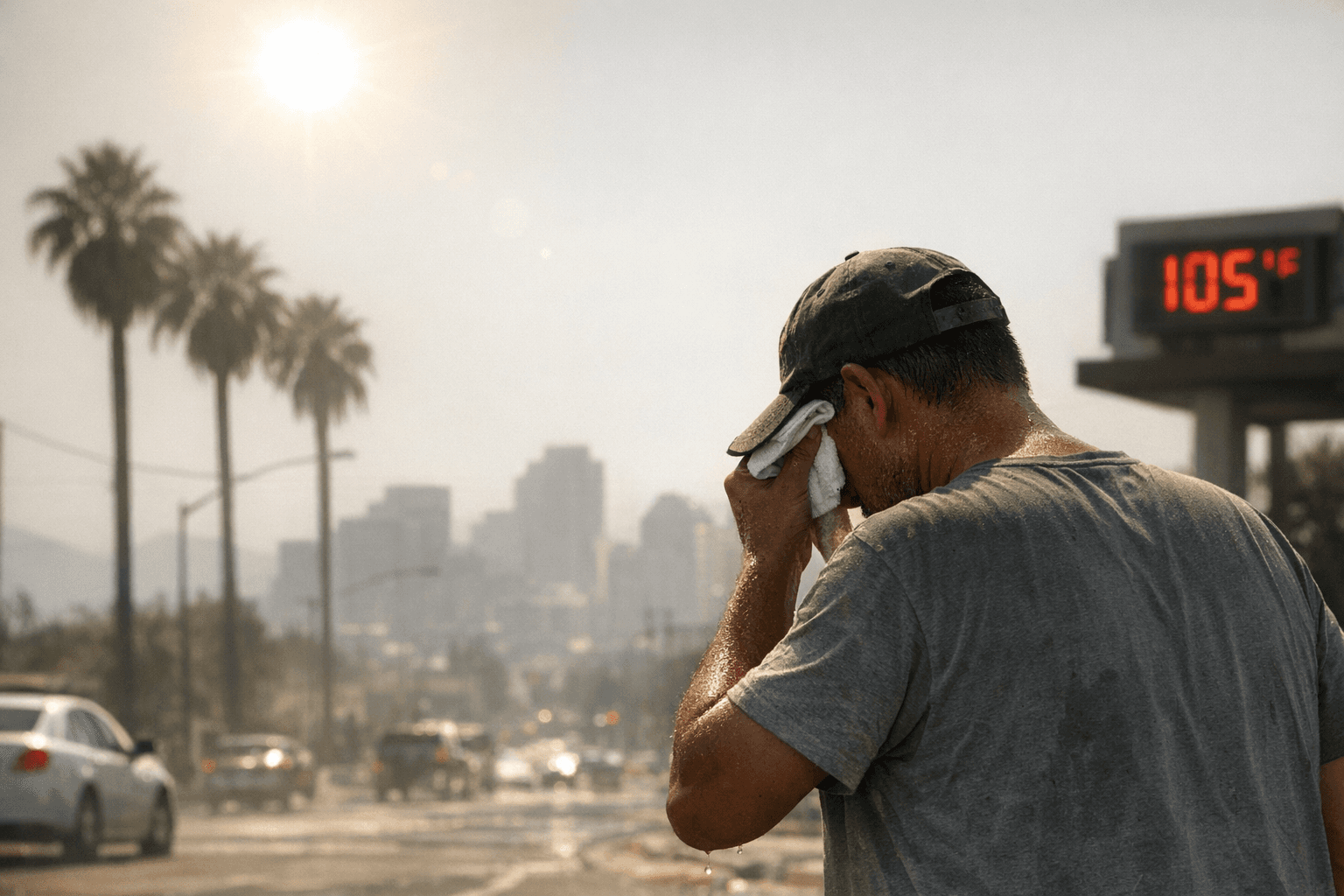
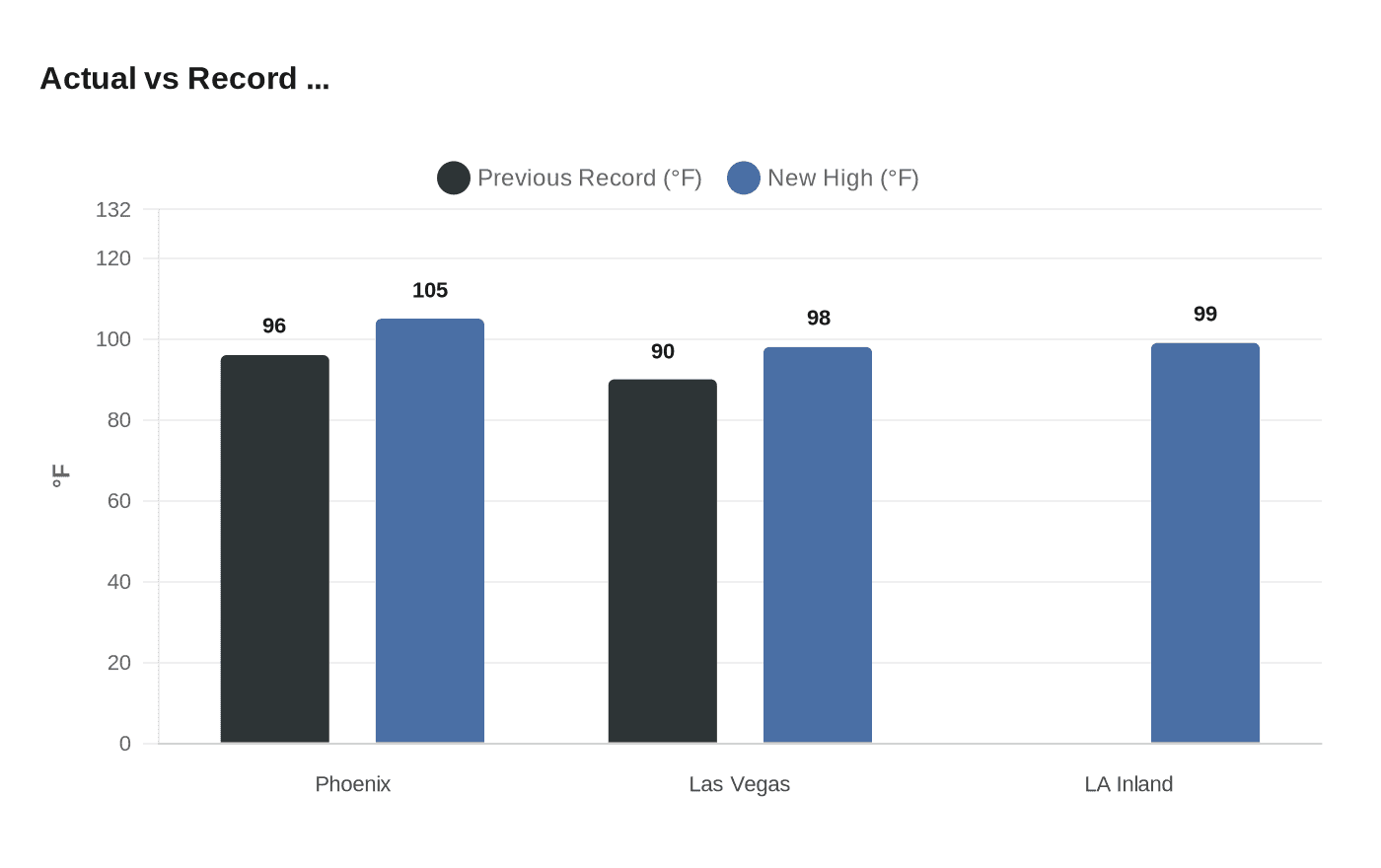
National Weather Service meteorologist Rose Schoenfeld had a blunt assessment of what just swept across the western United States: "We are seeing temperatures that are much, much warmer than normal." That was an understatement. Phoenix reached 105 degrees Fahrenheit on Thursday, obliterating the city's previous March 19 record of 96 degrees, and forecasters said temperatures there would remain above 100 through at least the following Tuesday. Las Vegas hit 98 degrees, eight degrees above its prior record for the date. Inland parts of Los Angeles pushed into the upper 90s, shattering their own daily records. Regional temperatures were expected to climb as high as 107 degrees Fahrenheit into the weekend.
The heat arrived before astronomical spring had even begun. With the Northern Hemisphere technically still in winter until March 20, Schoenfeld told AFP that temperatures in parts of southern California were running up to 35 degrees Fahrenheit above normal for the time of year. "We are likely to continue to break daily calendar day records, as well as some areas all-time records," she said. CNN described the event as so intense and rare that some locations could shatter their all-time temperature records for April before that month had even arrived.
Extreme heat advisories covered swaths of southern California and Arizona, and the Phoenix Fire Department reported at least two heat-related rescues on hiking trails. Schoenfeld warned that anyone spending time outdoors was at risk of heat stroke and urged people to seek air-conditioned rooms and drink plenty of fluids. "It's also the first major heatwave of this year," she said, "occurring after periods of cooler temperatures. So the population has not gotten used to these temperatures yet."
The anomalous warmth extended far beyond the Southwest. The Rockies and Central Plains recorded temperatures nearly 20 degrees above normal, with highs in the 80s stretching as far north as Montana and South Dakota. The Midwest warmed into the 60s in Indianapolis and 70s in St. Louis. Only the Northeast stayed close to seasonal norms, with New York City expecting weekend highs near 60. Meanwhile, NBC News reported that wildfires were raging across Nebraska, killing at least one person, in the same period the heat dominated the West.
The heat wave struck a region already under severe environmental stress. The West entered it on the heels of its hottest winter on record. Colorado recorded its thinnest snowpack since 1981. "March is when typically we would be seeing more snow storms and continuing to build up that snowpack in the mountains," said Schumacher, cited by CNN. "And it looks like we're going to be going in completely the opposite direction this week." Lake Powell, the critical Colorado River reservoir, stood at just one-third of its capacity as drought conditions continued to worsen across the Southwest.
Scientists say the pattern behind this event mirrors what drove the catastrophic June 2021 Pacific Northwest heat wave, which killed hundreds and sent temperatures into the 120s Fahrenheit in Oregon and Washington. Though March 2026 temperatures fell far short of those extremes, CNN noted that both events stemmed from "record-strong heat domes parked over a particular region of the country for extended periods of time, plus a healthy dose of climate change." The last 11 years have been the hottest in recorded history globally, and scientists say heat waves of this kind are a clear marker of warming driven chiefly by the burning of fossil fuels.
In Los Angeles on Thursday, Terry Salas captured the mood succinctly, telling AFP that the climate across the United States in recent weeks had been "crazy." Back in southern California, plants and trees were already blooming weeks ahead of schedule, with vegetation growing at an accelerated pace after heavy rains in December and January, their early emergence now colliding with temperatures that would have been extraordinary in July.
This article was produced by Prism’s automated news system from verified source data, official records, and press releases, then run through automated quality and moderation checks before publishing. The system is built and supervised by the people who set the standards it runs under. Read our full AI policy.
Did this article answer your question?