Record drought grips U.S., raising wildfire, food price and water worries
More than 148.8 million people and 239.2 million acres were in drought as fire danger spread from Florida to Washington and beef prices stayed elevated.
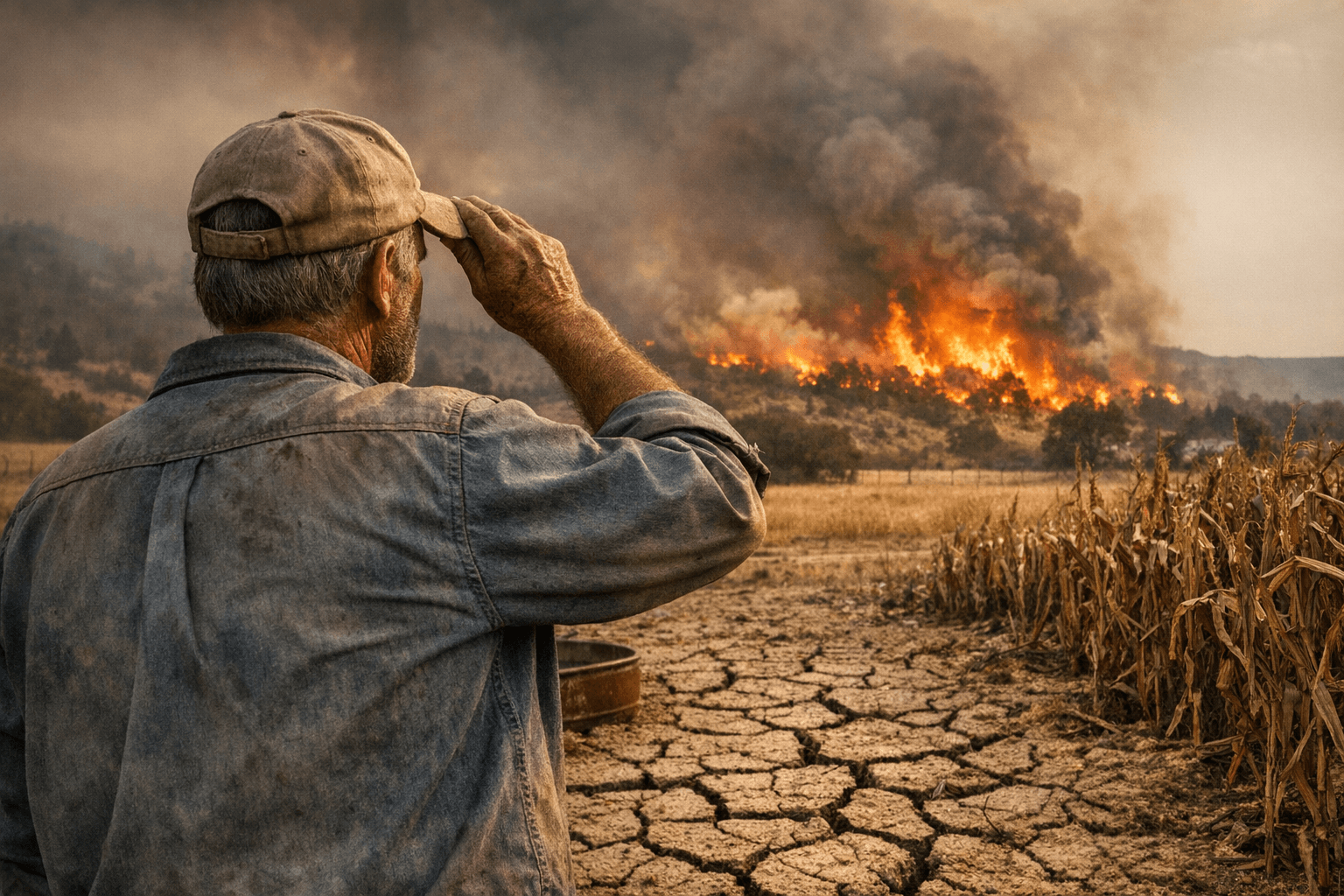
Record drought is stretching across the country, turning what is often treated as a regional weather problem into a national threat to fire safety, farm output and grocery costs. As of April 6, 60.05% of the Lower 48 states and 50.18% of the United States and Puerto Rico were in drought, with 239.2 million acres of crops and 148.8 million people affected, according to Drought.gov.
The scope is wide enough to touch nearly every corner of the economy. The U.S. Drought Monitor’s April 16 map showed dryness persisting in the Southeast, parts of the South, the Northeast and much of the High Plains, while moderate drought expanded in parts of southern New Jersey, eastern Pennsylvania, northern Delaware, Virginia and West Virginia. Earlier in the spring, NOAA said moderate to exceptional drought covered 55% of the continental United States in mid-March, and its Spring Outlook, released March 20, forecast drought worsening or developing across much of the West and south-central Plains from April through June.
That outlook also pointed to another problem: heat. NOAA said above-normal temperatures were favored across most of the country this spring, and low snowpack and soil moisture were key drivers of the dry pattern. In the West, poor snowpack is already cutting into runoff, which raises the risk of weaker reservoir levels, tighter water supplies and earlier fire danger. Washington responded on April 8 by declaring a statewide drought emergency, citing exceptionally low snowpack and projected water shortages, with officials warning that low rivers, warmer water and wildfire risk could affect water users, fish and agriculture.
Fire agencies are treating the drought as a warning sign for the months ahead. The National Interagency Fire Center said fire activity increased across the United States in March and projected elevated significant wildland fire potential from April through July in drought-affected areas. Florida has already seen about 1,500 wildfires in the first three months of 2026, and state officials said the state was on track to surpass the fire totals of both 2024 and 2025. That matters because Florida’s peak fire season runs from April through June.
The economic pressure is showing up in livestock markets as well. USDA’s April 15 livestock outlook projected 2026 beef production at 25.790 billion pounds, down 20 million pounds from the previous month, and said slaughter steer prices were expected to average $241.66 per hundredweight, 8% above last year. USDA also said cattle and calves on feed totaled 86.2 million head on Jan. 1, the lowest level in 75 years, a sign that drought-linked herd liquidation has already thinned supplies.
That chain reaction is what makes this drought different. Dry fields reduce crop prospects, hot and parched landscapes lift wildfire danger, and tight cattle inventories keep beef prices high. With spring still unfolding and NOAA calling for more heat and continued drought risk across major producing regions, the cost of dry weather is no longer confined to the places where the rain failed to fall.
This article was produced by Prism’s automated news system from verified source data, official records, and press releases, then run through automated quality and moderation checks before publishing. The system is built and supervised by the people who set the standards it runs under. Read our full AI policy.
Did this article answer your question?

