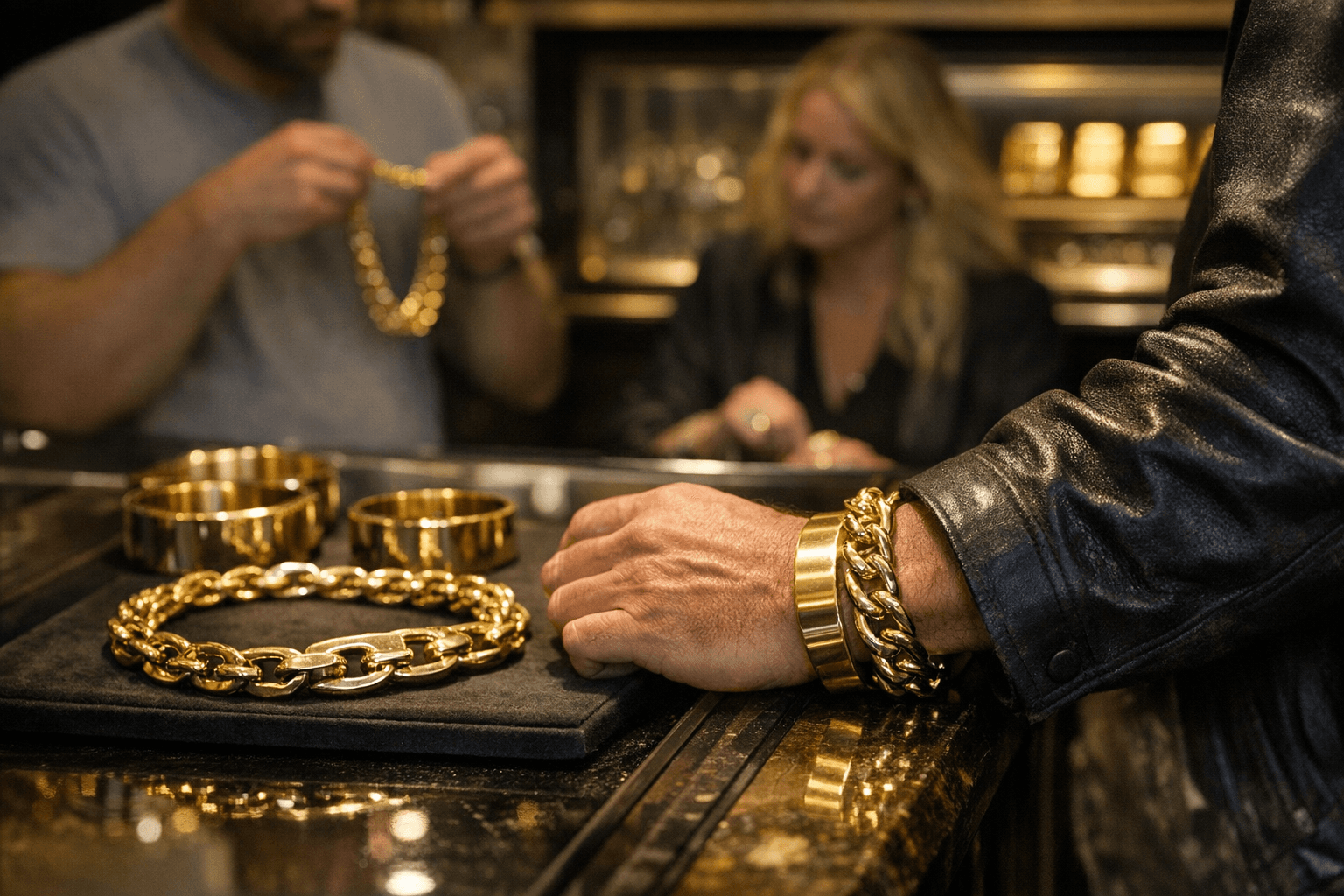
Record-High Gold Prices Push Americans to Pawn, Sell Inherited Jewelry
Residents are pawning inherited gold and prospectors near Denver are combing the South Platte River as gold surges to record levels.
Record-high gold prices have translated into cash for American families, with people pawning or selling inherited gold jewelry to meet expenses. The rush to monetize heirlooms has coincided with an extraordinary market run that pushed prices and volumes into territory normally occupied by institutional buyers.
Near Denver, reporter Trevor Hughes captured the mood in a LinkedIn post: "Ever heard of 'gold moderately interesting.' Noooo. It's gold fever and for good reason: There's just something special about seeing that buttery-yellow metal. And it's even more exciting when you find it yourself." He added, "With gold prices at record highs, I got to wondering how it was affecting gold prospecting. Turns out I didn't even have to go very far: I reported this story about 20 minutes from my house near Denver, where ancient gold washes down the South Platte River during the spring floods. And it's just there waiting to be found."
The retail and online response has been dramatic. BullionVault users traded a combined £73.2 million of bullion in a single 24-hour period — the highest daily value in the platform’s history — as gold vaulted to $5,000 an ounce and silver touched $100; "Whether prices can sustain such elevated levels remains uncertain, but the record turnover indicates that precious metals have reasserted themselves as a central refuge when confidence in markets and policymakers falters."

Exchange-level activity shows how much of the move has been driven by smaller, retail-sized contracts. "The micro copper... saw volumes mushroom from 369,000 lots in December to 969,000 in January. That's equivalent to over one million metric tons of physical metal," and the CME micro gold contract "has experienced an equally dramatic jump in activity after bursting into life around the middle of last year." Regulators in China have reacted: the Shanghai Futures Exchange and the Guangzhou Futures Exchange have between them raised margins and tightened trading rules 38 times to maintain order.
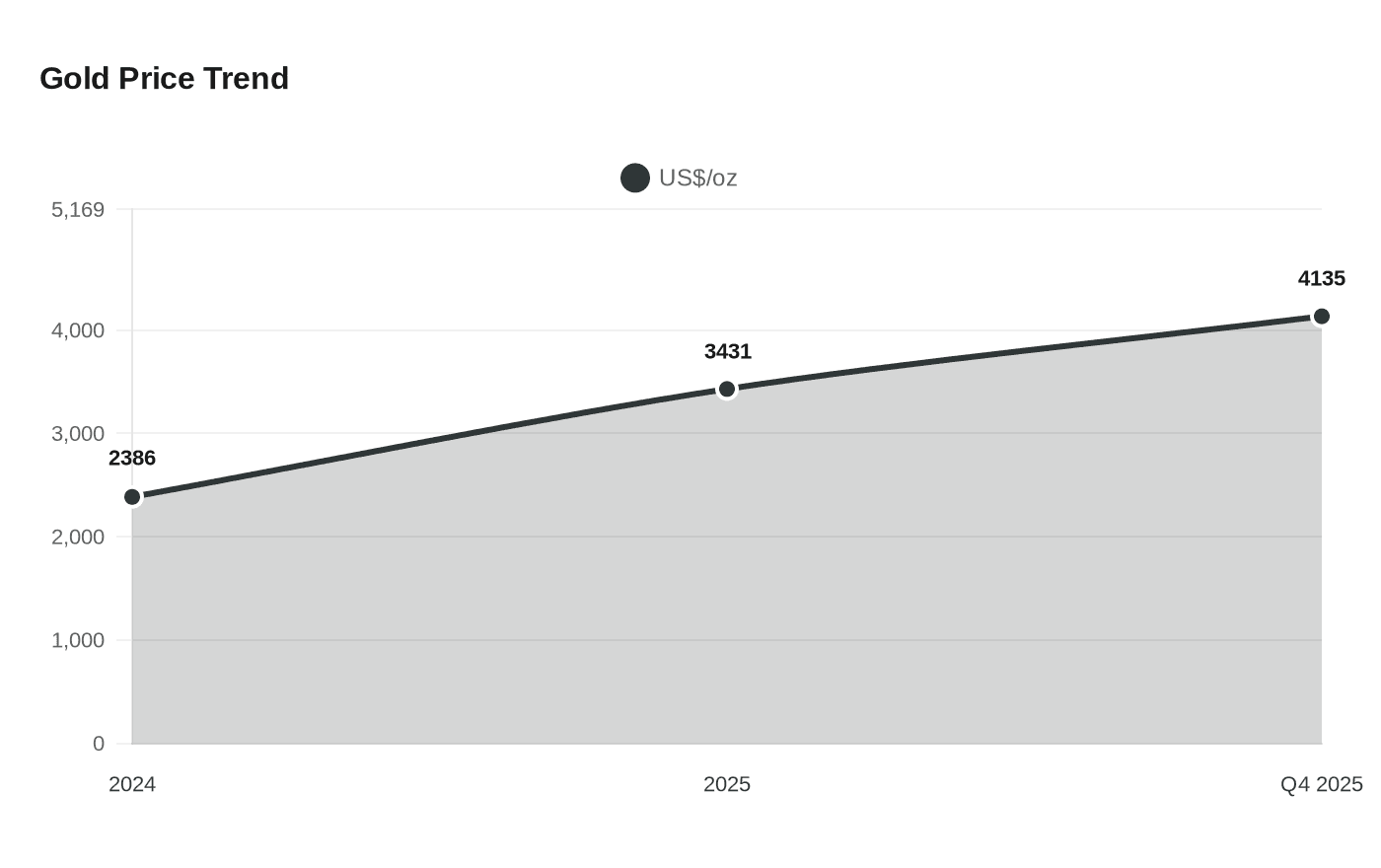
Historical context underlines the scale of the surge. The gold price set 53 new all-time highs during 2025, with an average Q4 price of US$4,135 per ounce, a 55% increase compared to Q4 2024, and a full-year 2025 average of US$3,431 per ounce — a 44% gain from 2024’s US$2,386. Global jewellery demand climbed 18% in value terms to a record US$172 billion even as consumers bought fewer grams, and survey data show 43% of central banks planning further accumulation. The World Gold Council’s outlook for 2026 anticipates strong ETF inflows and robust bar and coin demand underpinning prices even if jewellery tonnage remains weak.
Geopolitical shocks and technical momentum have amplified the move. XM.com noted that "Gold opened with a bullish gap on Monday, rising more than 2.5% to reach a one month high near 5,400, as the conflict in the Middle East jolted markets," and that the earlier record high of 5,597 was reached on Jan. 29. Technical maps show resistance around January peaks near 5,420 and 5,597, with a 123.6% Fibonacci extension target at 6,587; support sits at 5,250, 5,100, the 20-day SMA around 5,057, and a psychological 5,000 level while momentum indicators edge toward overbought territory.
For owners of family rings and chains, these market dynamics mean a new calculus. BullionVault’s £73.2 million trading day, exchange interventions tallying 38 rule changes, and central bank appetite make clear that gold’s role as both ornament and asset is changing — prospectors on the South Platte River may find flakes, and those with inherited pieces may find immediate liquidity, while Citi analysts warn that vastly larger buying could push prices into five-figure territory if sustained. The near-term picture points to continued price pressure and volatility, and to jewelry moving from the jewelry box to the pawnbroker’s counter as families respond to that pressure.
Know something we missed? Have a correction or additional information?
Submit a Tip