Reform UK Surges as Labour Faces Heavy Losses in Local Elections
Reform UK seized more than 700 council seats as Labour lost ground in its strongholds, turning local elections into a sharp verdict on Keir Starmer’s leadership.
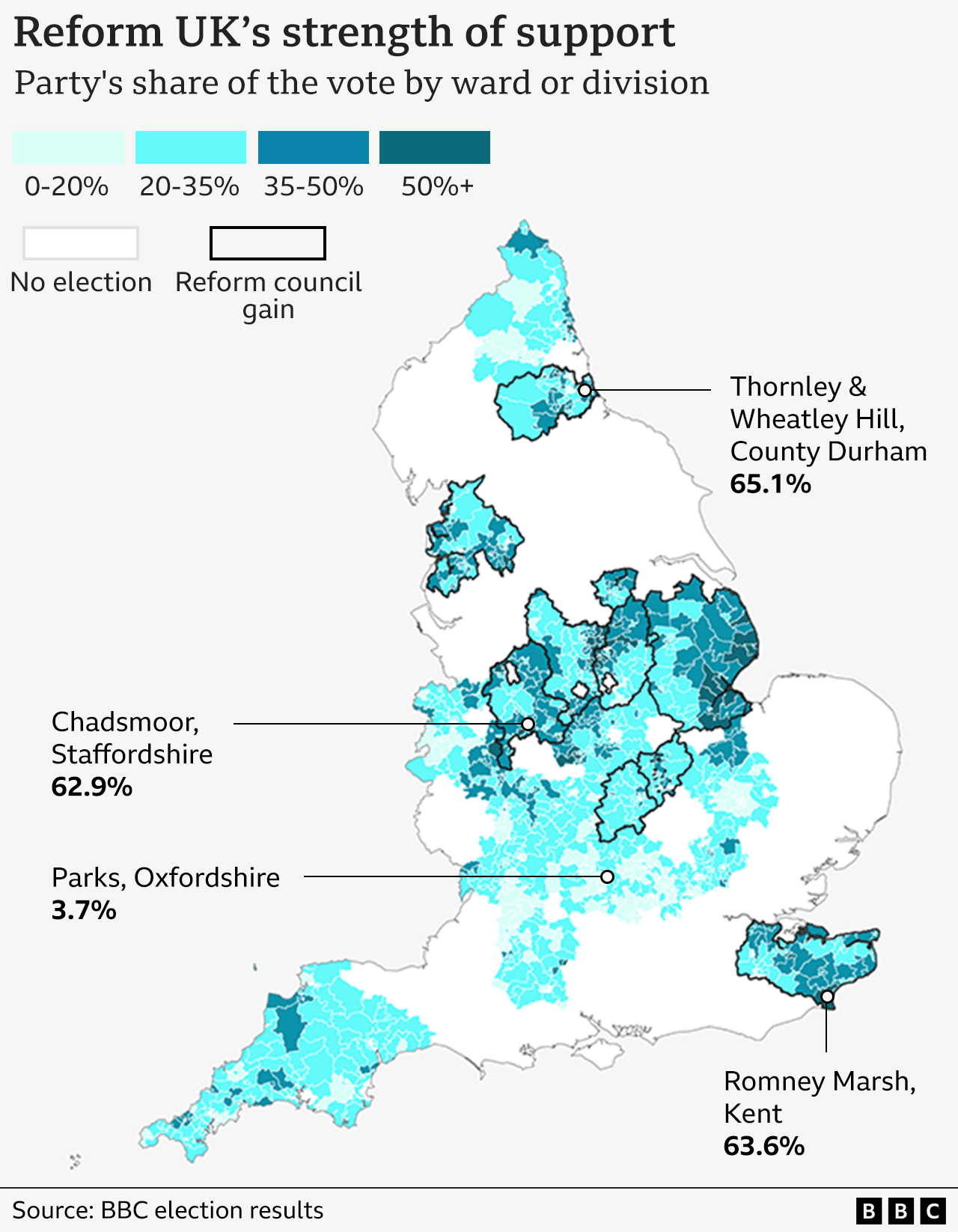
Reform UK turned England’s local elections into a severe test of Keir Starmer’s government, with early results showing Labour losing around half of the seats it had been defending and Reform surging across former strongholds in central and northern England. More than 5,000 council seats were contested across 136 councils, making the vote the most significant public verdict before the next general election, expected in 2029.
The losses cut deepest in places that once anchored Labour’s local power. In Tameside, Labour lost control for the first time in almost 50 years after Reform won all 14 seats Labour had been defending. In Wigan, Labour lost every one of the 20 seats it was defending to Reform. Other counts also pointed to pressure in parts of London and Greater Manchester, underscoring how far the party’s problems extended beyond one region.
Reform’s advance was the central story of the night. Reuters reported that the party had gained more than 300 council seats in early results, later revising that total to more than 700. Sky News projected Reform on 27% of the vote in the English council contests, ahead of the Conservatives on 20%, and said Reform had gained almost 1,000 seats and taken control of six councils. Early counts also showed Nigel Farage’s party emerging as the main beneficiary of voter dissatisfaction with Labour.

Starmer tried to contain the fallout by insisting he would not quit and saying he would stay in office to “deliver change.” He later said he took full responsibility for the losses and acknowledged some “unnecessary mistakes.” Defence Minister John Healey backed him, warning against the “potential chaos of a leadership election,” a sign that the government was determined to shut down any immediate challenge even as the scale of the losses deepened.
The results suggested something larger than a single bad night for Labour. Analysts said Britain’s traditional two-party system was continuing to fracture, with Labour and the Conservatives both losing support to Reform and the Greens, while nationalist parties were expected to fare well in Scotland and Wales. For Starmer, elected only just under two years ago on a landslide national victory, the local election results landed as a blunt warning: voters were not simply punishing incumbency, they were searching for a different kind of politics.
Know something we missed? Have a correction or additional information?
Submit a Tip